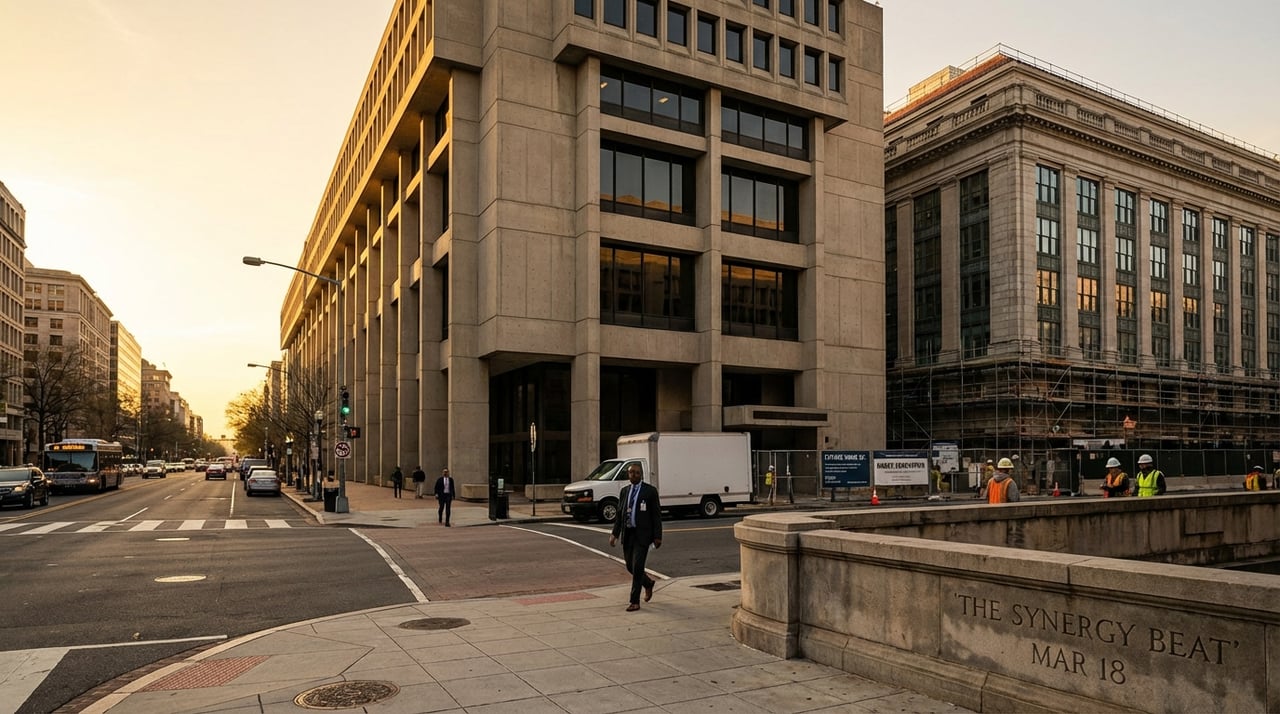
The Synergy Beat — Weekly Roundup
March 18, 2026
From Anchor to Overhang: The Federal Workforce Becomes the DMV's Central Risk Variable
Stay ahead of the market with expert insights, real-time data, and stories shaping the Washington D.C., Maryland, and Virginia real estate landscape.
WEEKLY SNAPSHOT
The week of March 16 delivered a cluster of compounding signals that demand a clear-eyed read. Washington, DC's residential market recorded a 7.5% year-over-year price decline in February 2026, with average days on market stretching to 108 — a 37% increase from the prior year — as Bright MLS data confirms active regional listings up 18% since January 2025. That softness is not uniform: it is concentrated in the District proper and urban counties tied to federal employment, while Montgomery County and North Arlington continue to absorb buyer demand. Simultaneously, two federal agencies announced physical relocations out of downtown DC — HUD is vacating its headquarters for Alexandria, and USDA is selling its South Building — accelerating a structural contraction in the urban federal footprint that commercial and residential real estate must now price accordingly. On the national cost side, the Section 122 universal tariff regime (10%, being raised to 15%) is layering new construction expense on top of already-embedded 50% steel and 45% Canadian lumber duties, locking NAHB's documented $10,900-per-home cost spike into 2026 project economics. The market is not collapsing — it is bifurcating, and position matters more this week than it has in several years.
TOP HEADLINES
-
DC home prices fell 7.5% YoY in February 2026 to a $599K median as days on market surged to 108 days, per Redfin — the direct fingerprint of federal workforce uncertainty in the District.
-
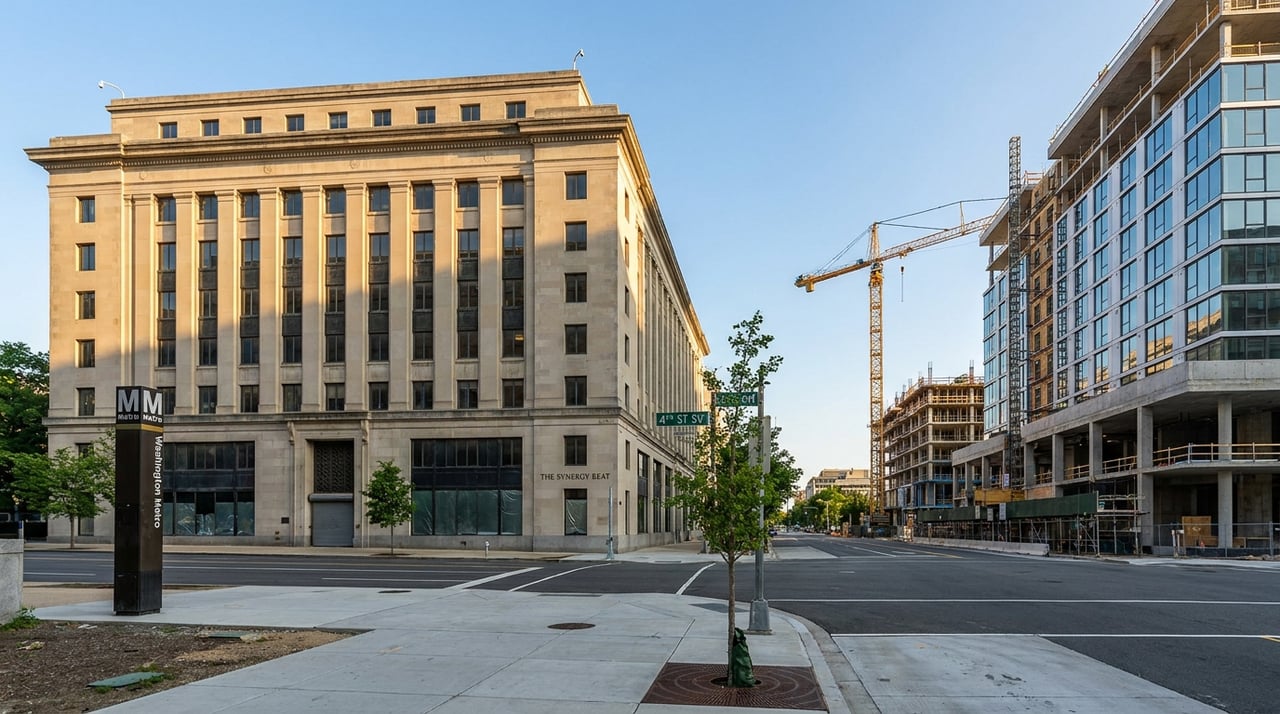
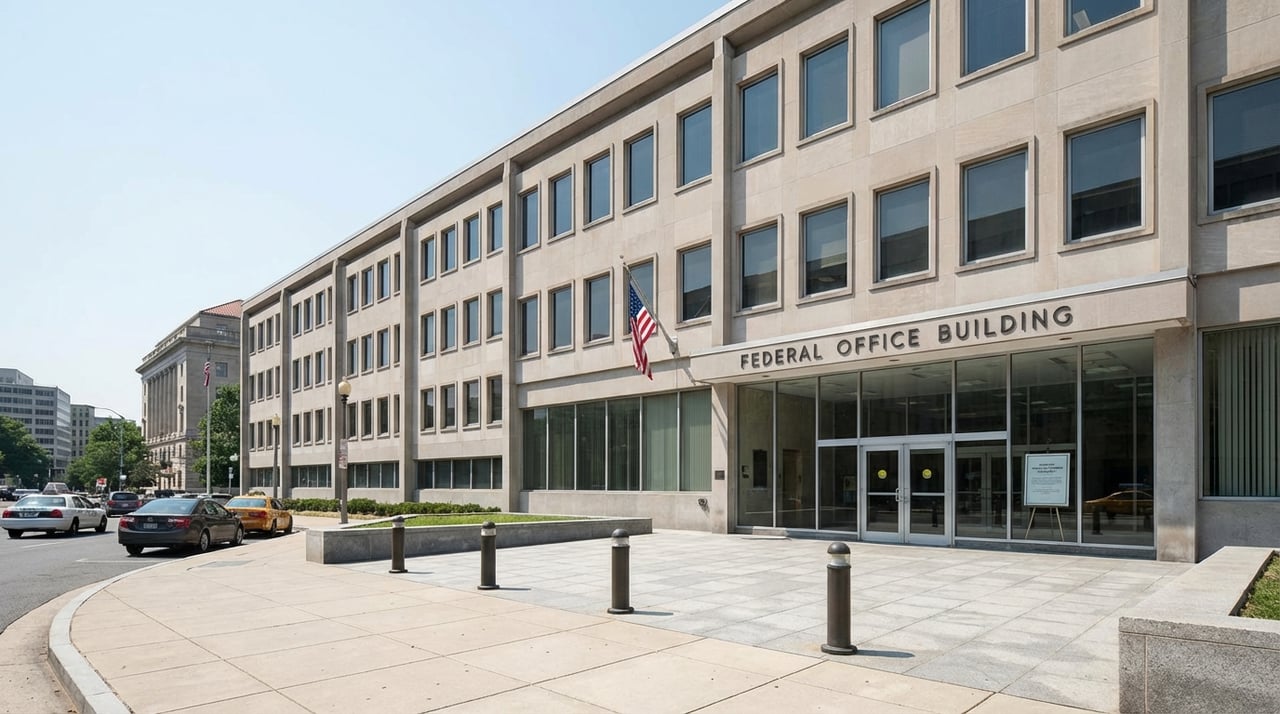
HUD is vacating its downtown DC headquarters for the NSF's former Alexandria, VA facility, and USDA has agreed to sell its historic South Building — two confirmed agency relocations compressing the federal urban footprint.
-
Freddie Mac PMMS (March 12): the 30-year fixed rate ticked up to 6.11% from 6.00%, but purchase applications rose 7.8% week-over-week and 11% year-over-year — spring buyer demand is responding.
-
NAHB confirms tariffs on steel (50%), Canadian lumber (45%), and cabinets (now 50%) have added an estimated $10,900 in construction costs per home; the AGC's Tariff Resource Center was updated March 4 with the current regime now in full effect.
-
On March 11, 2026, USTR launched new Section 301 trade investigations targeting China, the EU, and 13 other nations — the administration's move to permanently replace the IEEPA tariffs struck down by the Supreme Court on February 20.
Story 1: DC Home Prices Down 7.5% Year-Over-Year as Days on Market Hit 108
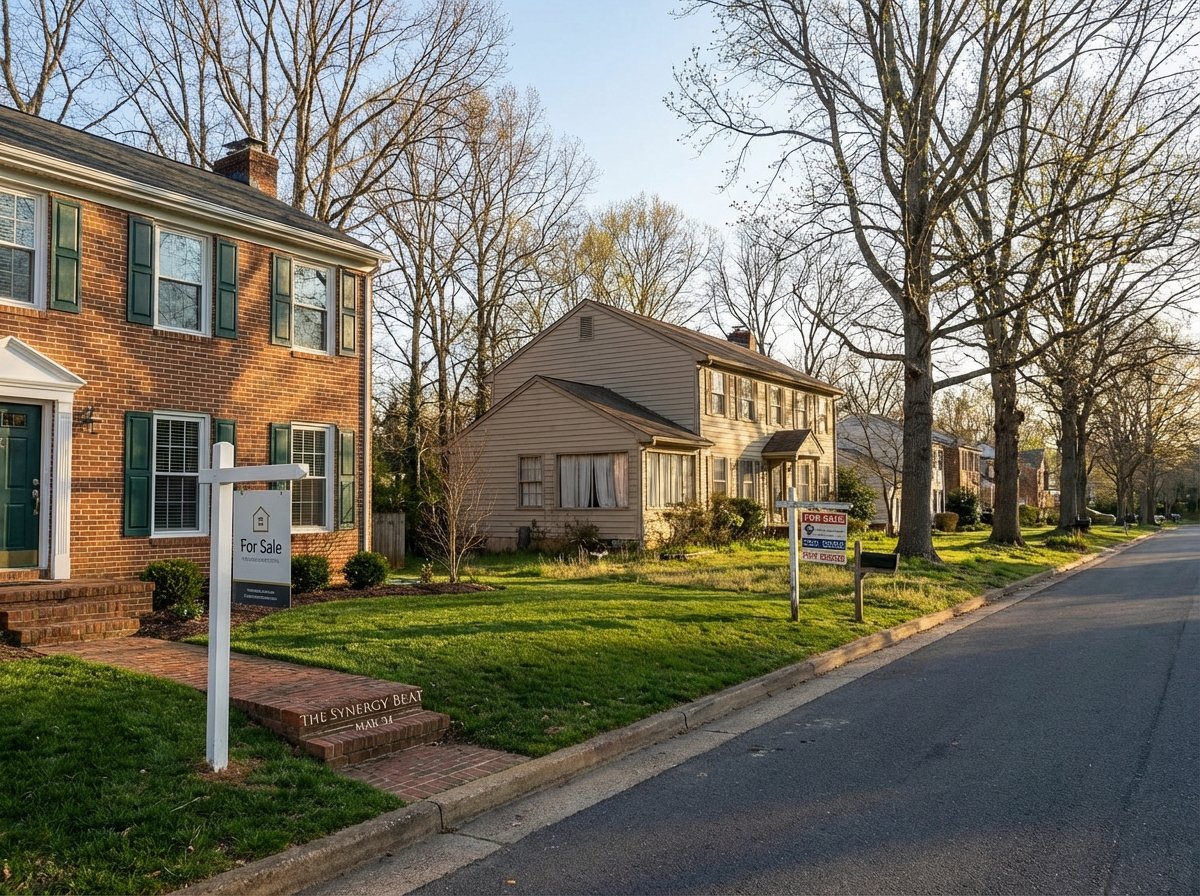
What Happened: Redfin's February 2026 data for Washington, DC showed median home prices at $599,000, down 7.5% compared to February 2025. The average home is now spending 108 days on the market versus 79 days one year ago — a 37% increase in time-to-sell. Active regional listings across the DC Metro rose 18% compared to January 2025, per Bright MLS. Total closed sales in January 2026 fell 10.3% year-over-year, though new pending contracts edged up 1.9%, suggesting early-stage re-engagement from buyers taking advantage of higher inventory and lower rates. The condo segment is the weakest link: Bright MLS Chief Economist Lisa Sturtevant has specifically flagged DC condos as the submarket with the most supply and the softest price performance heading into spring.
Why It Matters (DMV Lens): Federal workforce uncertainty is the documented primary driver of demand erosion in the District. Bright MLS data ties the softness directly to DOGE-related job uncertainty — buyers are pausing, and some laid-off federal workers are accelerating their selling timelines. This is not a national housing correction story; it is a local economic confidence story. The DC condo market, where remote-work trends were already creating headwinds, is now absorbing both a supply surge and a buyer hesitation cycle simultaneously. This is creating the first meaningful buyer's market the District has seen in more than five years for the condo segment specifically.
Who It Impacts First: Buyers (opportunity window in DC proper — negotiate now on lingering inventory); Sellers in DC proper (pricing discipline is non-negotiable, waiting is a liability); Investors eyeing discounted urban condos for long-term hold strategies.
Story 2: HUD Leaves Downtown DC, USDA Sells South Building — Agency Relocations Accelerate
What Happened: The Department of Housing and Urban Development announced it is vacating its downtown Washington, DC headquarters and relocating to the former National Science Foundation building in Alexandria, Virginia. Separately, the USDA confirmed it will sell its South Building — the single largest liability in GSA's real estate portfolio, carrying $1.6 billion in deferred maintenance costs, per GSA Administrator Edward Forst. The USDA South Building sale will bring USDA's remaining space to an 80% utilization rate across its national capital region facilities, in compliance with the USE IT Act. GSA currently has 23 properties listed for accelerated disposition nationally, with the broader federal footprint reduction targeting a 50% cut in owned real estate.
Why It Matters (DMV Lens): Every agency that vacates downtown DC creates two distinct real estate effects: (1) commercial vacancy pressure on the buildings left behind, compressing already-struggling DC office valuations; and (2) a potential residential demand signal in the receiving jurisdiction. HUD's move to Alexandria is the clearest example — it brings federal employment density to a submarket already experiencing strong SFH demand and historically low supply. For investors tracking conversion potential, the USDA South Building and peer assets represent long-horizon redevelopment optionality at scale. The FBI's pending relocation to Greenbelt, Maryland, carries a similar residential demand implication for Prince George's County.
Who It Impacts First: Investors (conversion and redevelopment opportunity in downtown DC commercial; residential demand signal in Alexandria and Greenbelt); Commercial owners with DC assets adjacent to vacating agencies; Sellers and buyers in Alexandria, VA, where federal relocation adds employment-base depth.
Story 3: Freddie Mac PMMS — 6.11% on March 12, But Spring Buyer Demand Is Responding
What Happened: Freddie Mac's Primary Mortgage Market Survey for the week of March 12, 2026, showed the 30-year fixed-rate mortgage averaging 6.11%, up 11 basis points from the prior week's 6.00%. The 15-year fixed averaged 5.50%, up from 5.43%. A year ago at this time, the 30-year averaged 6.65% — meaning today's borrowers are working with a 54-basis-point cost advantage year-over-year. Freddie Mac Chief Economist Sam Khater noted that despite the modest uptick, buyers are responding, with existing home sales rising 1.7% in February and purchase applications increasing 7.8% week-over-week and 11% year-over-year. The Mortgage Bankers Association's most recent weekly report confirmed a 3.2% seasonally adjusted increase in total applications for the week ending March 6.
Why It Matters (DMV Lens): Rates in the 6.00–6.15% band are triggering meaningful buyer re-engagement nationally, and the DMV is no exception — particularly in the Maryland and Northern Virginia suburbs where purchase demand is less correlated to federal employment uncertainty than the District proper. The year-over-year rate improvement of 54 basis points translates to approximately $150–$200 per month in mortgage savings on a $700,000 loan, a real affordability lever in a market where the DC Metro median is $585,000. For sellers in the suburbs, this rate environment supports asking price discipline. For buyers currently pre-approved, locking sooner rather than later hedges against the 15% Section 122 tariff increase expected imminently, which will put upward pressure on Treasury yields and eventually mortgage rates.
Who It Impacts First: Buyers (the rate window is open and spring demand is building — hesitation is a cost); Sellers in suburban Maryland and Northern Virginia (the rate environment supports price, but do not price speculatively); Investors refinancing or acquiring — the 54-basis-point year-over-year improvement meaningfully alters rental yield math in the NoVa market.
Story 4: NAHB Documents $10,900 Per-Home Cost Spike as Tariff Stack Now Fully Embedded
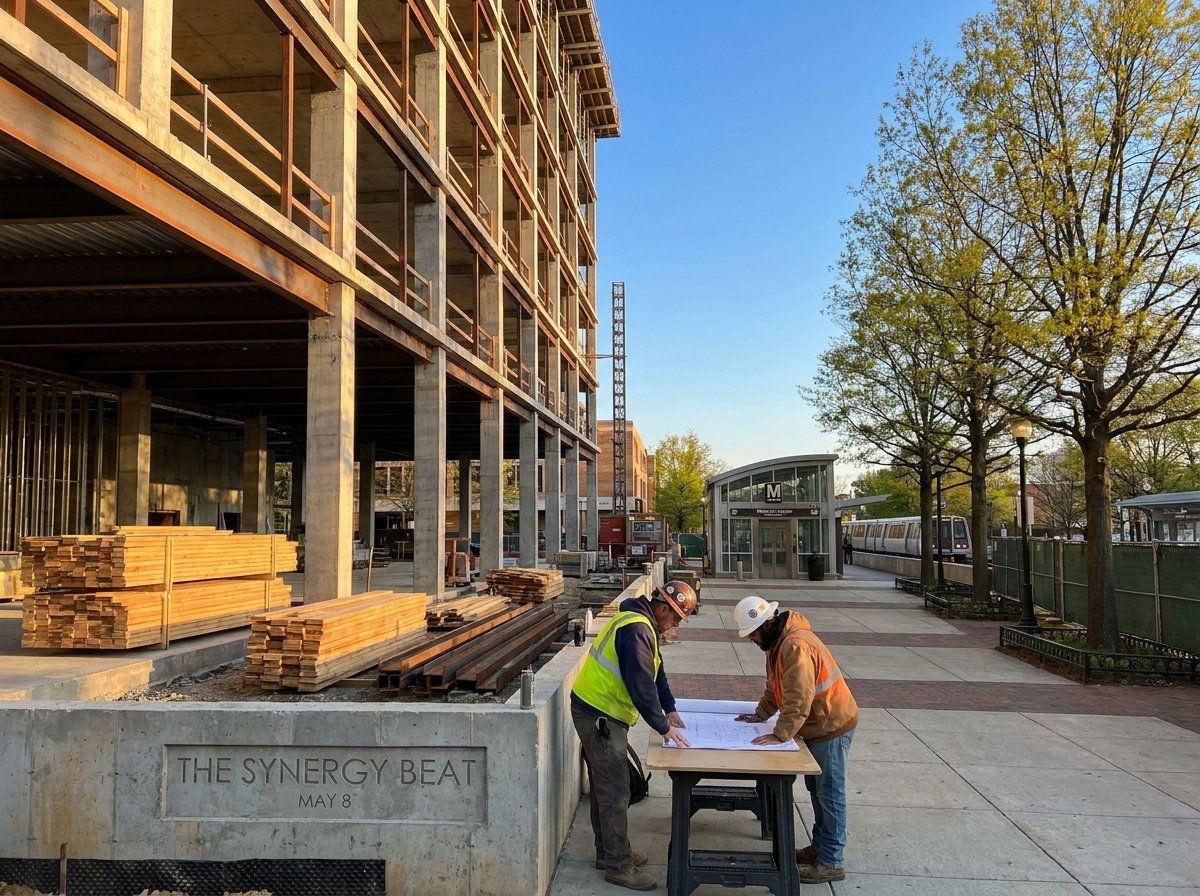
What Happened: The National Association of Home Builders formally quantified the cumulative impact of the current tariff regime at approximately $10,900 in additional construction costs per new home. The AGC's Tariff Resource Center, updated March 4, 2026, confirms the current effective stack: 50% tariffs on all steel and aluminum imports, 50% tariffs on semi-finished copper, a 10% tariff on softwood timber and lumber (with Canadian lumber effectively at 45% due to combined antidumping and countervailing duties), and 50% tariffs on kitchen cabinets and vanities (escalated from 25% as of January 1, 2026). NAHB estimates that over 60% of builders have reported seeing higher costs due to tariffs. JLL data shows material prices averaged 4.2% above 2024 levels across 2025, with aggregate construction costs projected to rise roughly 8% under current policy conditions.
Why It Matters (DMV Lens): For the DMV new-construction pipeline — already constrained by Virginia's 10%+ permit decline in 2025 — these embedded tariff costs are not headline risk anymore. They are baseline project economics. Every luxury pre-construction project in suburban Maryland and Northern Virginia is now operating with cost floors that simply did not exist in 2023. For developers, this means the viability threshold for a new project has moved up by $10,000–$17,000 per unit minimum, depending on material mix and scale. For buyers of new construction, expect this to manifest in tighter incentive packages and higher base pricing through 2026. For resale sellers, the tariff-driven constraint on new supply is a structural support for existing inventory values in well-positioned submarkets.
Who It Impacts First: Builder / Developer (cost modeling must reset — no project economics from 2023 or 2024 are valid without tariff-adjusted materials pricing); Buyers of new construction (price floors are moving up, negotiate upgrades aggressively while builders still have incentive budgets); Investors in existing product in supply-constrained submarkets (tariff headwinds on new supply are a medium-term price support for well-located resale).
Story 5: USTR Launches Section 301 Investigations March 11 — Permanent Tariff Architecture Taking Shape
What Happened: On March 11, 2026, the Office of the United States Trade Representative initiated new Section 301 trade investigations into "structural excess capacity and production in manufacturing sectors" affecting China, the European Union, Singapore, Switzerland, Norway, Indonesia, Malaysia, Cambodia, Thailand, Korea, Vietnam, Taiwan, Bangladesh, Mexico, Japan, and India. This move follows the Supreme Court's February 20 ruling striking down IEEPA tariff authority, which had underpinned much of the existing tariff structure. The Trump administration pivoted on February 24 to Section 122 (a rarely used "balance-of-payments" authority) for a 10% universal tariff, currently being raised to 15%, with an expiration in 150 days. Treasury Secretary Scott Bessent confirmed on March 4 that Section 301 and Section 232 authorities are being mobilized to replace the temporary Section 122 regime with permanent structures.
Why It Matters (DMV Lens): This is the critical policy signal that determines whether construction cost inflation is a 2026 problem or a structural, multi-year constraint on DMV housing supply. If Section 301 investigations result in permanent tariffs on steel, lumber derivatives, and finished building components — which the investigation timeline and administration intent strongly suggest — the $10,900-per-home cost floor documented by NAHB becomes a permanent feature of the new-construction economics, not a cyclical disruption. For the DMV specifically, where labor costs are already elevated and land prices remain structurally high, this makes affordable new-construction delivery increasingly unviable below the $700,000 price point in close-in suburban markets.
Who It Impacts First: Builder / Developer (the 150-day Section 122 window is the last point at which material pricing has any softness — procurement decisions made now will define 2027 project margins); Investors evaluating development vs. acquisition (the math increasingly favors acquiring well-located existing product over new ground-up in the $500K–$750K range); Buyers of future new construction (lock in a new-construction contract now, before Section 301 permanence is confirmed and builders reprice).
INVESTOR INSIGHT OF THE WEEK
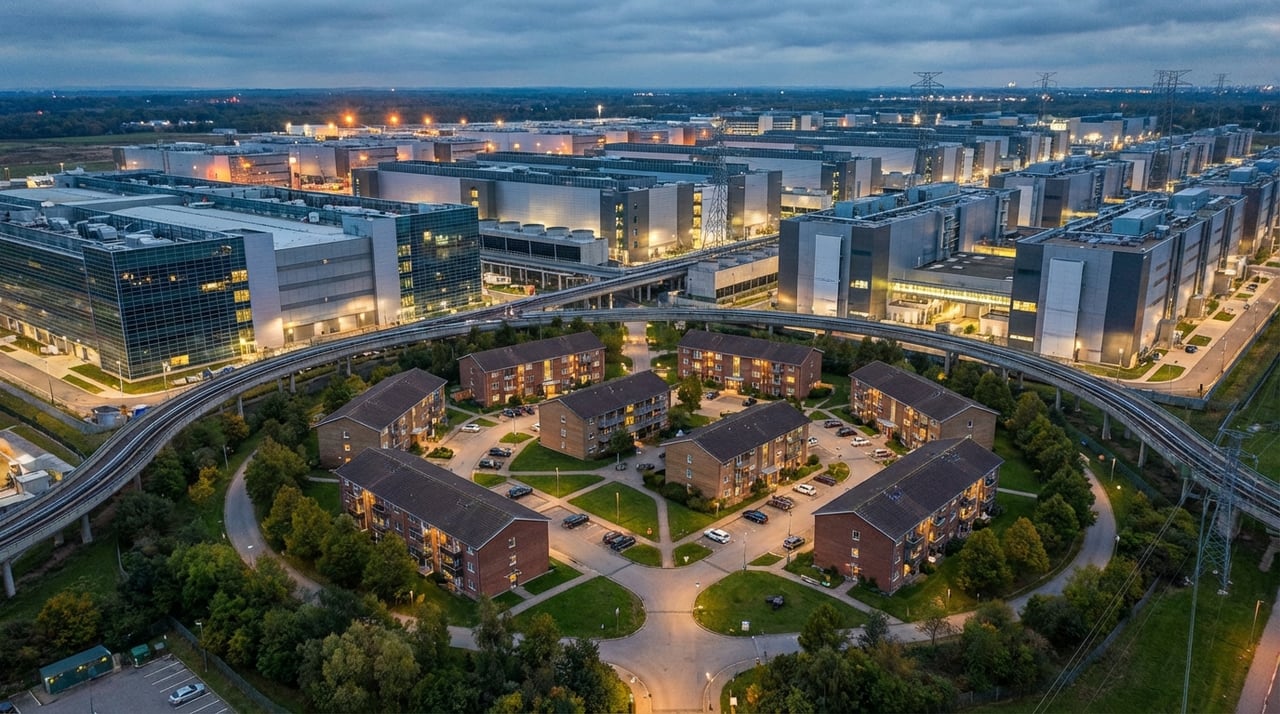
The structural story this week is about the permanent recalibration of new-construction cost economics in the DMV, arriving simultaneously with a federal workforce contraction that is draining demand from the District's supply-heavy lower price tiers. These two forces together are compressing the viable development window in DC proper while simultaneously making well-located, existing products in suburban NoVa and Montgomery County more durable as an investment proposition. The investor who positions now in small-format multifamily or townhome product along the Silver Line corridor in Northern Virginia — where Amazon HQ2, Virginia Tech Innovation Campus, and a tech employment base insulate against federal workforce risk — captures both the near-term rate improvement and the medium-term supply constraint created by tariff-driven construction cost escalation.
The single clearest actionable takeaway: the Federal government's retreat from downtown DC is creating simultaneous risk in commercial adjacencies and opportunity in the receiving jurisdictions — investors who identify the next three agency destinations will own the next wave of residential demand.
THE SYNERGY SYNTHESIS — MARKET VERDICT
The DMV housing market is still operating as two distinct economies inside a single metro boundary. In Washington, DC proper — particularly the condo segment — the data is unambiguous: prices are down 7.5% year-over-year, days on market have grown 37%, and active inventory has expanded sharply. This is the direct consequence of federal workforce uncertainty, which has put an effective demand ceiling on the segment most exposed to government employment. Buyers in the District who are not dependent on federal employment income are entering the most attractive negotiating position since the pre-pandemic period; sellers who anchor to 2024 comps risk sitting on market through spring as competition intensifies.
Contrast that with Montgomery County, Maryland and the core of North Arlington, Virginia. Here, contract activity in January 2026 was up 8.3% year-over-year (Northern Virginia) and the median sold price for the broader DC Metro reached $585,000, up 4.8% YoY. The diversified economic base — NIH, HHS-adjacent contractors, Amazon, tech, consulting — means that federal workforce softness is not translating to demand weakness in the same way. Sellers in Bethesda, Chevy Chase, and Kensington are still moving well-priced, well-presented inventory in the 35–55 day range in competitive price bands. The $800K–$1.4M SFH range in close-in Maryland remains undersupplied relative to demand.
The clearest opportunity this week sits at the intersection of two signals: agency relocation and rate improvement. Alexandria, Virginia is receiving direct federal employment from HUD's headquarters move, adding institutional demand depth to a submarket already performing well. With the 30-year rate at 6.11% — 54 basis points below a year ago — and purchase applications up 11% annually, the buyer pool is present. The clearest risk is for sellers and investors in DC's condo market below $600,000, where supply is abundant, tenant uncertainty is high, and the spring 2026 surge will add more competition before demand recovers.
WHY IT MATTERS — STRATEGIC GUIDANCE
|
Role |
Strategic Recommendation (This Week) |
|---|---|
|
Buyer |
With DC proper showing 108-day average market time and prices down 7.5% YoY, now is the moment to negotiate in the District — not flee it. For buyers unconstrained by federal employment, the inner DC condo market offers meaningful price discovery that was impossible 18 months ago. In Montgomery County and North Arlington, competition for well-positioned SFH under $900K remains firm; move quickly on clean product there. |
|
Seller |
Sellers with DC condos or homes in agency-heavy corridors (Capitol Hill, NoMa, Foggy Bottom) should not wait for a spring rebound that may not materialize. Inventory is already up 33%+ and days-on-market have extended from 79 to 108 days YoY. Price ahead of the next inventory surge, not behind it. Suburban Maryland SFH sellers (Bethesda, Chevy Chase, Potomac) retain more leverage — price accurately and present well. |
|
Investor |
The NoVa tech corridor (Tysons, Reston, Arlington) remains the best risk-adjusted hold in the DMV. Amazon HQ2, Virginia Tech Innovation Campus, and data center demand insulate this submarket from federal workforce risk. For income investors, look at small-format multifamily in transit-oriented Bethesda and Silver Spring — the return-to-office mandate is pushing rental demand back into the inner ring. |
|
Builder / Developer |
Do not break ground on speculative infill in DC proper until federal employment stabilizes. Material cost floors are set — steel at 50% tariff, Canadian lumber at 45% — and these are now structural, not temporary. The Section 301 investigations announced March 11 signal permanence. Budget at minimum 8–10% cost escalation versus pre-2025 baselines. In suburban MD and NoVa, luxury pre-construction with locked-in finish specs and pre-sold contracts remains viable — execute now before the Section 122 tariff (expiring July 2026) potentially becomes permanent Section 301 duty. |
With data as our compass and community as our core, The Synergy Group of Compass helps clients navigate a DMV market defined by uneven risk and uneven opportunity — identifying where federal workforce contraction is creating genuine buying leverage, where tariff-driven supply constraints are preserving value, and where rate improvement is unlocking the most durable moves of 2026.