WEEKLY SNAPSHOT
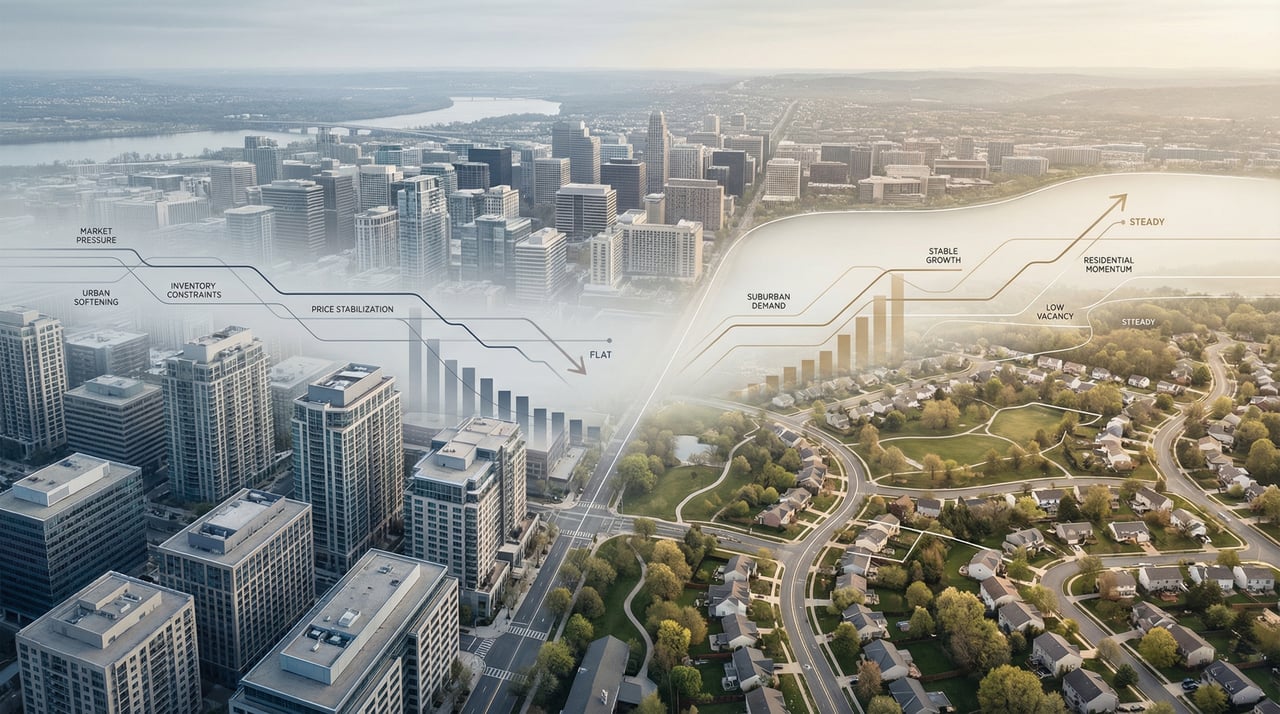
The 2026 real estate market is opening with a palpable shift in energy. A significant drop in mortgage rates to near 6% is injecting fresh optimism, potentially unlocking pent-up demand. However, this macro tailwind collides with a local reality of rapidly rising inventory and a cooling pace of sales across the DMV. The frenzied bidding wars of the past are yielding to a more measured, balanced environment where pricing strategy is paramount.
TOP HEADLINES
-
Mortgage Rates Plunge to Three-Year Low, Hitting Low-6% Range to Start 2026.
-
Fed’s Easing Campaign and Cooling Labor Market Reshape Borrowing Landscape.
-
Northern Virginia Inventory Surges, Signaling a Shift Toward Market Equilibrium.
-
D.C. Office Vacancy Remains High as Multifamily Sector Shows Resilience.
-
Global Tariff Uncertainty and Supply Chain Shifts Create Volatility in Construction Costs.
DETAILED REPORTS
1. Mortgage Rates Plunge to Three-Year Low, Hitting Low-6% Range to Start 2026
-
What Happened: Following a federal directive aimed at mortgage bond purchases and signs of a cooling U.S. labor market, the average 30-year fixed mortgage rate has fallen to around 6% in early January 2026, its lowest level in three years.
-
Why It Matters: This is a critical psychological and financial threshold. For buyers who have been sidelined by rates over 7%, this shift materially improves affordability and expands purchasing power. It signals a potential thaw in transaction volume as the cost of borrowing becomes less prohibitive.
-
Practical Takeaways:
-
Buyers: Re-run your numbers immediately. A 1% drop in rates significantly changes your monthly payment and budget. Get pre-approved now to be ready to act.
-
Sellers: Anticipate an uptick in buyer interest, but do not assume this means a return to frenzy. Buyers are still price-sensitive.
2. Northern Virginia Inventory Surges, Signaling a Shift Toward Market Equilibrium
-
What Happened: Recent data through late 2025 shows a dramatic increase in active listings across Northern Virginia, with some areas seeing year-over-year inventory growth of 30% to nearly 70%. While sold prices are still seeing moderate rises, buyer activity metrics like showings and sold-to-list ratios have cooled.
-
Why It Matters: The era of chronically low supply is ending. The market is transitioning from an extreme seller's market towards a more balanced state. While not yet a true buyer's market, the intense pressure has released, giving buyers more choices and negotiating room.
-
Practical Takeaways:
-
Buyers: You have more options and less pressure to waive every contingency. Take the time to find the right property and negotiate terms that protect you.
-
Sellers: Pricing is now more critical than ever. Overpricing in a market with rising inventory will lead to your property sitting stale. Listen to the data, not the headlines from two years ago.
3. D.C. Office Vacancy Remains High as Multifamily Sector Shows Resilience
-
What Happened: The commercial real estate landscape in D.C. remains bifurcated. Downtown office vacancy rates are stuck at record highs (around 14%+) due to lagging demand. Conversely, the multifamily sector remains robust with strong demand, though new supply is outpacing it.
-
Why It Matters: The health of the downtown commercial core impacts the broader regional economy and tax base. Distress in the office sector could lead to repros and conversions, reshaping neighborhoods. The strength of multifamily underscores the continued demand for living in the District.
-
Practical Takeaways:
-
Investors: Opportunities exist in distressed office assets ripe for conversion or repositioning, but caution is warranted. Multifamily remains a safer, though more competitive, bet.
4. Global Tariff Uncertainty and Supply Chain Shifts Create Volatility in Construction Costs
-
What Happened: Evolving global trade policies and tariffs are injecting volatility into the prices of key construction materials like steel, aluminum, and copper. Supply chains are shifting, leading to longer lead times for critical equipment.
-
Why It Matters: This global issue directly impacts local development finances. Unpredictable material costs and delays make pricing new construction projects more difficult and risky, potentially squeezing developer margins or leading to higher prices for end-buyers of new homes.
-
Practical Takeaways:
-
Developers/Investors: Build higher contingencies into your pro-formas for new construction. Consider the relative stability and value of existing assets versus the risk of ground-up development in this environment.
5. Fed’s Easing Campaign and Cooling Labor Market Reshape Borrowing Landscape
-
What Happened: The Federal Reserve's rate cuts in late 2025, driven by easing inflation pressures and a softening job market (unemployment edging up to 4.4%), have fundamentally altered the borrowing environment.
-
Why It Matters: The Fed's pivot signals a broader economic shift. While lower rates are good for real estate, the "cooling labor market" aspect bears watching. A balanced economy supports a healthy housing market, but a significant recession could dampen demand even with low rates.
-
Practical Takeaways:
-
All Clients: Stay informed on macro data. The interplay between falling rates and the health of the job market will dictate the trajectory of the 2026 housing market.
INVESTOR INSIGHT OF THE WEEK
The continued volatility in global supply chains and construction material pricing, driven by tariffs and trade shifts, presents a clear strategic signal for DMV investors. Ground-up development carries heightened risk right now due to cost unpredictability and timeline delays. Bold Takeaway: In the near term, the risk-adjusted returns may be far more attractive in acquiring and stabilizing existing, well-located multifamily or varied commercial assets rather than embarking on new construction projects where your pro-forma is at the mercy of global steel prices.
THE SYNERGY SYNTHESIS (THE MARKET VERDICT)
The DMV real estate market is in the midst of a complex, fascinating recalibration. We are seeing a powerful collision of opposing forces: the macro-level tailwind of significantly lower mortgage rates against the local-level headwind of sharply rising inventory. The result is not a crash, but a return to sanity. The frantic energy of the post-pandemic years has dissipated, replaced by a market that rewards patience, data analysis, and strategic pricing.
This shift is not uniform. A townhome in a high-demand area like Loudoun County may still see multiple offers and move in days due to persistent scarcity in that specific segment. Meanwhile, a condo in a dense corridor like Arlington is likely facing more competition from other listings, longer days on market, and buyers empowered to negotiate. Understanding these hyper-local nuances is now more critical than ever.
Opportunity Forecast: The spring market of 2026 will offer the best buying conditions in years. The combination of lower rates and increased inventory creates a "goldilocks" window for buyers to secure a home without the extreme duress of the recent past.
Risk Forecast: The primary risk lies with sellers who fail to adjust their expectations. Pricing a home based on outdated 2023 comparable sales will result in stagnation. In a market with more choices, buyers will simply bypass overpriced listings.
WHY IT MATTERS TABLE
|
Role |
Strategic Recommendation (This Week) |
|
Buyer |
Get off the fence. The drop in rates to near 6% is a major opportunity. Refresh your pre-approval and start touring aggressively while inventory is high and competition is moderate. |
|
Seller |
Price for the current market, not the past one. With inventory climbing, your pricing strategy must be compelling. Prepare your home to shine and be open to reasonable negotiations. |
|
Investor |
Pivot to existing assets. Given construction cost volatility, focus on acquiring and adding value to existing properties. Monitor distressed commercial assets for long-term conversion plays. |
With data as our compass and community as our core, The Synergy Group of Compass helps clients navigate this evolving landscape to make smart, wealth-building decisions.