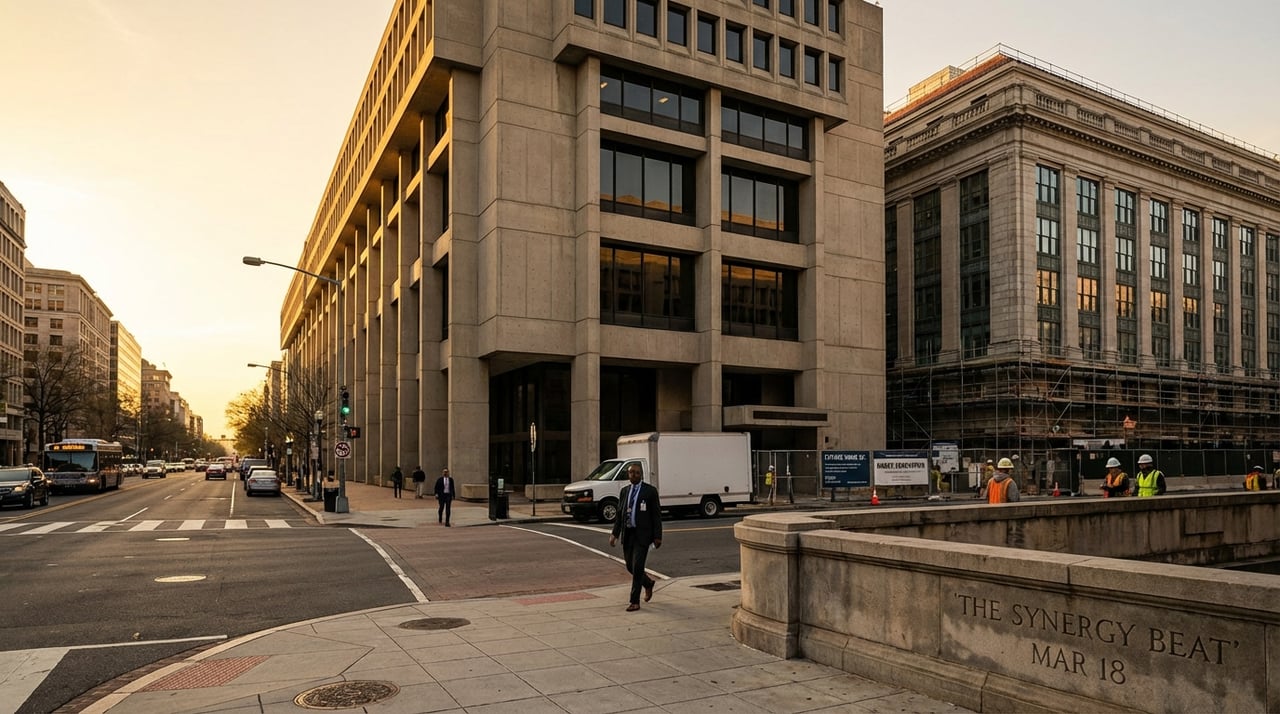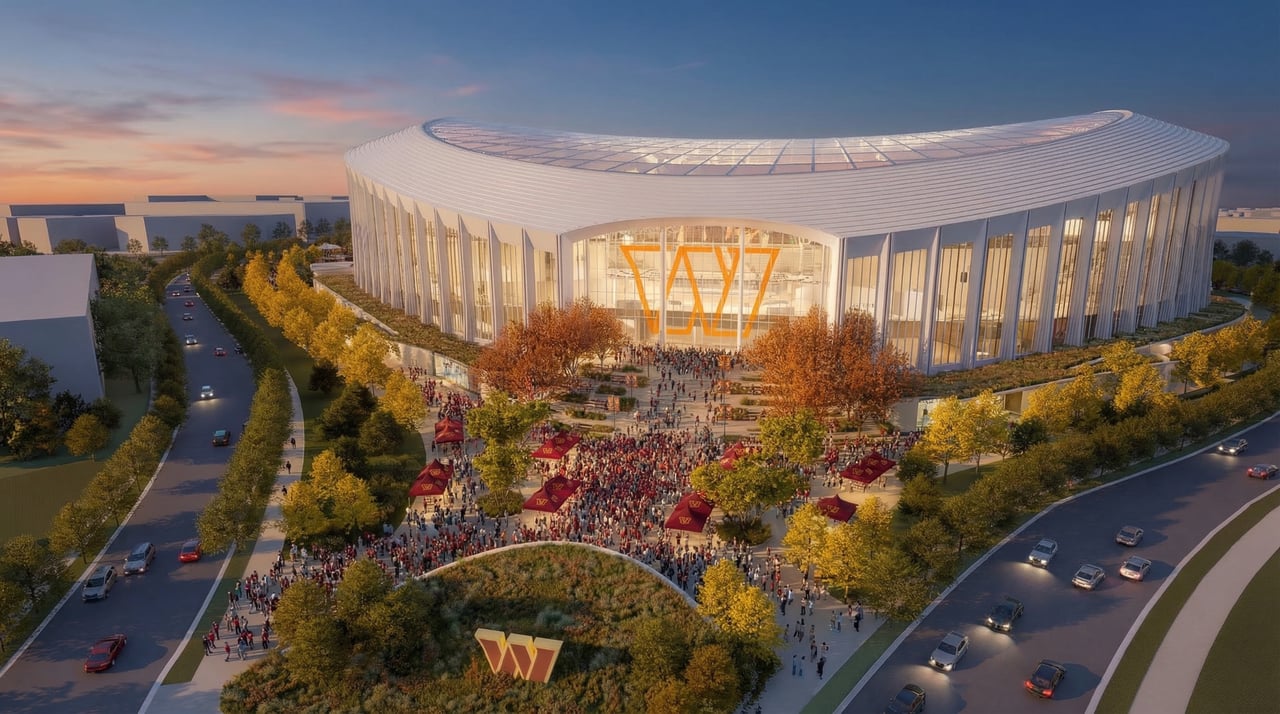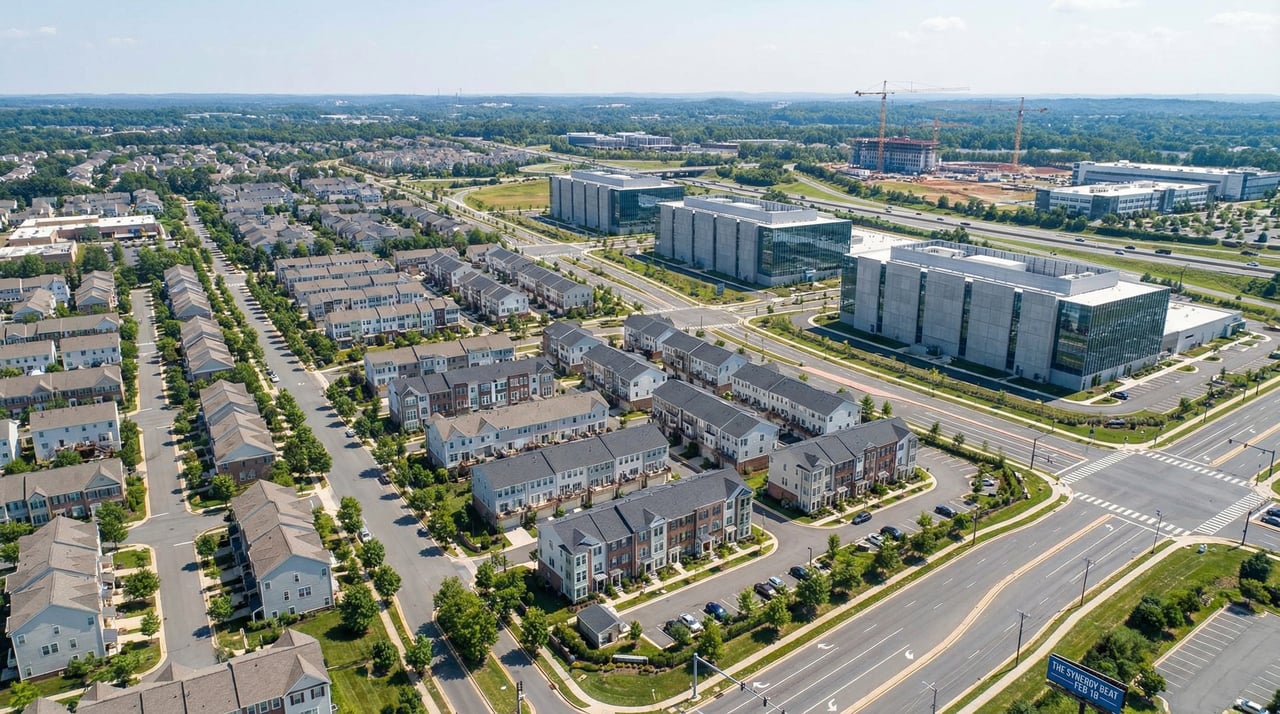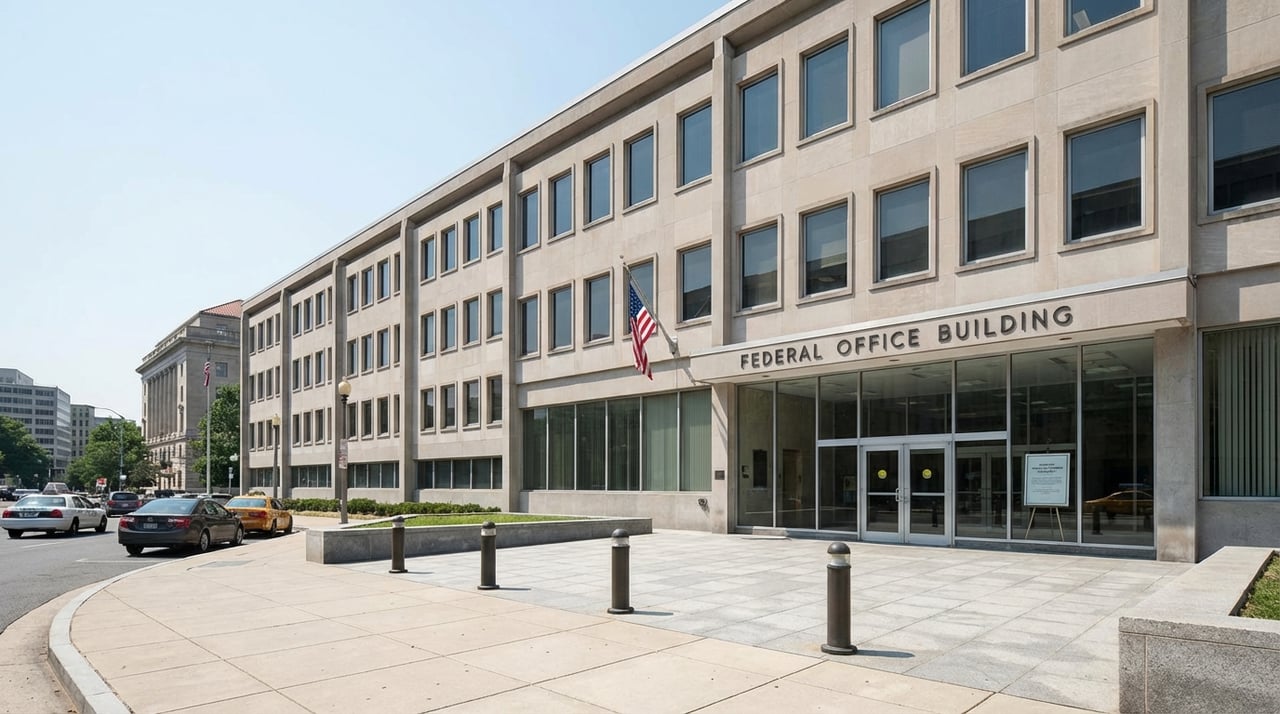
This week’s shift is the pipeline: more institutional signals that Washington’s built environment is being re-priced and re-purposed. On one side, federal assets and occupancy strategy continue to reshape downtown D.C. supply and conversion math. On the other, the AI/data-center power race is changing infrastructure constraints and entitlement politics — especially across Northern Virginia. The vibe: selective confidence (well-located, scarcity assets) plus new risk premiums (policy, utilities, insurance/flood standards, and compliance friction).
TOP HEADLINES
-
GSA accelerates federal property disposition — D.C. office assets remain on the list (GSA)
-
Big Tech builds “shadow power” for data centers as grids strain — implications for DMV infrastructure and growth corridors (Washington Post)
-
Court upholds FinCEN’s anti–money laundering rule for residential real estate transfers; implementation pushed to March 2026 (HousingWire)
-
FHA extends waiver tied to new-construction flood elevation standards, effective Feb. 20, 2026 through Feb. 19, 2027 (HUD/FHA)
-
Mortgage rates hold ~6.07% on 30-year fixed (Feb. 24, 2026) (Wall Street Journal)
DETAILED REPORTS
1) GSA accelerates disposition — D.C. office assets remain on the list
What Happened
GSA continues publishing an “assets identified for accelerated disposition” list as part of rightsizing the federal real estate portfolio. The list includes multiple large federal properties, including D.C. office assets previously listed (e.g., Independence Ave SW corridor entries).
Why It Matters (DMV lens)
This is a supply catalyst — not for homes directly, but for conversion opportunity and downtown repricing. Disposition + relocation decisions change:
-
investor underwriting on office-to-residential feasibility,
-
the timeline for downtown activation,
-
and the risk premium on D.C. condo inventory competing with new conversion product.
Who It Impacts First (Buyer / Seller / Investor)
Investor first (conversion and value-add buyers), then Seller (downtown product pricing pressure/competition), then Buyer (new inventory choices if conversions deliver).
2) Data centers + private power (“shadow grid”)
What Happened
The Washington Post reports tech and energy partners moving toward off-grid / privately powered data center models to bypass grid interconnection delays and constraints, driven by explosive AI compute demand.
Why It Matters (DMV lens)
Northern Virginia sits at the center of U.S. data center gravity. When power becomes the choke point, the downstream impacts hit DMV real estate through:
-
entitlement politics (moratoria, zoning fights, community pushback),
-
infrastructure timelines (substations, transmission upgrades),
-
tax base and employment clustering, and
-
housing demand near growth corridors (while also raising questions around utility cost pass-through and reliability).
Who It Impacts First (Buyer / Seller / Investor)
Investor first (land, industrial, and adjacent housing corridors), then Buyer (location tradeoffs and utility-cost sensitivity), then Seller (micro-market demand shifts).
3) FinCEN AML rule upheld; implementation delayed to March 2026
What Happened
HousingWire reports a federal judge upheld FinCEN’s AML rule covering residential real estate transfers, with implementation delayed to March 2026 following litigation.
Why It Matters (DMV lens)
DMV has a meaningful share of high-value and entity/cash complexity transactions. Compliance friction tends to:
-
slow certain closing workflows,
-
increase documentation rigor for non-traditional or entity purchases,
-
and reduce opacity — which can marginally cool speculative / low-transparency activity.
Who It Impacts First (Buyer / Seller / Investor)
Buyer first (entity/cash buyers), then Investor, then Seller (offer pool quality and speed).
4) FHA extends new-construction flood elevation waiver (effective Feb. 20, 2026 → Feb. 19, 2027)
What Happened
HUD/FHA announced an extension of a temporary partial regulatory waiver tied to flood elevation / minimum property standards for certain new construction, effective Feb. 20, 2026 through Feb. 19, 2027.
Why It Matters (DMV lens)
This is a supply lever with a cost angle: flood elevation standards can restrict buildable lots and increase construction costs in impacted geographies. Even when the strictest flood-zone impacts are not uniform across DMV, the broader signal is that construction feasibility and regulation are now core pricing inputs — especially for entry and mid-tier new construction.
Who It Impacts First (Buyer / Seller / Investor)
Buyer first (FHA-adjacent affordability bands), then Builder/Investor, then Seller (competing new supply).
5) Mortgage rates ~6.07% on 30-year fixed (Feb. 24, 2026)
What Happened
WSJ reports the 30-year fixed average holding around 6.07% (Bankrate), with inflation progress still gating faster relief.
Why It Matters (DMV lens)
At DMV price points, a “flat” rate environment keeps the market in payment discipline mode: buyers stay active, but they’re ruthless on value, inspections, and concessions. The real signal is behavioral: good product still clears; average product negotiates.
Who It Impacts First (Buyer / Seller / Investor)
Buyer first (monthly payment), then Seller (pricing power), then Investor (cap-rate vs financing spread).
INVESTOR INSIGHT OF THE WEEK
The emerging DMV edge is “infrastructure-adjusted underwriting.” Between federal space churn (downtown D.C. conversion supply) and power constraints tied to data center expansion, investors should price assets based on what the area can physically support over the next 24–60 months — not just today’s comps. Underwrite entitlement + utilities + regulatory friction as real line items, not soft risks.
Bold takeaway: The next winners in DMV won’t be the boldest buyers — they’ll be the best underwriters of policy and infrastructure timelines.
THE SYNERGY SYNTHESIS — MARKET VERDICT
D.C.’s core story is still re-allocation: federal real estate strategy and asset disposition keep pushing downtown toward a multi-year conversion and repricing cycle. That tends to create opportunity in well-positioned, scarcity inventory while pressuring undifferentiated condos that compete with tomorrow’s conversion product.
At the same time, Northern Virginia’s growth machine is confronting its new constraint: power. When energy access becomes the gating factor, it changes everything from land values and timelines to political risk. The demand is real — but the path gets noisier.
Contrast: Arlington vs. Bethesda (MoCo SFH)
-
Arlington: more sensitive to policy/infrastructure headlines and corridor effects; opportunity in targeted micro-locations aligned with sustained employment + transit utility.
-
Bethesda / MoCo SFH: scarcity and school-driven demand remains resilient, but buyers are more exacting; “A+” homes keep leverage, “B” homes need pricing realism and clean inspection posture.
One opportunity: targeted value in assets positioned for the next downtown D.C. cycle (conversion adjacency, livability improvements).
One risk: power/infrastructure-driven entitlement volatility in growth corridors — timeline risk becomes pricing risk.
WHY IT MATTERS TABLE
|
Role |
Strategic Recommendation (This Week) |
|
Buyer |
Treat “payment” as your boundary, but push harder on concessions for non-A+ homes; prioritize locations with durable infrastructure commitments. |
|
Seller |
Price for today’s buyer discipline; lead with inspection readiness and clean terms to protect net. |
|
Investor |
Underwrite regulatory + utilities as hard costs; focus on assets where policy/infrastructure uncertainty is lowest relative to upside. |