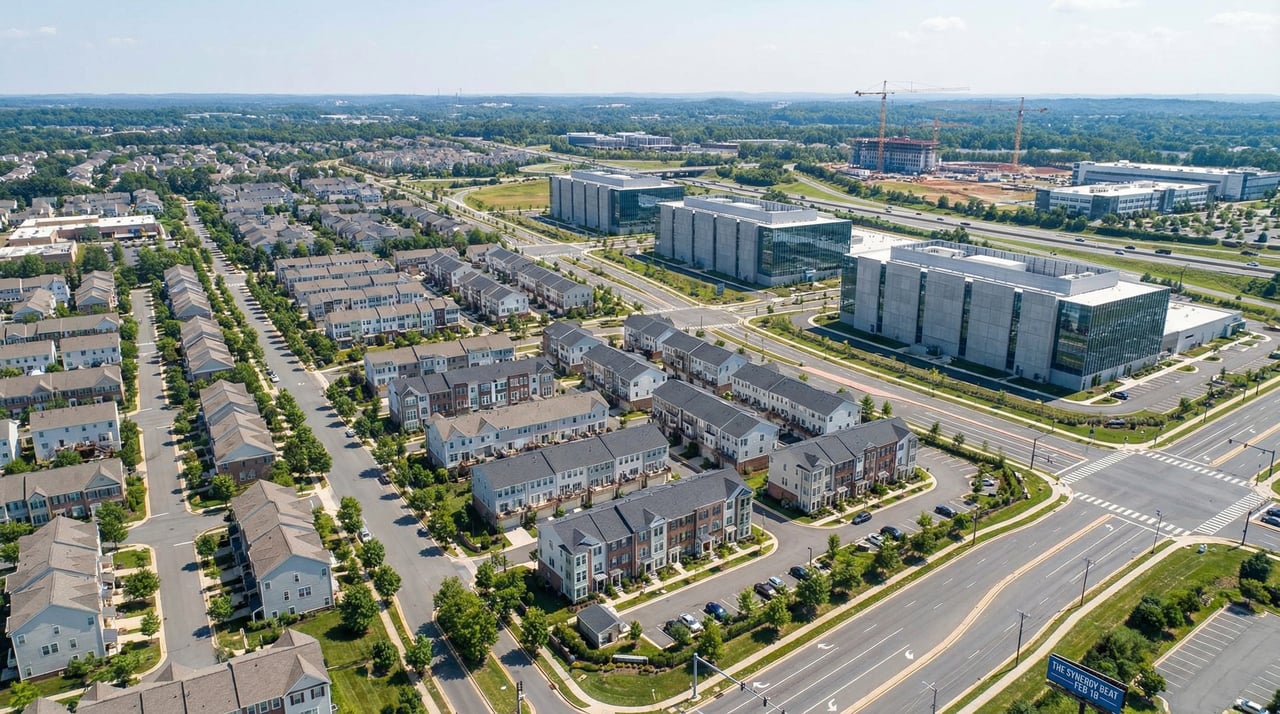
The Synergy Beat Weekly Roundup: Fed Cuts, Inventory Surges, and the New Tech Landscape
SUBTITLE: Stay ahead of the market with expert insights, real-time data, and stories shaping the Washington D.C., Maryland, and Virginia real estate landscape.
WEEKLY SNAPSHOT
The "Soft Landing" has officially evolved into a "Rate-Cut Reality." With the Federal Reserve delivering its third consecutive cut this week, the cost of capital is easing, yet the local picture remains sharply divided. While Northern Virginia’s tech corridor shows resilience, the District is grappling with a historic inventory spike driven by federal sector shifts. The vibe? Opportunistic Caution. Buyers have leverage we haven’t seen in years, particularly in D.C. proper, while sellers in the suburbs hold steady ground.
TOP HEADLINES
-
Fed Cuts Rates Again: Central bank lowers target range to 3.50%-3.75% amid softening labor data.
-
DC Inventory Spike: Listings in the District skyrocket 60% year-over-year following federal restructuring.
-
Mortgage Rates Stabilize: 30-year fixed rates hover in the low 6% range, offering stability but not a freefall.
-
NoVA Data Center Boom: Commercial demand in Northern Virginia continues to outpace the region, buffering residential values.
-
White House AI Order: New executive action blocks state-level AI regulation, signaling a "Green Light" for tech hubs.
DETAILED REPORTS
1. The Fed’s "December Gift": A Third Rate Cut
What Happened: The Federal Reserve concluded its final meeting of 2025 by lowering the federal funds rate by 25 basis points to a target of 3.50%-3.75%. This marks the third cut this year. The decision wasn't unanimous—three dissenters argued for a pause—but Chair Powell cited a "cooling labor market" (unemployment ticked up to 4.4%) as the primary driver.
Why It Matters: The Fed is pivoting from fighting inflation to protecting jobs. For the economy, this signals that the "high rate" era is effectively over, but it also validates concerns about a slowing economy.
What This Means:
-
Buyers: Cheaper money is on the horizon, but lenders are already pricing this in. Don't expect a sudden drop to 4%; expect stability.
-
Sellers: Lower rates bring more buyers off the sidelines, but the economic "softness" means pricing power is capped.
-
Investors: The cost of leverage is falling. It’s time to underwrite deals that didn't pencil out six months ago.
2. The D.C. Inventory Shock
What Happened: In a stunning divergence from national trends, housing inventory in the Washington D.C. metro area—specifically the District—has spiked nearly 60% year-over-year. Analysts attribute this flood of listings to recent federal sector layoffs and the ripple effects of the Q4 government shutdown.
Why It Matters: This is a localized supply shock. While national inventory is creeping up slowly, D.C. is suddenly awash in options, shifting the balance of power dramatically.
What This Means:
-
Buyers: You have the upper hand. Time on market has increased by over 30%. Negotiate hard on contingencies and price.
-
Sellers: If you don't have to sell, consider holding. If you do, your home must be pristine and priced aggressively to compete.
-
Investors: This is a prime "buy box" moment for acquiring distressed or sitting inventory in the city.
3. Mortgage Rates: The "New Normal" in the Low 6s
What Happened: Despite the Fed’s cut, the 30-year fixed mortgage rate held steady, averaging around 6.12% - 6.22% this week. The market had already anticipated the Fed's move.
Why It Matters: We are seeing the stabilization of borrowing costs. The volatility of 2024 is fading, providing predictability for long-term planning.
What This Means:
-
Buyers: Rate lock certainty is better than gambling on further drops. If the numbers work now, move.
-
Sellers: The buyer pool is accustomed to these rates. The "rate shock" paralyzing the market is dissipating.
-
Investors: Stability allows for accurate cap rate projections. Refinance opportunities may open up in mid-2026.
4. The Tale of Two Markets: NoVA vs. D.C. Office
What Happened: Commercial real estate reports this week highlight a stark contrast: Northern Virginia’s data center market is seeing record demand and low vacancy, while D.C.’s office sector struggles with high vacancy and "slow absorption."
Why It Matters: Commercial trends drive residential demand. The robust jobs market in NoVA (Ashburn, Reston, Tysons) supports strong home prices there, while D.C.'s office slump weighs on the downtown condo market.
What This Means:
-
Buyers: NoVA suburbs remain competitive due to strong employment anchors.
-
Sellers: In NoVA, highlight proximity to tech hubs. In D.C., market the lifestyle over the commute.
-
Investors: Follow the jobs. Single-family rentals in Fairfax and Loudoun Counties are effectively hedged by the tech sector's strength.
5. Wildcard: The AI Executive Order
What Happened: The White House signed an executive order this week blocking individual states from crafting their own AI regulations, arguing that a "patchwork" of laws would stifle American innovation.
Why It Matters: This is a massive deregulatory signal for the tech industry. As a global tech hub, the DMV (especially the Dulles Tech Corridor) stands to benefit from increased venture capital confidence and corporate expansion.
What This Means:
-
Buyers/Sellers: A booming local tech sector means high-income earners entering the market. This supports long-term appreciation in tech-heavy zip codes.
-
Investors: Watch for commercial spillover effects in mixed-use developments near Metro stops in Virginia.
INVESTOR INSIGHT OF THE WEEK
The "Federal Flight" Opportunity: The inventory surge in D.C. is a classic market dislocation. With federal restructuring causing a temporary exodus or hesitation, D.C. condos and rowhomes are seeing price softening. This is a contrarian buy signal. While the headlines scream "glut," the long-term fundamentals of the Capital remain.
Bold Takeaway: Acquire Grade-A assets in D.C. proper while the "fear premium" is high; cash flow might be tight today, but appreciation will return as the federal dust settles.
THE SYNERGY SYNTHESIS (THE MARKET VERDICT)
The DMV market is currently defined by bifurcation. On one side of the Potomac, Northern Virginia is operating with the efficiency of a growth stock—fueled by data centers, tech policy tailwinds, and suburban demand. On the other side, the District is facing a "value correction" driven by federal employment shifts and an inventory glut. Maryland remains the steady middle ground, with tight inventory in Bethesda and Chevy Chase keeping prices firm.
The Fed’s continued easing provides a safety net, ensuring demand doesn't collapse, but it won't ignite a boom overnight. We are entering a period where micro-location matters more than macro-trends. A townhouse in Reston faces completely different pressures than a condo in Shaw.
Forecast:
-
Opportunity: D.C. Buyers. The next 60 days represent the best leverage buyers have had in the District since 2010.
-
Risk: Overpricing in the Suburbs. Sellers in MD/VA must be careful not to overplay their hand; buyers are price-sensitive despite lower rates.
WHY IT MATTERS
| Role | Strategic Recommendation (This Week) |
| Buyer | Aggressive in D.C., Decisive in NoVA. Use the inventory glut in the city to negotiate price cuts. In the suburbs, move quickly on quality inventory. |
| Seller | Price for the Current Rates, Not Future Cuts. Stability is here. If you are in D.C., stage impeccably to stand out in the crowded market. |
| Investor | Look for "Federal Distress." Target multifamily or condos in D.C. where owners need liquidity. Avoid speculative office assets. |
With data as our compass and community as our core, The Synergy Group of Compass helps clients navigate these complex currents to build lasting wealth. Whether you're capitalizing on D.C.'s buyer market or leveraging NoVA's growth, we are your strategic partners.