The Cost of War: How the Strait of Hormuz Is Repricing the DMV Spring Market
Stay ahead of the market with expert insights, real-time data, and stories shaping the Washington D.C., Maryland, and Virginia real estate landscape.
Weekly Snapshot
The spring buying window that opened when mortgage rates briefly dipped below 6% in late February is now closing fast. The U.S.-Israel strikes on Iran that began February 28 have effectively blocked 20% of global oil supply through the Strait of Hormuz, sending oil above $114 per barrel and reigniting inflation fears that are pushing Treasury yields, and with them mortgage rates, steadily higher. Freddie Mac's April 2 PMMS recorded the 30-year fixed rate at 6.46%, its highest level in seven months, up from 5.99% just five weeks ago.
Inside the DMV, two distinct dynamics are running simultaneously. The federal property portfolio is actively being liquidated, with GSA's first completed DC building sale closing at $24 million last month, signaling a structural shift in downtown supply. Meanwhile, Bright MLS continues to project Washington DC as the only Mid-Atlantic market expected to see price declines in 2026, driven by sustained federal workforce uncertainty. This is not a frozen market. It is dividing by submarket, price tier, and property type.
Top Headlines
The Iran War pushes the 30-year mortgage rate to 6.46%, a 7-month high, eliminating five weeks of affordability gains at the peak of spring buying season.
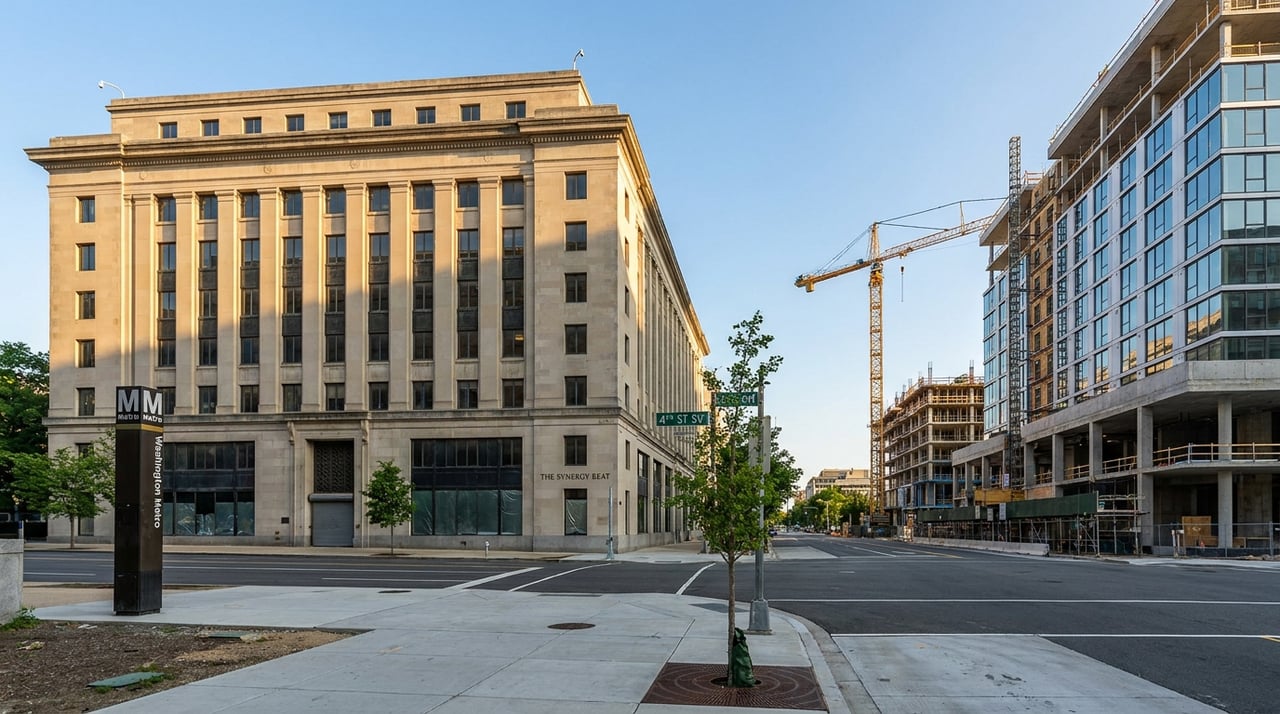
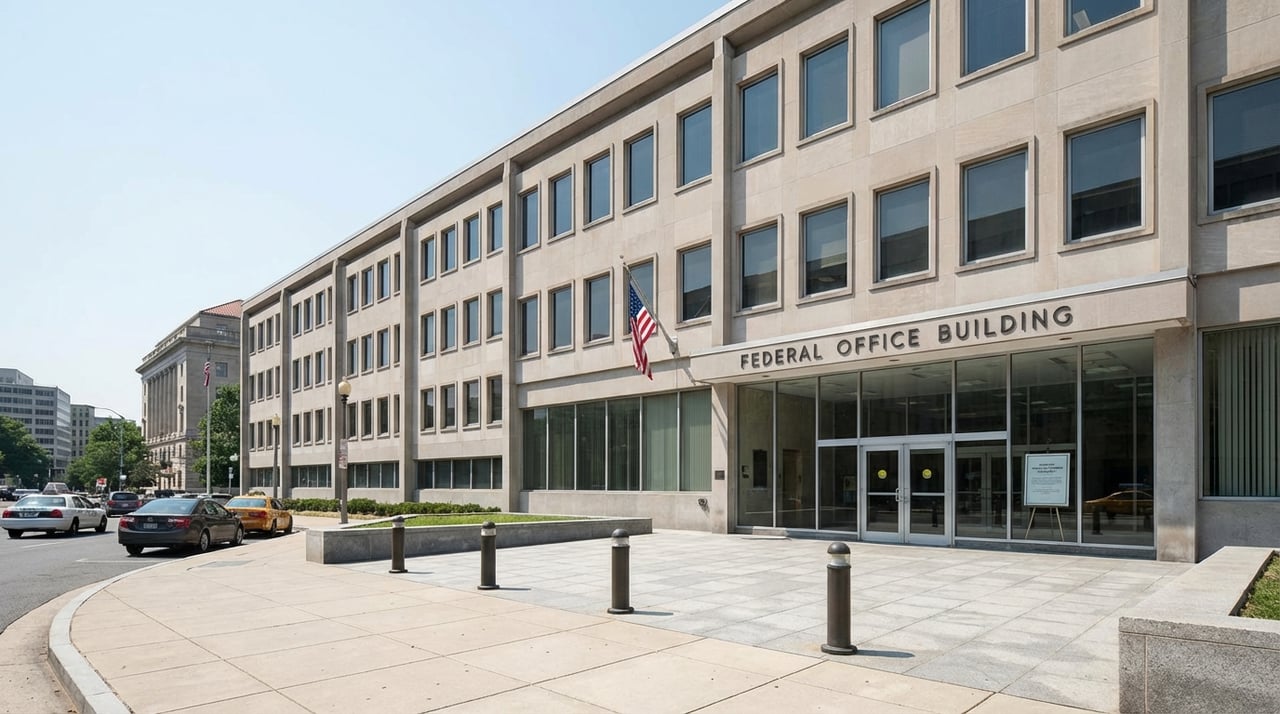
GSA sells a former DHS 940,000-SF DC campus for $24M, with 16 more federal buildings on the accelerated disposition list.
Bright MLS projects DC median prices down roughly 1% in 2026, the only Mid-Atlantic market in negative territory, as federal workforce uncertainty suppresses urban demand.
NAHB confirms tariffs now add an estimated $10,900 to the average new home build cost, with Canadian lumber at a 45% tariff and kitchen cabinet duties at 50%.
The Strait of Hormuz blockade, the largest oil supply disruption in market history per the IEA, eliminates near-term Fed rate cut probability and locks in a rate holding pattern through 2026.
Detailed Reports
Story 1: Iran War Sends the 30-Year Mortgage Rate to 6.46%, Reversing Five Weeks of Affordability Progress
What happened. Freddie Mac's Primary Mortgage Market Survey for the week ending April 2, 2026 recorded the 30-year fixed-rate mortgage at 6.46%, up from 6.38% the prior week and 47 basis points above the 5.99% briefly achieved in late February, immediately before U.S. and Israeli forces launched coordinated strikes against Iran on February 28. The resulting Strait of Hormuz closure has disrupted approximately 20% of global oil supply, pushing Brent crude above $114 per barrel. Rising energy prices have reignited inflation expectations, pushing 10-year Treasury yields higher and widening the mortgage-to-Treasury spread by approximately 20 basis points. The March jobs report, 178,000 new jobs, nearly triple consensus expectations, has removed near-term Fed rate cut probability. The CME FedWatch Tool shows a 79% probability the Fed holds rates flat through the remainder of 2026.
Why it matters for the DMV. February and early March data from the Mortgage Bankers Association showed purchase application activity climbing as rates dipped below 6%. That momentum has been interrupted. Every 25 basis points added to the 30-year rate removes approximately $40 to $50 of monthly purchasing power on a $600,000 loan, roughly the entry price for a competitive Montgomery County or Northern Virginia single-family home. A 47-basis-point reversal erases a meaningful share of the affordability recovery that had been driving renewed buyer activity. The lock-in effect, gradually releasing as sellers adjusted to a higher-rate world, is also at risk of reasserting itself if rates persist through April and May.
Who it impacts first. Buyers, since those who paused after an accepted offer now face higher costs than when they went under contract. Sellers, since spring momentum has weakened and more buyers will delay decisions or request concessions to offset rate increases.
Story 2: Bright MLS Confirms DC Is the Lone Mid-Atlantic Market Projected for Price Decline in 2026
What happened. Bright MLS, the primary listing service for the Mid-Atlantic region, projects that the Washington DC metro area will see approximately a 1% decline in median home prices in 2026, the only negative forecast among major Mid-Atlantic markets. Philadelphia is projected up 2.8%, Baltimore up 2.5%, and even the Fredericksburg and North Central Virginia corridor up 1.5%. Bright MLS Chief Economist Lisa Sturtevant has attributed weaker DC demand primarily to ongoing federal government uncertainty. Active listing inventory in DC is up approximately 33% year over year, with average days on market extending to 45 to 70 days. Sales volume, however, is projected to rise 8 to 10% as buyers who have been waiting return with negotiating leverage. Northern Virginia's Fairfax County is tracking materially differently, with pending contracts up more than 13% year over year.
Why it matters for the DMV. The divergence between DC proper and its suburbs is the defining structural story of the 2026 DMV market. DC urban condos, concentrated in neighborhoods with high percentages of federal workers, are experiencing genuine price softening alongside significant inventory expansion. This is a buyer's market in select DC zip codes. Fairfax County and well-located Montgomery County submarkets, meanwhile, are holding pricing power because their buyer pools are less exposed to the federal employment variable. DC sellers pricing off 2024 comps need to reconcile with data that says spring 2026 is not rescuing that strategy.
Who it impacts first. Sellers, since DC condo and urban rowhouse sellers face the most pricing pressure. Buyers, since DC urban buyers have rare negotiating leverage in neighborhoods that remained consistently competitive for the past four years.
Story 3: GSA Completes First DC Federal Building Sale, a 940,000-SF Former DHS Campus at $24M
What happened. The General Services Administration completed the sale of a 940,000-square-foot Washington, DC office complex at the end of March 2026, confirming the federal government's first closed transaction under its accelerated property disposition program. The building, a former Department of Homeland Security operational hub vacant since March 2025, was purchased by Dalian Development, a DC-based real estate firm operating through its Delaware affiliate Lakeville Ventures, for approximately $24 million. The deal closed in roughly 60 days from contract to settlement. GSA Administrator Edward Forst cited over $200 million in deferred maintenance savings and $5.5 million in annual operating cost reductions. The buyer has publicly stated plans to convert the campus into residential, retail, and entertainment uses. GSA has since placed 16 additional buildings on its accelerated disposition list.
Why it matters for the DMV. A 940,000-square-foot federal campus converting to mixed-use residential is not a routine transaction. It is a supply event. DC proper is already experiencing inventory expansion tied to federal workforce uncertainty. The conversion of underutilized federal office stock through the GSA disposition pipeline now adds a second supply channel that did not exist 12 months ago. For existing DC condo owners in adjacent neighborhoods, a larger residential supply pipeline is a direct pricing headwind. For investors and developers, the program creates acquisition opportunities at below-market entry points, but conversion risk at current financing costs requires careful project underwriting.
Who it impacts first. Investors and developers, since DC urban residential conversion plays now have a federal property pipeline to monitor. Existing DC urban condo buyers should be aware that new supply is entering the pipeline through an unconventional channel.
Story 4: NAHB Confirms Tariffs Now Add $10,900 to Average New Home Build Cost, Supply Pipeline Compressing
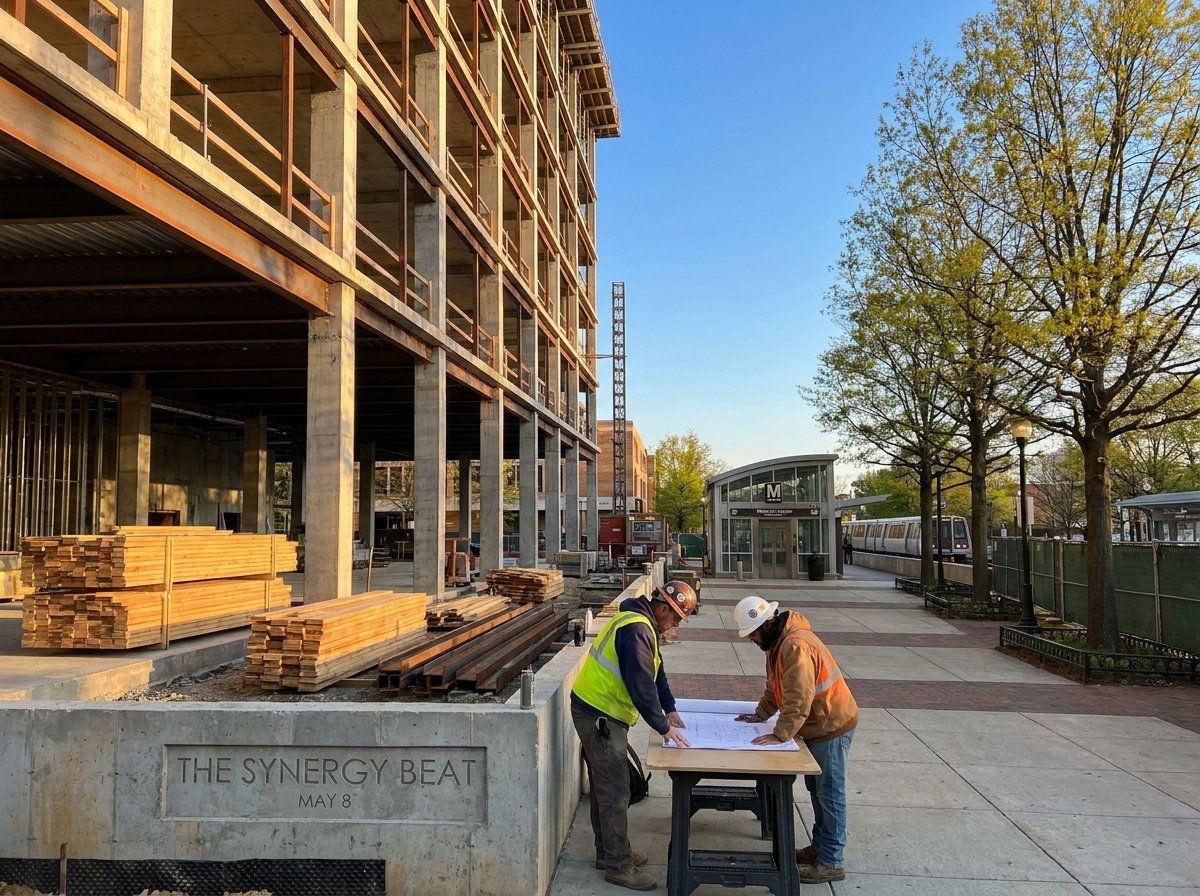
What happened. The National Association of Home Builders, tracking tariff impacts through its Wells Fargo Housing Market Index surveys, has confirmed an average builder estimate of $10,900 in per-home cost increases attributable to tariff actions. The tariff landscape driving this includes a 45% combined tariff rate on Canadian softwood lumber, 50% duties on kitchen cabinets and vanities, Section 232 tariffs on steel and aluminum, and elevated costs on drywall, appliances, and windows. NAHB reports that supplier prices have risen an average 6.3% in response to announced and enacted tariff measures. Building material costs have now risen approximately 40% cumulatively since December 2020. NAHB has not released a revised per-home estimate since tariff rules have continued to evolve, a reflection of the ongoing uncertainty that is itself a primary source of builder hesitation.
Why it matters for the DMV. New construction is the only structural mechanism to expand housing supply at scale. In Northern Virginia, residential construction permits declined more than 10% in 2025 year over year. Tariff-driven cost increases compound that pressure directly. When a builder adds $10,900 or more in material costs, projects either get repriced upward, face margin compression, or get shelved entirely. For the DMV, a market where existing inventory remains well below pre-pandemic norms, any further compression of the new construction pipeline extends the supply deficit that is currently supporting prices in NoVA and Montgomery County despite softening demand elsewhere.
Who it impacts first. Builders and developers, since margin compression and cost uncertainty are chilling new project starts. Buyers, since fewer new construction options at attainable price points appear in suburban growth corridors.
Story 5: The Strait of Hormuz Closure Is the Largest Oil Disruption in Market History, Locking In a Rate Freeze
What happened. The International Energy Agency has characterized the closure of the Strait of Hormuz, which followed the February 28 U.S.-Israel strikes on Iran, as the largest supply disruption in the history of the global oil market. The strait carries approximately 20% of global oil and LNG supply. Oil is trading near $115 per barrel as of this week, with President Trump's deadline to Iran expiring tonight at 8 PM ET. Global central banks, including the European Central Bank, have already postponed planned rate reductions in response to the energy inflation shock. In the U.S., a March payroll report showing 178,000 new jobs, nearly triple expectations, has reduced the Fed's urgency to cut even absent inflation concerns. The 10-year Treasury yield remains near 4.46%, directly pressing mortgage rates. Bond markets are selling off globally, reducing capital flows into rate-sensitive assets.
Why it matters for the DMV. This story earns its slot because it directly determines the rate trajectory for 2026, the primary variable driving buyer behavior, seller decisions, and investor calculus across the DMV. The DMV has historically been one of the most defensible real estate markets during national economic turbulence, because federal employment and defense contracting provide income stability that most metros lack. That stability premium is real, but it does not immunize buyers from higher borrowing costs. If the conflict extends, oil stays elevated, and the Fed holds flat, the window for the 5.9% to 6.2% mortgage rate range, in which buyer activity measurably improved, stays closed. Capital rotating toward safety globally may historically favor DMV residential assets, but not at the price of a 47-basis-point rate reversal during peak buying season.
Who it impacts first. Investors, since the flight-to-safety dynamic reinforces the long-term case for DMV income-producing residential assets, but near-term financing costs remain headwinds. Buyers, since rate relief is not coming this quarter, and decisions should be structured around rates in the 6.25% to 6.75% range through at least mid-2026.
Investor Insight of the Week
The convergence of the Iran-driven oil shock, tariff-compressed new construction pipelines, and a jobs market too strong for the Fed to justify rate cuts has created a structural tightening in supply that most buyers and investors are underweighting. When new construction activity decelerates, and the current tariff math, financing costs, and builder hesitation all point toward deceleration, existing residential inventory becomes the primary vehicle for meeting demand. In Northern Virginia's Fairfax County, where pending contracts are already up 13% year over year and construction permits have been declining, that supply math is already resolving in favor of sellers and long-term holders. For investors analyzing DMV acquisition targets in 2026, the calculus is shifting. Paying today's price with today's rate in a market where new supply is being structurally suppressed may prove more defensible than waiting for rate relief that the macro environment is not currently permitting. The best entry point is not always the lowest rate. It is the point at which supply constraints are still building and competition has not yet caught up.
The Synergy Synthesis
The DMV housing market is operating in two distinct registers this spring, and confusing them is where buyers and sellers make expensive mistakes. In DC proper, particularly the condo market inside the beltway, a combination of federal workforce uncertainty, rising inventory (up 33% year over year), and extended days on market (45 to 70 days, up from 25 to 30 at peak) has produced genuine buyer leverage for the first time in years. DC condo buyers in the $450,000 to $700,000 range are encountering reduced competition, price concessions, and sellers who are negotiating. That window is real, and it is not yet crowded.
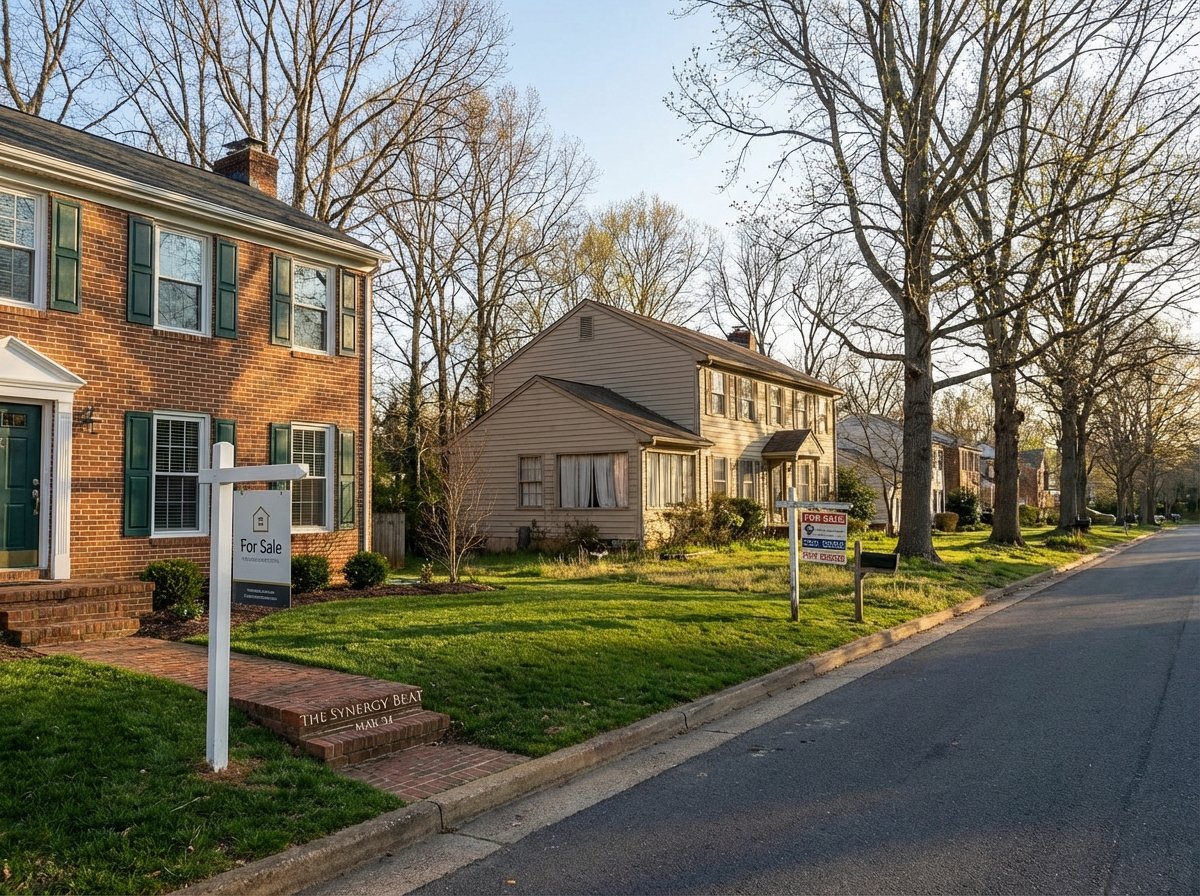
The suburbs tell a different story. In Fairfax County, and in the best-located Montgomery County submarkets including North Bethesda, Rockville, and the Chevy Chase corridor, pending contract activity is climbing and days on market remain compressed. These are markets where the buyer pool is less exposed to federal employment volatility, where school systems and commute access anchor demand independently of government payroll, and where new construction supply is thinning due to tariff and financing headwinds. Sellers in these submarkets who price correctly are not experiencing the softening dominating DC condo headlines.
The risk for buyers across the entire DMV is rate volatility driven by events, oil shocks, jobs data, and geopolitical escalation, that are structurally beyond the housing market's control. The opportunity for sellers in the suburban SFH tier is a narrowing inventory advantage that may persist through Q2 2026 before any new supply enters the pipeline. Investors who have been waiting for rate capitulation should consider that the market is not offering that trade this quarter. What it is offering is supply scarcity in established suburban submarkets at a price that may look conservative by Q4 if the conflict persists.
What This Means for You
If you're buying, DC urban condo buyers have the clearest near-term leverage. Inventory is up, days on market have doubled, and sellers are negotiating in the $450K to $700K tier. In Fairfax County and MoCo SFH markets, competition remains stronger. Get pre-approved now, rate-lock strategically, and do not wait for rate relief the current macro environment is not delivering.
If you're selling, in DC condos, price off current data, not 2024 comps. Overpriced DC condo inventory is sitting 45 to 70 days with growing competition. Suburban SFH sellers in Fairfax, North Bethesda, and the Chevy Chase corridor retain a pricing advantage, but the spring window is active now, not in July.
If you're investing, the supply compression story is the thesis. Tariffs, declining permits, and a frozen new construction pipeline are narrowing the available inventory base in the suburbs. Existing residential in Fairfax County and the MoCo commuter corridor is positioned as a supply-scarce asset with federal employment anchoring rental demand. The GSA disposition pipeline is a secondary acquisition channel worth monitoring for DC urban conversion plays.
If you're building, federal property disposition creates a non-traditional acquisition channel in DC: GSA-originated building sales at below-market entry pricing, with residential conversion as the end state. The $24M former DHS campus transaction is the first of many that administrators have signaled. High tariff costs and financing headwinds require substantial capitalization and realistic development timelines.
With data as our compass and community as our core, The Synergy Group of Compass helps clients read a market operating in two registers at once, so the leverage in one submarket and the scarcity in another both become clear before a decision is made. When the same region is a buyer's market on one block and a seller's market thirty minutes away, having someone who reads the split every day by your side is what keeps you from bringing the wrong strategy to the wrong street.