Weekly Snapshot
This week delivered a concrete illustration of a theme building for months: the federal government's physical and economic footprint in the DMV is actively contracting — and the market is beginning to price that in. The GSA's ongoing liquidation of federal buildings, combined with a DC Council hearing this week confirming Commanders Stadium construction begins in Q2, signals that the capital is entering a structural transition. Mortgage rates remain near a three-year low at 6.00%, offering a technical window of opportunity — but that window is being narrowed by persistent construction cost inflation driven by tariffs, and by broader economic uncertainty tied to the Iran conflict. The question buyers and investors must now answer is not whether the DMV is changing, but which submarkets are absorbing that change and which are quietly repricing downward.
Top Headlines This Week
- DC Council Oversight Hearing Confirms Commanders Stadium Groundbreaking on Schedule for Q2 2026 — Demolition complete, site cleared, 6,000 residential units planned
- GSA Puts USDA's 2.1M SF National Mall Building Up for Sale — Federal real estate liquidation strategy takes another significant step
- 30-Year Fixed Mortgage Rate Holds at 6.00% — Near three-year low, but Iran War inflation fears are pushing rates back up from brief sub-6% territory
- NAHB: Tariffs Now Adding $7,500–$10,900 to the Cost of Every New Home — Steel, lumber, and copper duties structurally constrain new supply
- Iran War Economic Fallout Introduces New Inflation Variable into Housing Market — Energy and materials uncertainty clouds rate trajectory for spring
Detailed Reports
STORY 1 — DMV-DIRECT
Commanders Stadium Construction Confirmed On Schedule; DC Council Presses for Housing Delivery Transparency
What Happened
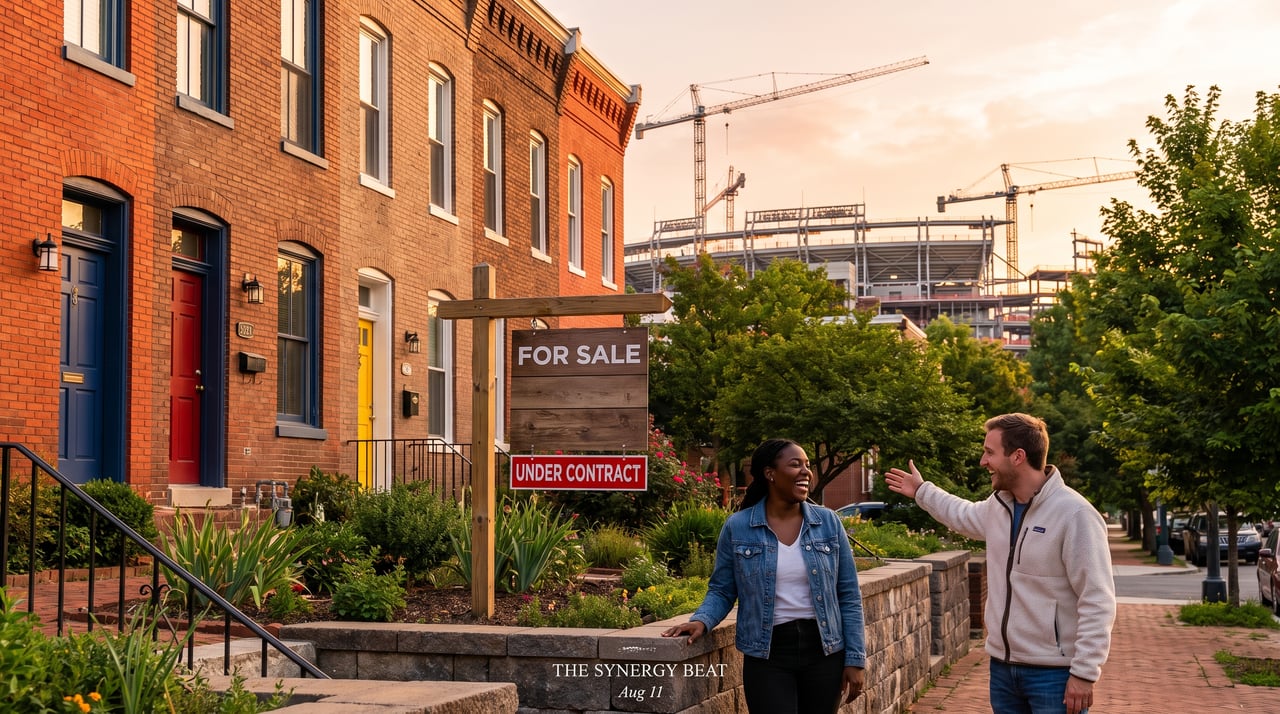
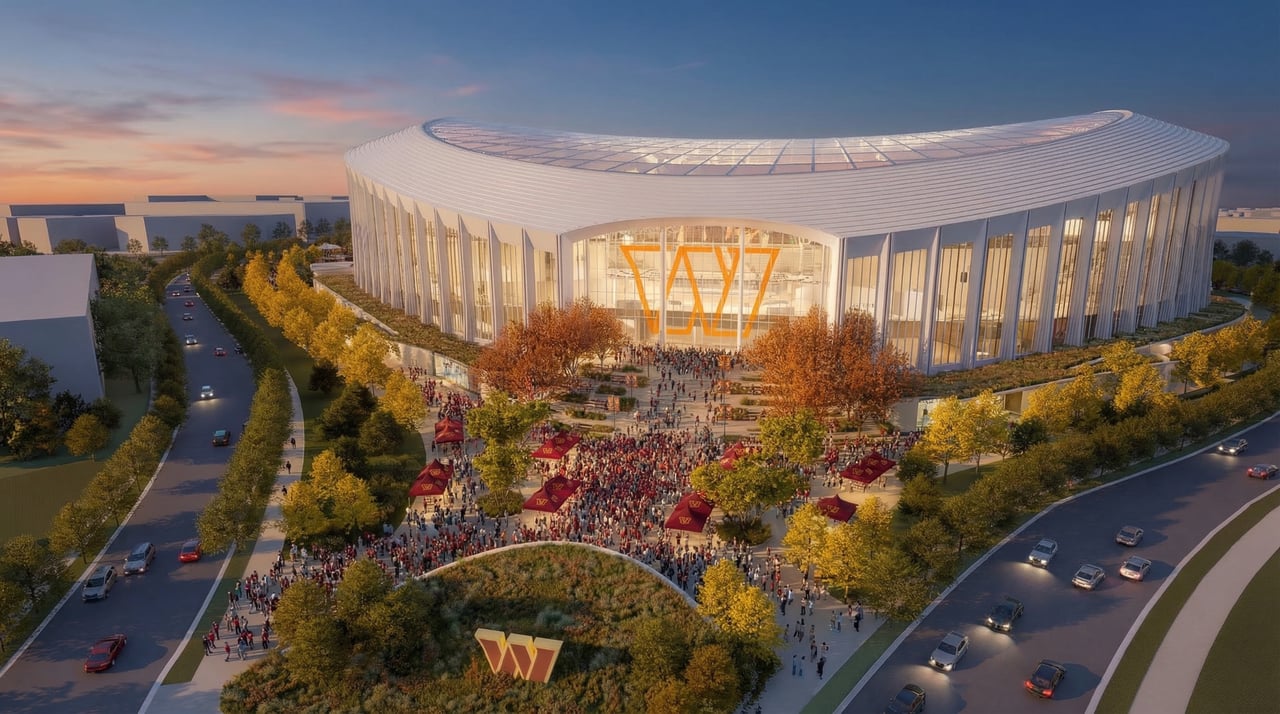
At a March 4 DC Council oversight hearing, the project executive for the RFK Campus confirmed that demolition of the former stadium is complete and the site is being leveled ahead of a Q2 2026 groundbreaking. The 180-acre development — the largest single private investment in DC history at $3.7 billion — includes the stadium plus 5,000–6,000 new residential units (at least 30% affordable), retail, hospitality, and park infrastructure. The stadium is projected to open in 2030. Separately, Mayor Bowser has explicitly positioned the project as DC's strategic pivot away from over-reliance on the federal government and its workforce as the economic anchor for the city.
Why It Matters (DMV Lens)
The RFK campus represents the single largest catalyst for real estate value creation in eastern DC in a generation. The Hill East and surrounding Capitol Hill corridor markets have largely been waiting for this catalyst. As the construction phase begins, proximity plays — Hill East, Stadium-Armory Metro area, Kingman Park — become increasingly viable for long-horizon investors.
Who It Impacts First
Investors. Buyers patient enough to absorb 3–4 years of construction noise in exchange for significant equity upside in an undersupplied waterfront corridor.
STORY 2 — DMV-DIRECT
GSA Moves to Sell USDA's Landmark National Mall Headquarters; Federal Building Liquidation Accelerates
What Happened
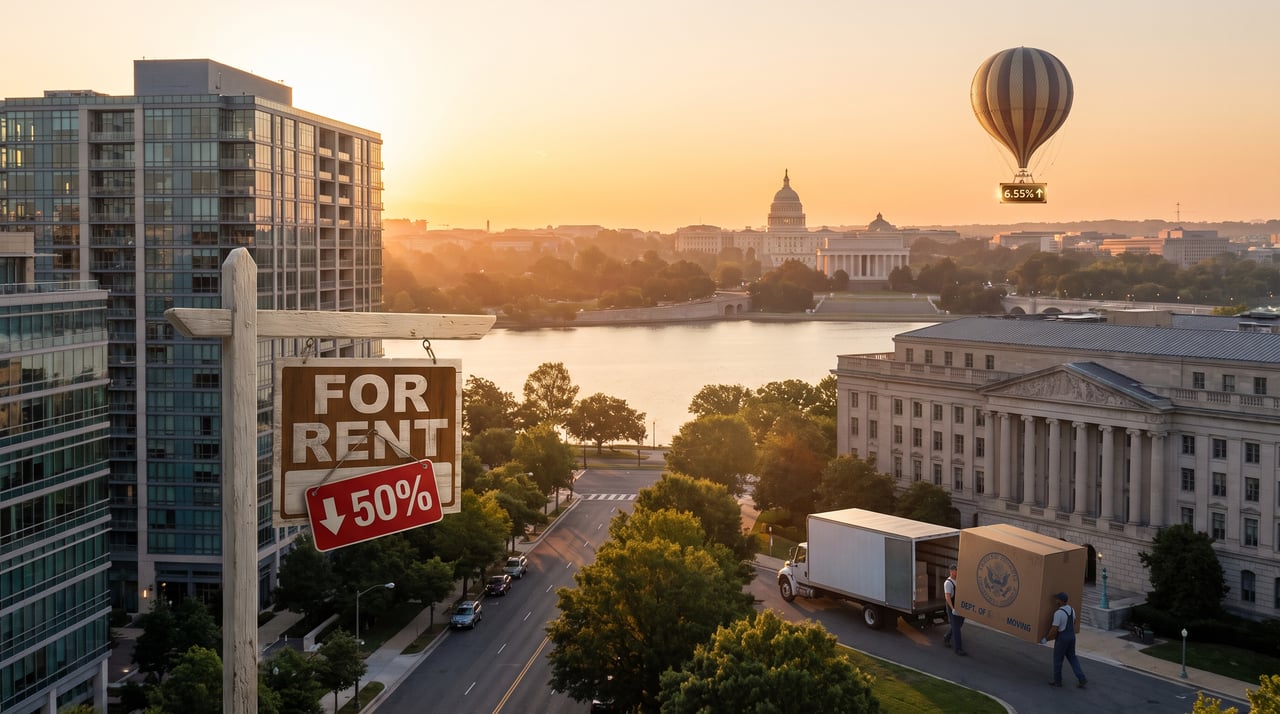
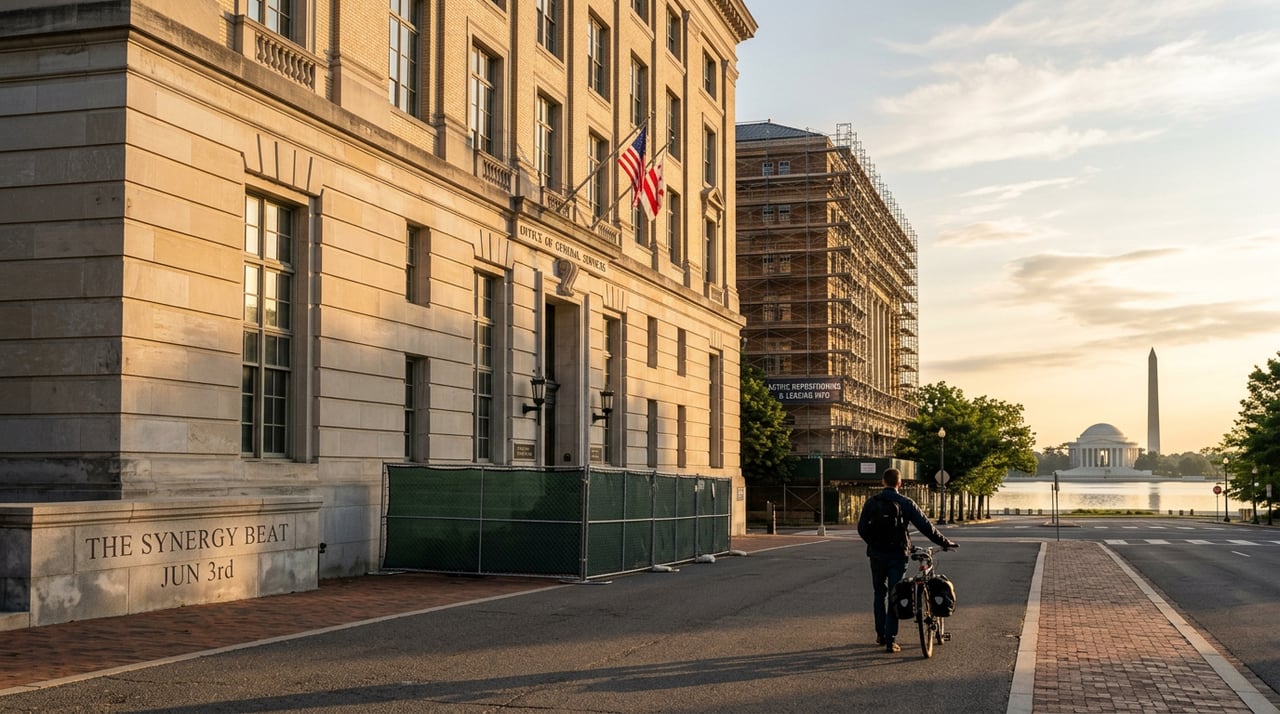
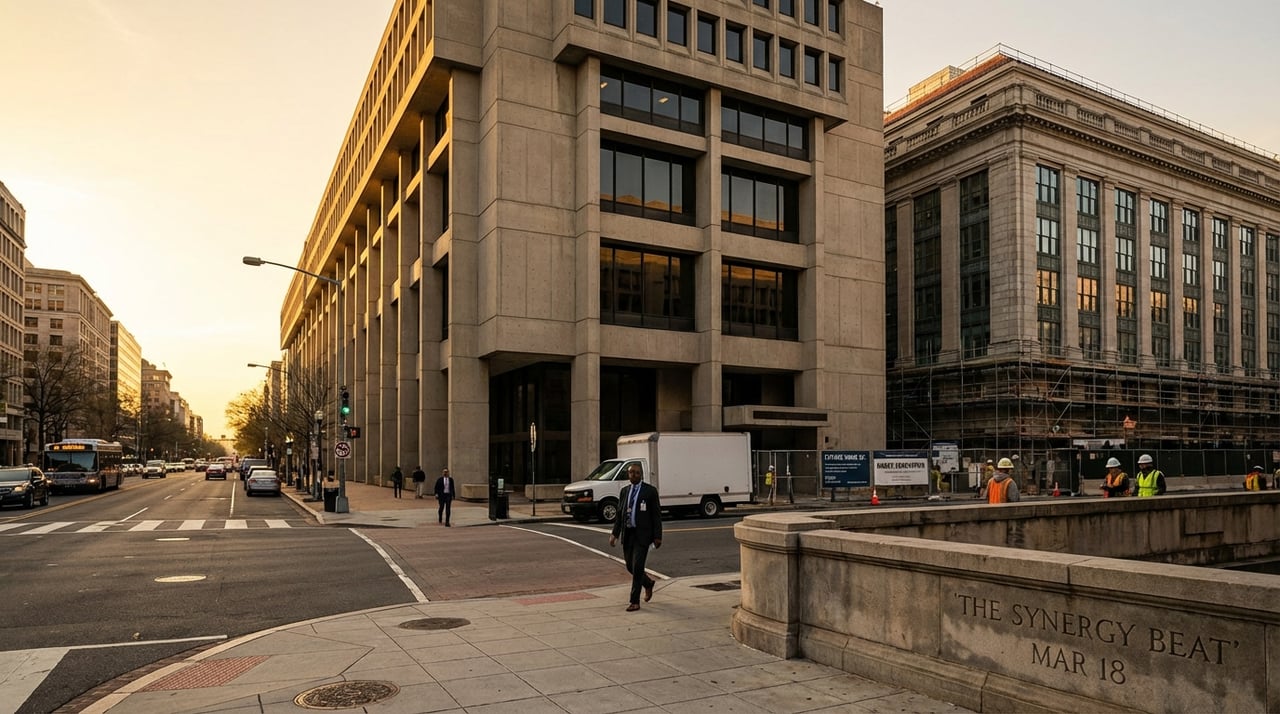
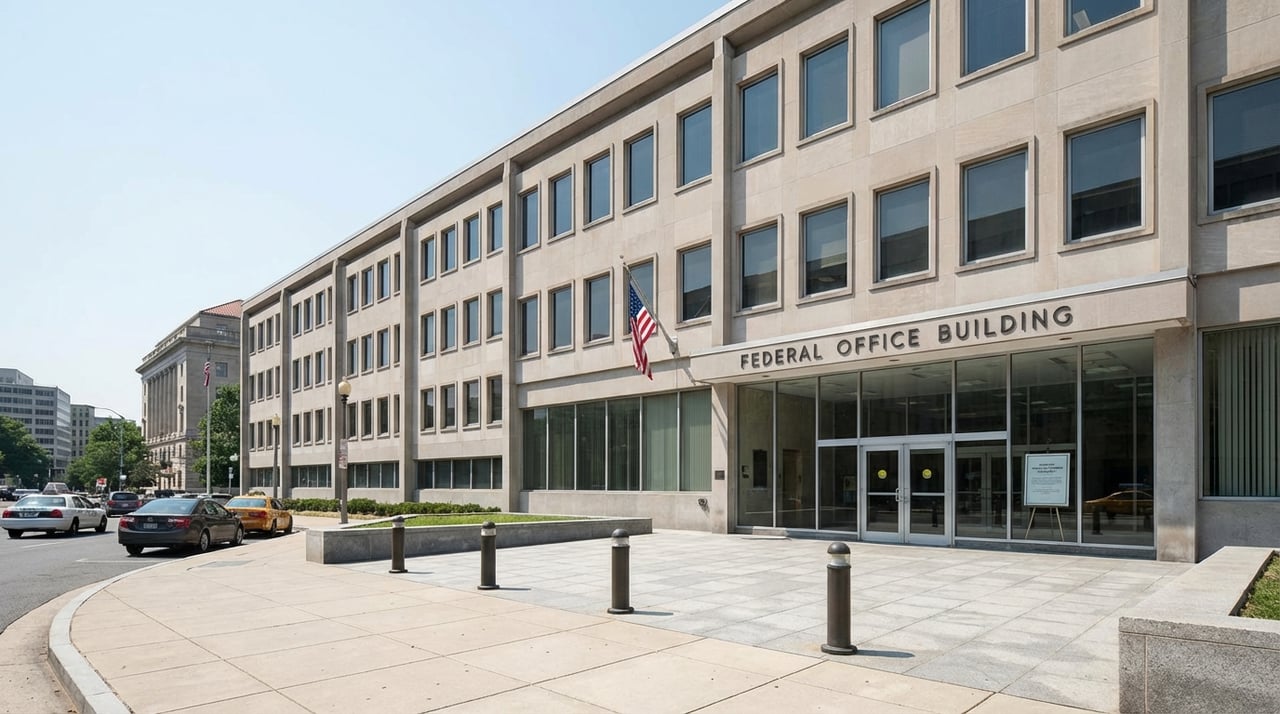
On February 26, GSA formally listed the USDA South Building — a 2.1 million square-foot property at 1400 Independence Ave SW — for accelerated disposition, citing $1.6 billion in deferred maintenance and greater than 85% vacancy. The agency said USDA staff will be relocated to hubs in North Carolina, Missouri, Indiana, Colorado, and Utah. GSA Administrator Edward Forst testified on Capitol Hill on March 4 that the federal real estate strategy is deliberate but moving — with a portfolio that needs tens of billions in repairs and a mandate to colocate agencies and shed underperforming assets. The GSA's active disposition list includes the Forrestal Building, the Wilbur J. Cohen Building, the HUD headquarters, and dozens of additional properties across DC, Maryland, and Virginia.
Why It Matters (DMV Lens)
The federal government is permanently reducing its footprint in the urban core. Every building cleared creates both a commercial redevelopment opportunity and a net reduction in daily foot traffic for surrounding residential and retail. For DC sellers whose neighborhoods derive demand from federal employment proximity — L'Enfant Plaza, Federal Triangle corridor, Southwest Waterfront — this is a structural headwind. For investors with appetite for adaptive reuse, it represents rare land and air rights opportunities in protected corridors.
Who It Impacts First
Sellers in federal-employment-dense neighborhoods. Investors tracking adaptive reuse or long-cycle commercial redevelopment.
STORY 3 — U.S. NATIONAL
30-Year Mortgage Rate Holds at 6.00% — At Three-Year Low But Vulnerability Emerging
What Happened
Freddie Mac's March 5 Primary Mortgage Market Survey put the 30-year fixed-rate mortgage average at 6.00%, slightly up from the prior week's 5.98%. Rates briefly dipped below 6% for the first time since 2022 in late February before inching back up. Mortgage rates edged back as economic uncertainty and inflation concerns tied to the Iran conflict returned to the market, pushing Treasury yields higher. Purchase and refinance application volume is up year-over-year. The broader downward trend in rates since May 2025 has been supported by Fannie Mae and Freddie Mac purchasing increasing volumes of mortgage-backed securities, keeping mortgage lending costs suppressed.
Why It Matters (DMV Lens)
The DMV buyer who has been parked on the sidelines waiting for sub-6% has their window. Rates at or just above 6% represent a meaningful improvement over the 6.6% buyers faced a year ago at this time — roughly $300–$400 per month less on a $700,000 loan. But the window is not guaranteed. Iran-driven inflation pressure is the new variable, and Fannie Mae and the MBA both forecast rates staying at or above 6% through end of 2026.
Who It Impacts First
Buyers — particularly move-up buyers in the $600K–$900K range in Montgomery County, Bethesda, and Northern Virginia who were rate-locked out of the market in 2024 and 2025.
STORY 4 — U.S. NATIONAL
Tariffs Now Structurally Adding $7,500–$10,900 to Every New Home — New Supply Is Quietly Getting Killed
What Happened
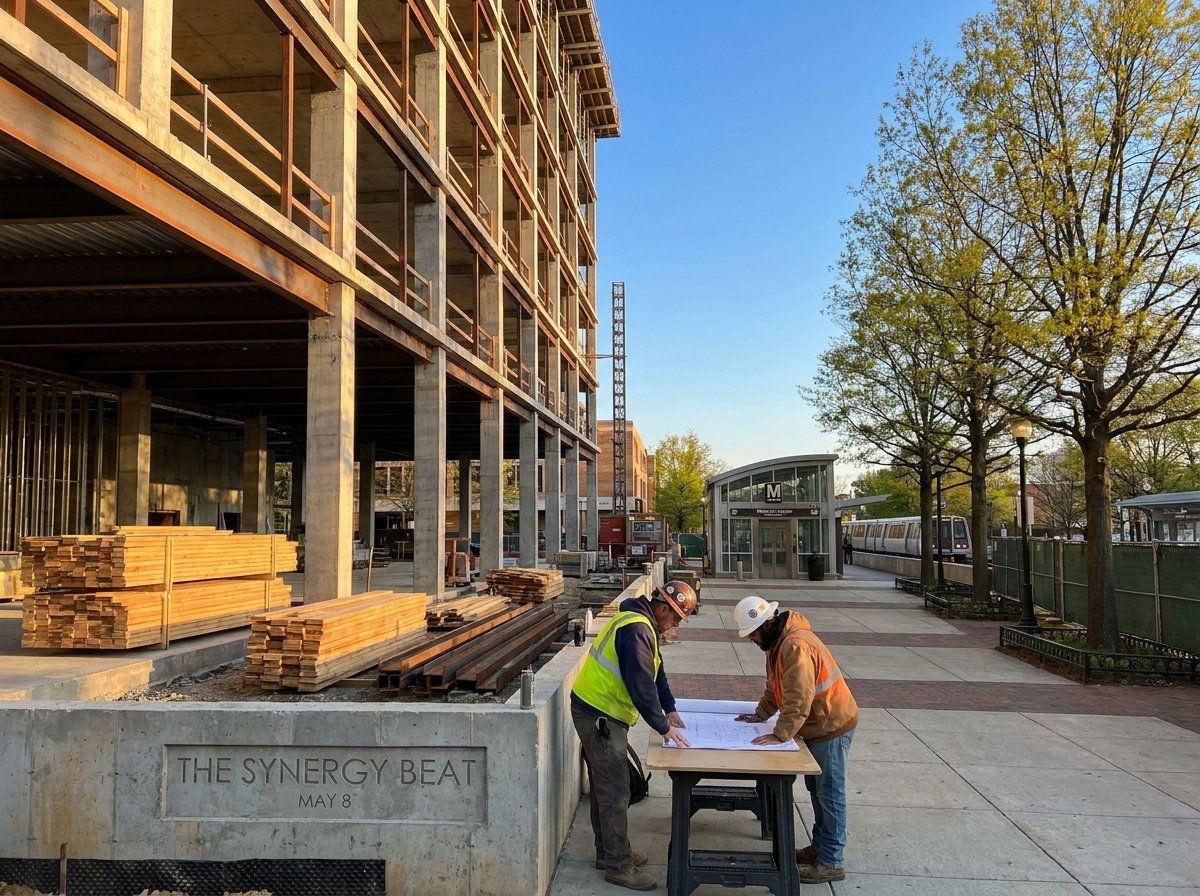
A 50% tariff on imported steel and aluminum went into effect in June 2025. A 50% tariff on semi-finished copper and derivative products began in August. Canadian softwood lumber — which accounts for approximately 85% of U.S. lumber imports — is now subject to a combined 45% duty rate. The National Association of Home Builders estimates tariff-driven cost increases are now adding between $7,500 and $10,900 to the cost of constructing a typical new home. Total construction materials costs rose approximately 4.2% in 2025 above 2024 levels, and aggregate construction costs are estimated to rise roughly 8% under current tariff policy conditions going into 2026.
Why It Matters (DMV Lens)
The DMV is a market chronically short of supply. New construction was supposed to be the correction mechanism in 2026. Instead, tariff-driven cost escalation is making new builds harder to pencil — particularly for mid-range product in Prince George's County, Loudoun County, and outer Maryland growth corridors where margin is thin and buyers are price-sensitive. Pre-construction buyers face longer timelines and higher final pricing. Investors evaluating new-build plays need to revisit pro formas built on 2025 material cost assumptions.
Who It Impacts First
Buyers of new construction. Developers underwriting pipeline projects. Sellers of existing homes, who benefit from reduced competitive pressure from new supply.
STORY 5 — GLOBAL SIGNAL
Iran War Introduces Sustained Inflation Uncertainty — The Variable No Spring Housing Market Forecast Priced In
What Happened
Freddie Mac's 30-year mortgage rate returned to 6% this week as fallout from the Iran conflict impacted markets, with Treasury yields rising on renewed inflation fears. While mortgage rates ticked back up to 6%, that remains considerably lower than the March 2025 rate of 6.6% — but Realtor.com's senior economist noted that economic uncertainty is not a position from which many people are interested in making the largest purchase of their life. Energy markets are also under pressure, with Gulf infrastructure targeted, raising the cost of transportation, manufacturing, and materials used in construction and home maintenance.
Why It Matters (DMV Lens)
The DMV has a government-anchored economy that is already absorbing the shock of DOGE-driven workforce reduction. Adding geopolitical uncertainty on top of that creates a compounding hesitation effect — particularly among buyers with federal employment or contracting exposure who are already in a wait-and-see posture. The silver lining: DC remains a geopolitical hub in a global conflict moment, which historically sustains federal agency staffing in defense, intelligence, and diplomatic functions. The risk is asymmetric — concentrated in civilian domestic agencies, not the national security apparatus.
Who It Impacts First
All segments, but most acutely buyers who were already hesitating. Sellers in high-inventory submarkets (DC proper) who were counting on spring to bring renewed demand.
Investor Insight of the Week
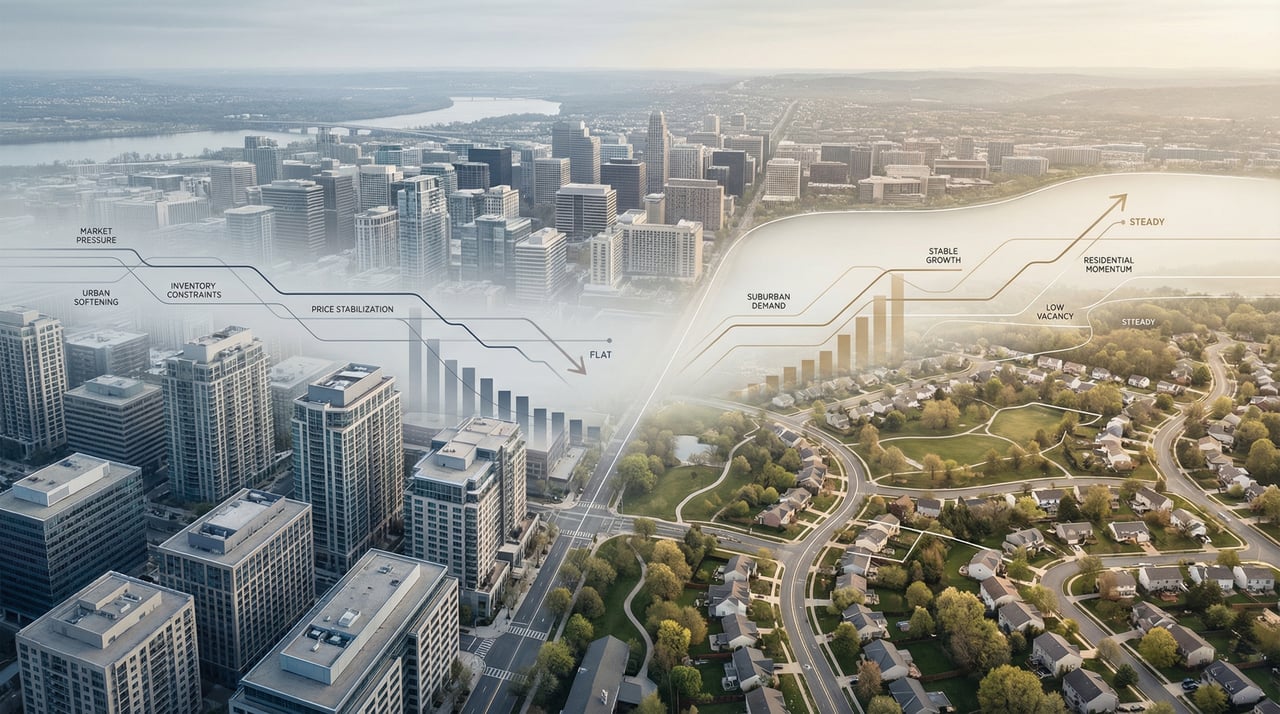
The convergence of stories this week points to a single actionable insight: the DMV is bifurcating into two real estate markets running on different engines. The first market — inner DC, federal-employment-dense neighborhoods, exurban commuter corridors — is navigating a structural demand correction driven by workforce reduction, building liquidation, and buyer hesitation. The second market — Northern Virginia tech corridors, established Maryland suburbs like Bethesda, Kensington, and Chevy Chase, and the emerging Hill East/RFK waterfront — is being repriced upward by scarcity, redevelopment catalysts, and buyers who are choosing quality and location over waiting for a rate that may not materialize. Construction tariffs are making new supply progressively more expensive to deliver, which means the spread between existing home values and replacement cost is narrowing.
The clearest move in this market is not speculation on DC's recovery — it is buying supply-constrained, catalyst-adjacent suburban product at a mortgage rate 60 basis points below where it was a year ago, before tariffs and Iran-driven inflation close that window further.
The Synergy Synthesis — Market Verdict
The DMV housing market in March 2026 is operating in two distinct registers, and conflating them is the most expensive mistake a buyer, seller, or investor can make right now.
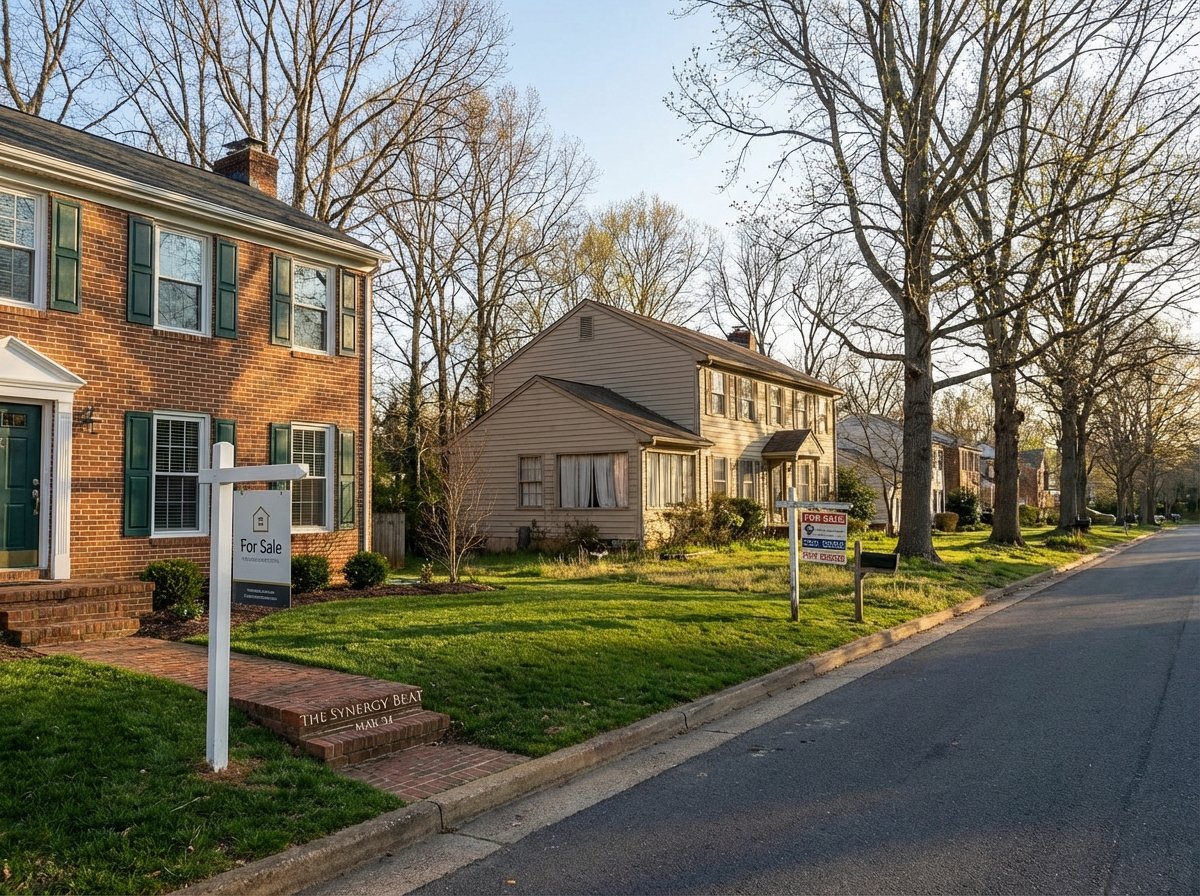
In Washington DC proper and exurban corridors heavily dependent on federal employment — think Calvert County, Spotsylvania, and parts of PG County — inventory is elevated, days on market are lengthening, and sellers are increasingly offering price reductions and concessions to move product. The DOGE-driven workforce contraction, the GSA's deliberate liquidation of federal real estate, and the broader geopolitical uncertainty have combined to produce a buyer hesitation effect that is measurable in contract timelines and showing-to-contract ratios. This is not a crash — but it is a real correction with real holding costs for sellers who price for 2022.
The Montgomery County and Northern Virginia story is different. Bethesda, Kensington, Arlington, and Alexandria continue to demonstrate supply-constrained fundamentals. Tariff-driven cost escalation is making it significantly more expensive to deliver new product into these markets, which structurally supports values on existing inventory. The RFK groundbreaking and the federal real estate liquidation — which will convert underused commercial into eventual residential and mixed-use — are medium-to-long-cycle positives for the city's east side. But those payoffs are 3–5 years away.
One Opportunity:
Buyers with 5+ year horizons looking at established Montgomery County or Northern Virginia submarkets — particularly existing homes in the $650K–$900K range — are entering at a rate 60+ basis points below 2025, against a supply picture that tariffs are making incrementally tighter. The setup is favorable.
One Risk:
Sellers in DC proper who are pricing based on 2024 comps without accounting for the prolonged buyer hesitation caused by federal workforce uncertainty, geopolitical noise, and the sustained overhang of elevated inventory. The spring market will arrive — but it will be selective, not broad.
Why It Matters — Strategic Recommendations
|
Role |
Strategic Recommendation (This Week) |
|
Buyer |
Move-up buyers in MoCo and NoVa: rates near a three-year low now. Don't wait for sub-6% that may not arrive before tariffs tighten new supply further. Lock now, negotiate hard on existing inventory with elevated DOM. |
|
Seller |
In DC proper: pricing discipline is non-negotiable. Days-on-market spreads favor buyers — strategic price positioning and presentation quality are now the primary levers. Sellers in Bethesda/Arlington corridor retain pricing power with correct strategy. |
|
Investor |
Two plays: (1) Hill East/RFK-adjacent for long-horizon waterfront upside. (2) Supply-constrained MoCo/NoVa existing product for near-term rental yield stability while tariffs and rates keep new-build competition expensive. Avoid exurban plays with high federal employment exposure. |
|
Builder / Developer |
Revisit all pro formas. Tariff-driven materials cost increases of 8–10% are structural, not transient. Value engineering and early procurement are now competitive necessities, not optional optimizations. |
With data as our compass and community as our core, The Synergy Group of Compass helps clients navigate markets that reward precision — not guesswork. Whether you are evaluating your next move in a market defined by federal transition, tariff-driven supply constraints, or generational redevelopment opportunity, our team delivers the intelligence to act with confidence.
SynergySoldIt.com