Trump vs. D.C.'s Next Mayor: What a Home Rule Fight Means for Property Risk
Stay ahead of the market with expert insights, real-time data, and stories shaping the Washington D.C., Maryland, and Virginia real estate landscape.
Weekly Snapshot
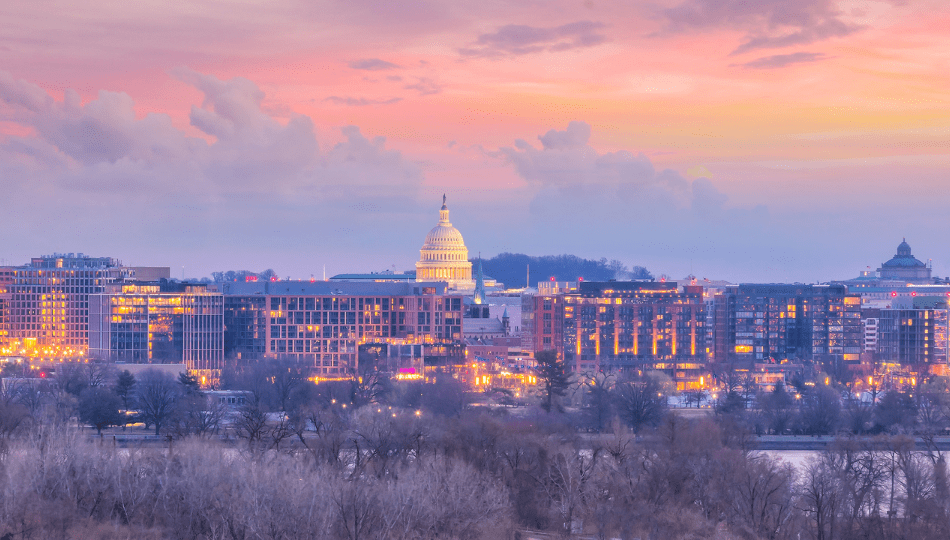
A direct clash between the White House and Washington's incoming city government is now the dominant risk factor for D.C. real estate. President Trump publicly labeled mayoral nominee Janeese Lewis George a "Communist" on Sunday and vowed to block her agenda, raising the odds of renewed federal intervention in District governance just as a Zara billionaire commits private capital to a trophy office renovation blocks from the White House. Mortgage rates held steady at 6.49%, the sixth straight week without meaningful movement, leaving purchase activity to ease even as refinance volume picks up. Risk is concentrated in D.C.'s political uncertainty and the federal office corridor. Opportunity is concentrated in trophy repositioning and rate-stable refinance plays for buyers who stop waiting for a rate drop that has not come.
Top Headlines
President Trump publicly attacked D.C.'s incoming mayor as a "Communist" and vowed to block her agenda, raising fresh questions about federal intervention in District governance.
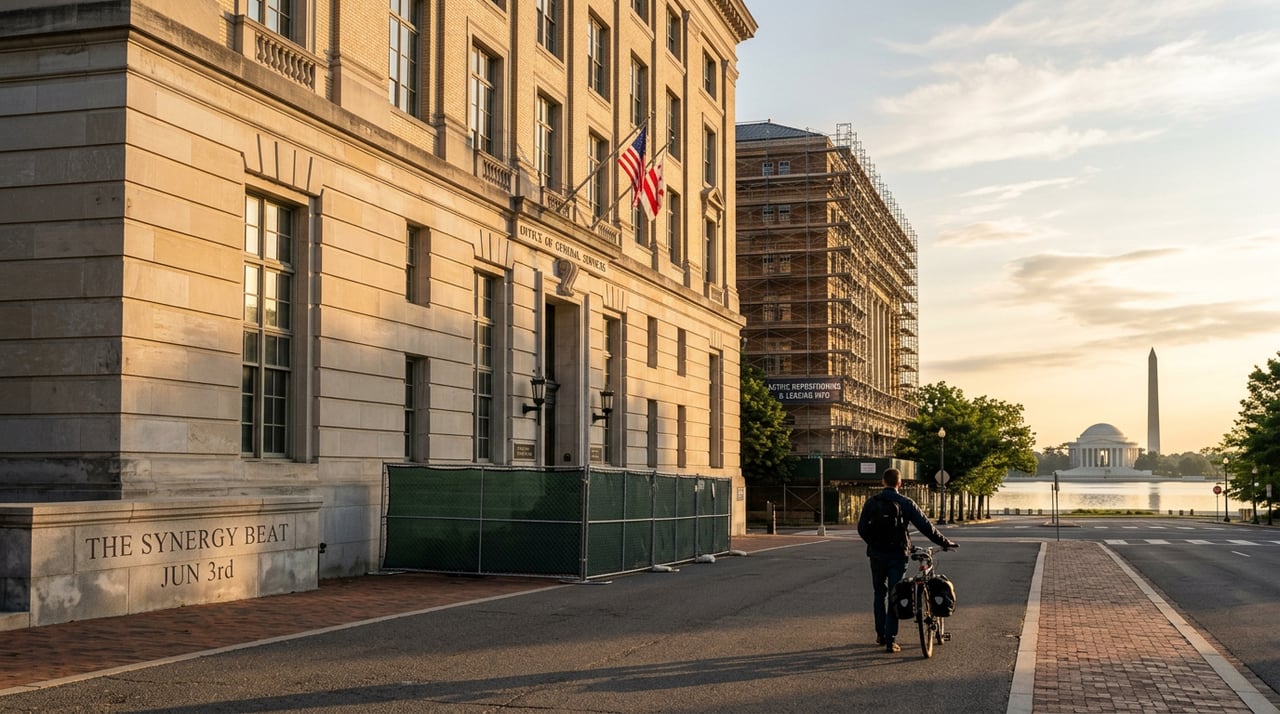
A Zara billionaire is planning a major renovation of a historic office building directly across from the White House, betting on a D.C. office recovery.
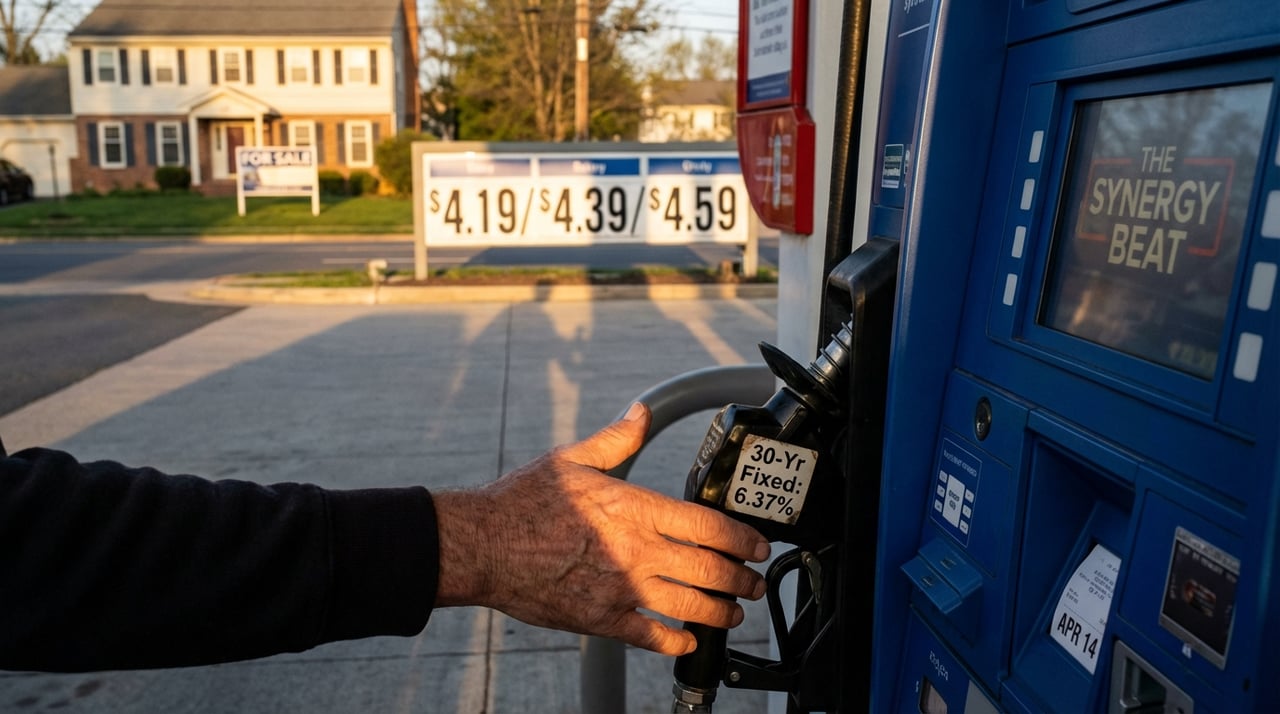
Freddie Mac's PMMS shows the 30-year fixed rate holding at 6.49%, its sixth consecutive week in a tight band.
GSA's disposition program is shedding federal office space nationally, with HUD's planned relocation to Alexandria, Virginia, adding new demand to the NoVa office market.
Foreign institutional capital is growing more selective on U.S. commercial real estate amid political risk, with domestic investors stepping in to fill the gap.
Detailed Reports
Story 1: Trump Publicly Attacks D.C.'s Incoming Mayor, Raising Federal Intervention Risk
What happened. President Trump used Truth Social on Sunday to label Janeese Lewis George, the democratic socialist who won D.C.'s Democratic mayoral primary in a landslide, a "Communist adherent" and vowed to block her agenda if elected, threatening not to let the city "be destroyed." Lewis George responded that she intends to work with the White House where possible but will not preemptively comply with federal actions she views as harmful to District autonomy.
Why it matters for the DMV. This is no longer a routine local election story. It is a direct signal of renewed tension over D.C.'s home rule and the degree of federal oversight the city's budget, policing, and development authority could face starting in 2027. Investors underwriting D.C. assets now have to price in political and regulatory uncertainty at the city level on top of the federal office contraction already underway, a real and quantifiable capital risk for anyone holding or acquiring District property.
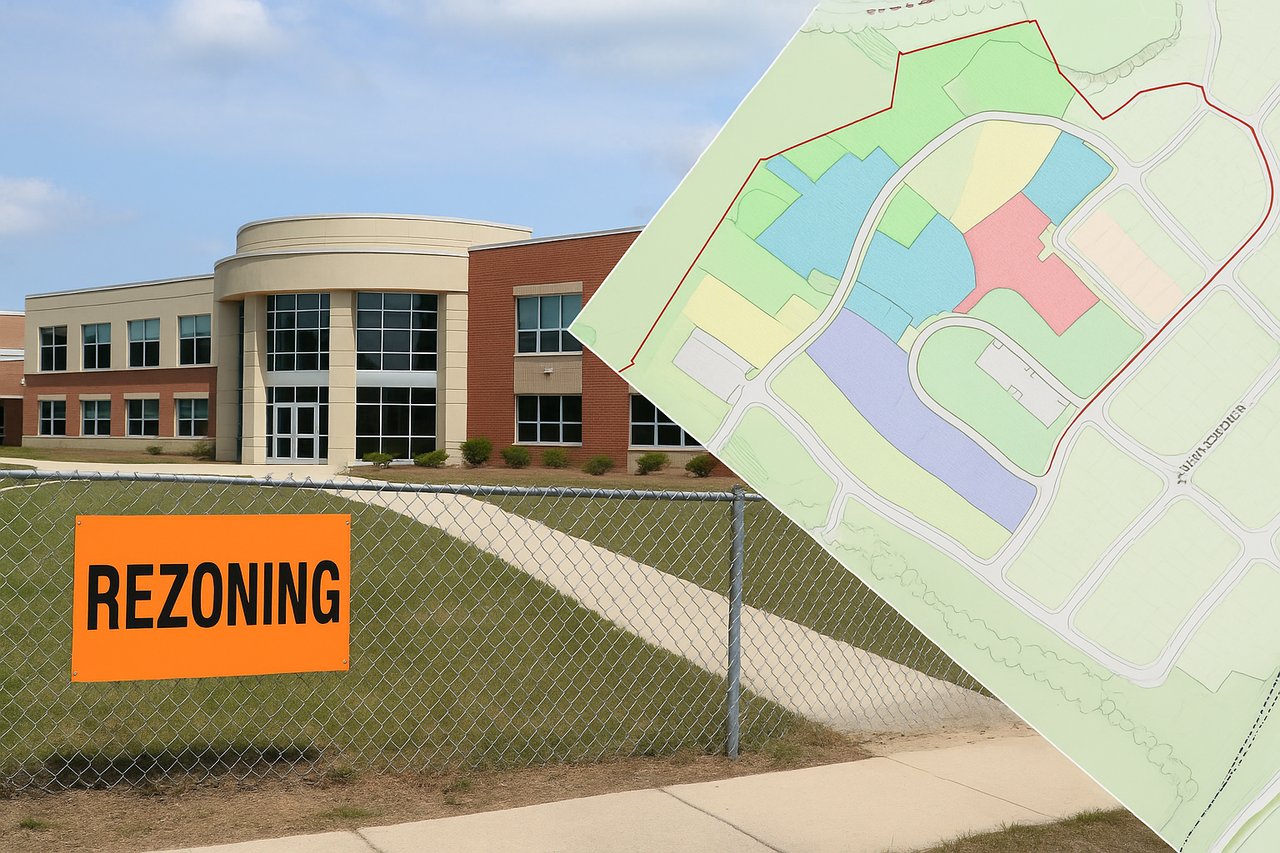
Who it impacts first. Investors and developers underwriting multi-year D.C. holds, who must now factor renewed federal-local conflict into risk premiums. Right behind them, buyers and sellers in the District, who face added uncertainty around permitting, zoning, and budget authority depending on how this standoff resolves.
Story 2: Zara Billionaire Plans Renovation of Historic Office Across From the White House
What happened. Amancio Ortega's real estate vehicle, the investment arm behind the Zara fortune, is moving forward with a major renovation of a historic office building directly across from the White House, signaling conviction in a D.C. office recovery even as federal tenants continue shrinking their footprint elsewhere in the city.
Why it matters for the DMV. This is a private, well-capitalized bet on trophy office product in the most prestige-driven submarket in the District, at the same moment GSA is shedding federal buildings nationwide. It signals a bifurcated D.C. office market. Commodity federal space is being sold off and repositioned, while irreplaceable, address-driven assets are drawing fresh private capital for repositioning rather than conversion.
Who it impacts first. Investors and developers underwriting trophy D.C. office, who now have a fresh comp for renovation-driven repositioning. Behind them, sellers of comparable Pennsylvania Avenue corridor office product, who can point to this deal as evidence of renewed institutional appetite.
Story 3: Mortgage Rates Hold at 6.49% for a Sixth Straight Week
What happened. Freddie Mac's Primary Mortgage Market Survey put the 30-year fixed rate at 6.49% as of June 25, up only two basis points from the prior week and down from 6.77% a year ago. Freddie Mac reported that purchase activity eased modestly while refinance activity continued to climb.
Why it matters for the DMV. Rate stability, not a rate drop, is now the operative condition for the DMV market heading into the second half of 2026. Buyers who have been waiting on the sidelines for rates to fall meaningfully are facing a market that is not moving in their favor on financing cost, even as DMV inventory continues to grow and give them more negotiating room on price.
Who it impacts first. Buyers, who should treat the current rate environment as the baseline for affordability planning. Sellers next, who can expect steady but not surging demand.
Story 4: GSA Accelerates Federal Office Disposition, HUD Relocation to Alexandria Advances
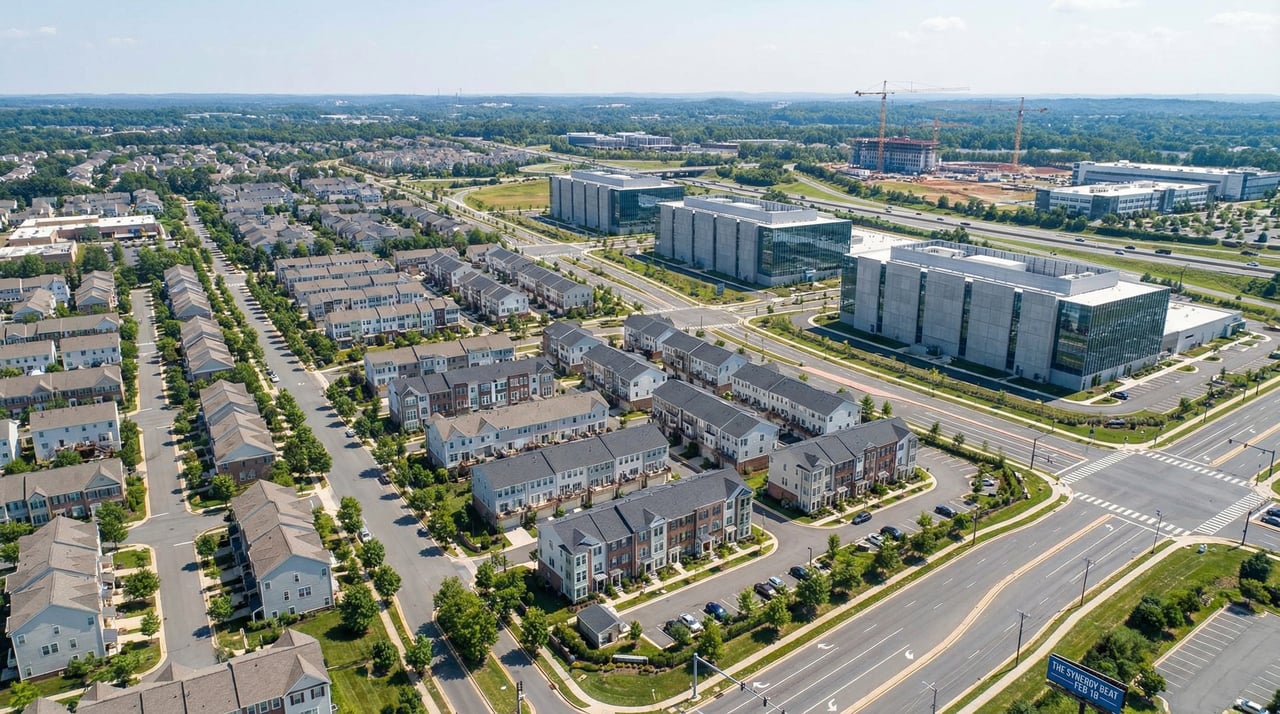
What happened. GSA continues working through a national disposition list aimed at eliminating roughly $5B in delinquent maintenance and operating costs tied to underutilized federal buildings. As part of the broader footprint reduction, HUD's headquarters relocation out of D.C. and into Alexandria, Virginia, remains in motion, shifting federal office demand across the river.
Why it matters for the DMV. This is a structural, multi-year reallocation of federal office demand from the District to Northern Virginia submarkets. Alexandria and similar NoVa locations stand to gain leasing activity and ancillary residential demand from relocated federal employees, while D.C.'s office vacancy challenge deepens in the near term.
Who it impacts first. Investors and developers in Alexandria and the broader NoVa office and multifamily markets, who should track federal relocation announcements as a leading indicator. Behind them, sellers of D.C. office product, who face a longer absorption runway.
Story 5: Foreign Capital Turns More Selective on U.S. Commercial Real Estate
What happened. A Commercial Observer review of recent investor surveys found that while the U.S. is still expected to attract roughly half of new global CRE capital allocations in the coming year, foreign institutional investors are growing more cautious amid political and trade-policy uncertainty. Domestic capital is increasingly filling the gap left by more hesitant cross-border investors, with Canadian pension funds remaining the most consistent foreign buyer of U.S. real estate.
Why it matters for the DMV. The DMV has historically drawn meaningful foreign institutional capital into trophy office and multifamily assets. A more selective foreign capital base means domestic buyers, family offices, and regional funds will play a larger role in DMV deal-making over the next year, with implications for pricing discipline and deal velocity on larger commercial transactions.
Who it impacts first. Investors competing for institutional-grade DMV assets, who should expect less foreign bidding pressure on large deals. Behind them, developers seeking joint-venture capital, who may need to lean more heavily on domestic partners.
Investor Insight of the Week
The throughline across this week's stories is a District facing renewed federal-local tension just as private capital selectively doubles down on trophy D.C. addresses, against a backdrop of a capital market rotating from waiting-for-rates-to-drop toward acting-on-rate-stability. For investors, that combination argues for pricing political risk explicitly into D.C. acquisitions while favoring disciplined repositioning of irreplaceable assets over speculative new development. It also favors NoVa submarkets positioned to absorb relocating federal office demand, such as Alexandria, where this kind of D.C.-specific governance risk does not apply. Build a political-risk premium into D.C. underwriting now, and position capital toward Alexandria and federal-relocation-adjacent NoVa submarkets that sit outside this governance standoff.
The Synergy Synthesis
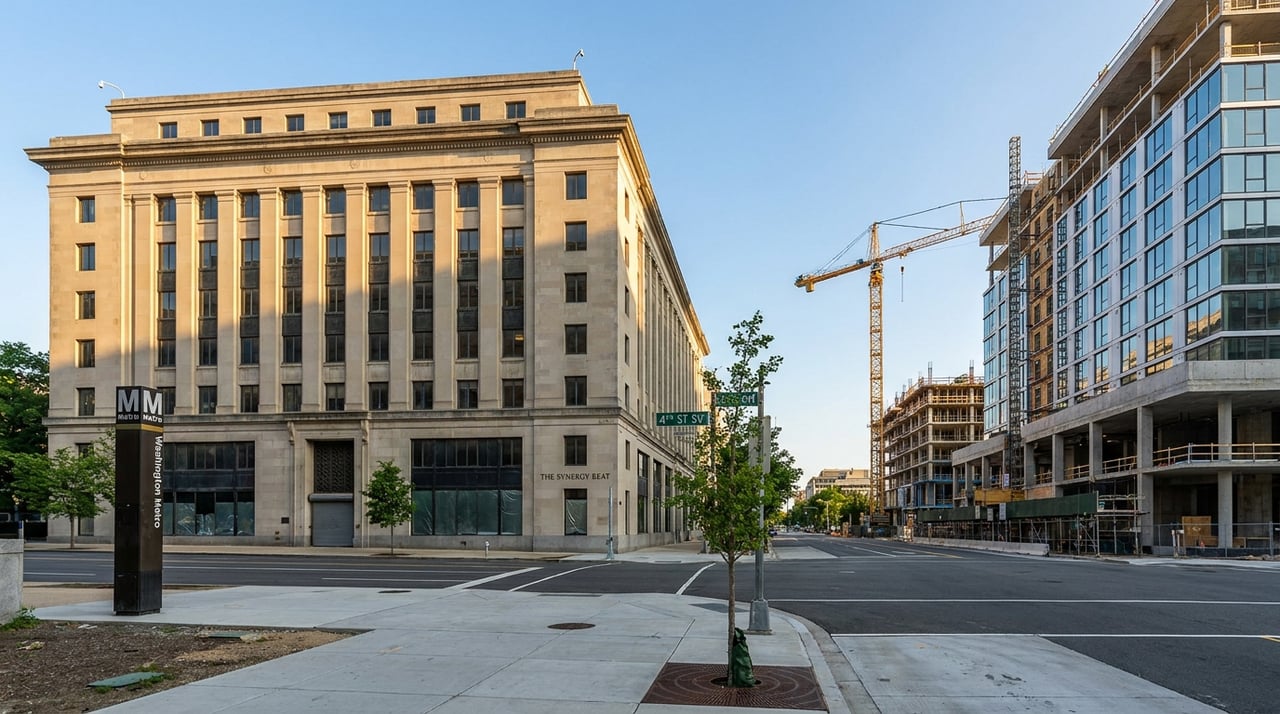
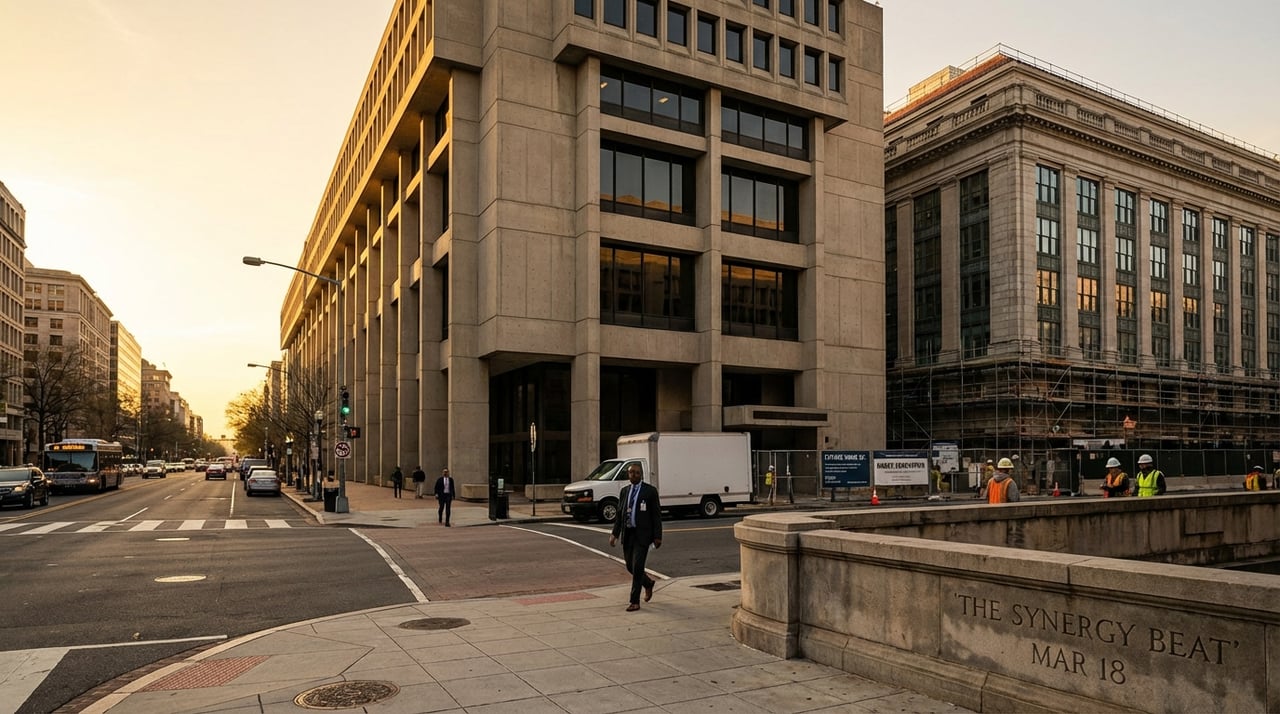
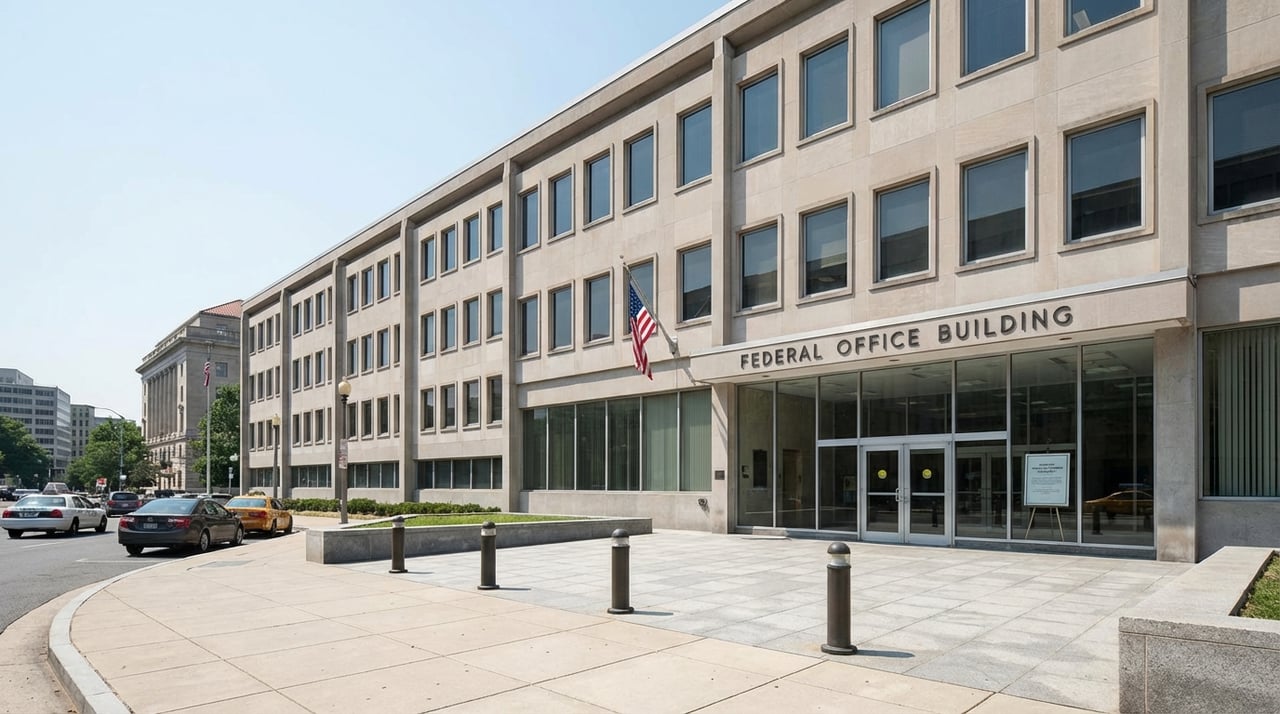
Southwest D.C. and Bethesda are telling two different stories this week, and both confirm the same underlying shift. In Southwest, GSA's string of dispositions, including the Regional Office Building and the Liberty Loan Building, is creating a wave of redevelopment-ready land and historic buildings at prices well under replacement cost. That is opportunity for patient capital willing to underwrite a multi-year adaptive-reuse timeline, but it is also risk for anyone holding nearby office product that now competes with newly available federal inventory. Bethesda, by contrast, shows the cost side of the same federal contraction story. Office assets there have traded at steep discounts to their prior basis as tenant demand tied to federal and federal-adjacent employment has softened. The opportunity in Bethesda is increasingly residential and mixed-use conversion of underperforming office stock, not office leasing recovery.
The risk across both submarkets is twofold: timing and politics. Federal disposition and relocation activity unfolds over years, and capital that expects fast absorption will misprice these opportunities. Layer on a President openly threatening intervention in District governance, and D.C.-specific assets now carry a political risk premium that Maryland and Virginia submarkets do not. The opportunity belongs to investors and developers who can hold through both the timing and the political transitions, positioning ahead of where federal demand is migrating, particularly toward Alexandria and the broader NoVa corridor.
What This Means for You
If you're buying, use the rate plateau, not a rate drop, as your entry signal. At 6.49% with purchase activity easing, sellers in DC and inner Maryland are facing less competition for their attention. Target listings sitting past two weeks and negotiate on closing costs and repairs rather than waiting for a rate move that has not materialized in six weeks.
If you're selling, Southwest DC and the broader federal corridor will see more inventory and more redevelopment noise over the next 12 months as GSA continues offloading buildings. If your property sits near a federal disposition site, price for the current absorption pace, not last year's comps, and lean on a clean, well-staged listing to stand out.
If you're investing, federal building sales below replacement cost, like the Old Post Office at $80M against a far higher build cost, signal where adaptive-reuse plays are forming. Track GSA's disposition list for Southwest and Pennsylvania Avenue corridor assets, and underwrite conservatively given DC's compressed 3.5% to 5% cap rate environment.
If you're building, mayoral transition politics now carry an added layer of federal friction following the President's public attack on the incoming mayor. Engage early with the incoming administration's housing policy team, watch closely how the home rule standoff resolves before committing to large D.C. entitlements, and prioritize entitlement work on sites where federal disposition is already creating redevelopment momentum, particularly Southwest and the L'Enfant Plaza corridor.
With data as our compass and community as our core, The Synergy Group of Compass helps clients turn federal-driven uncertainty into clear, well-timed decisions. In a market where the risk premium changes from one jurisdiction to the next, having someone who reads it every day by your side is what keeps a transition from becoming a costly guess.