Federal Land, Rising Rates, and Virginia Reform: The DMV Repositions
Stay ahead of the market with expert insights, real-time data, and stories shaping the Washington D.C., Maryland, and Virginia real estate landscape.
Weekly Snapshot
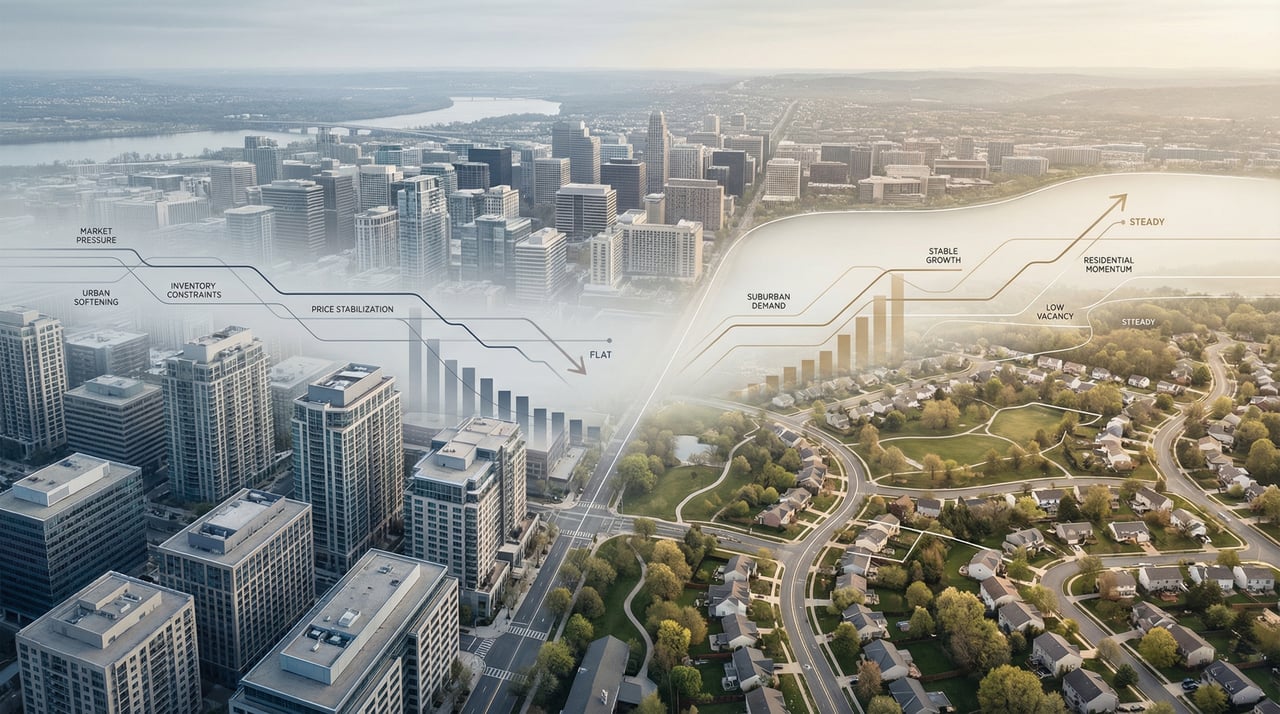
The week ending June 9, 2026 produced a rare alignment of structural forces. The federal government continued its systematic disposal of Southwest D.C. properties, while mortgage rates ticked back up following a stronger-than-expected May jobs report. Virginia's parking reform law, effective July 1, begins reshaping the development calculus near Metro stations across Northern Virginia. Meanwhile, D.C.'s new construction pipeline has collapsed to a 15-year low, compressing future supply even as near-term demand stays muted. The market is dividing. Inner-ring suburban submarkets with strong school ratings and limited inventory are holding or gaining value, while D.C. condos and outer Maryland suburbs continue to absorb softening pressure. The risk this week is rate persistence. The opportunity is in federal land repositioning and transit-adjacent Northern Virginia development.
Top Headlines
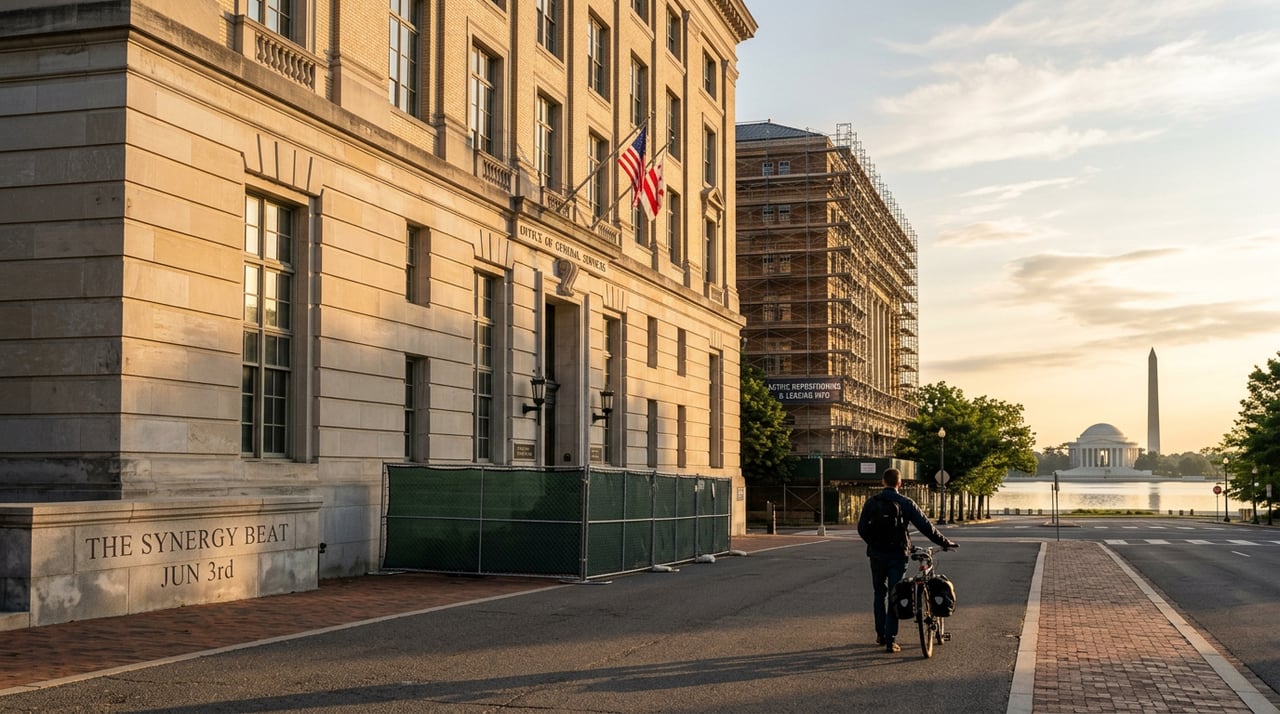
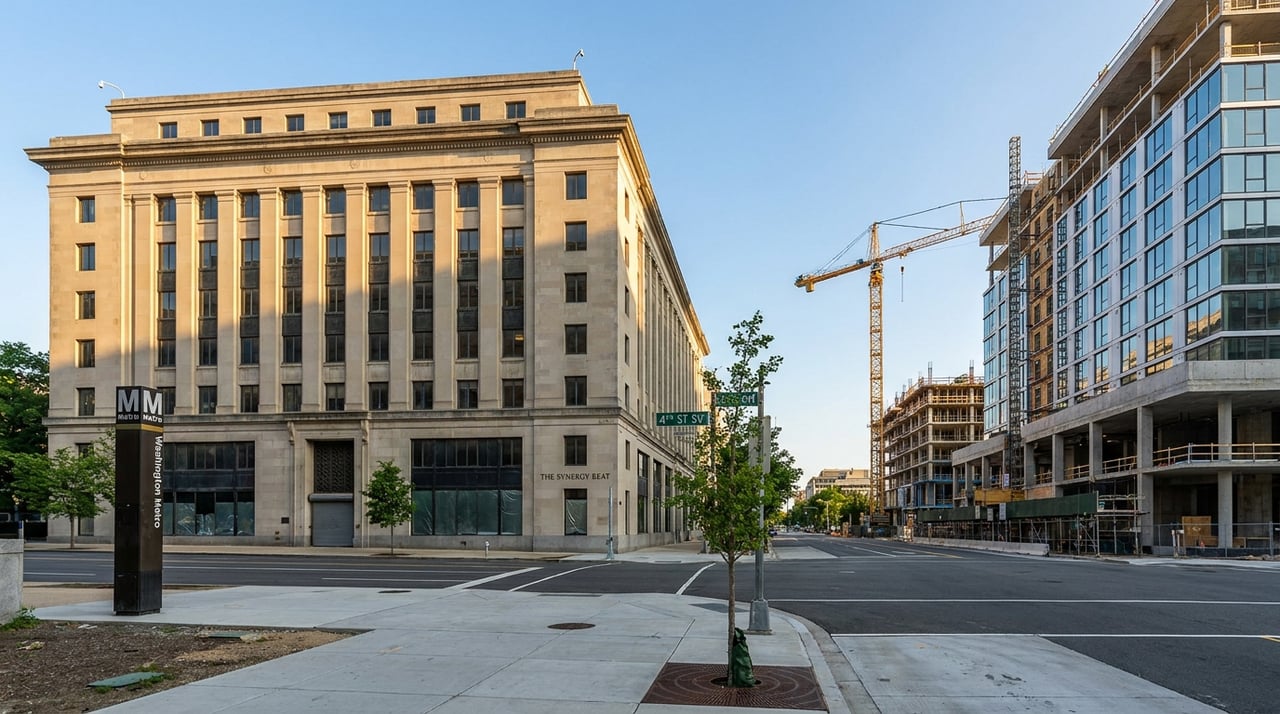
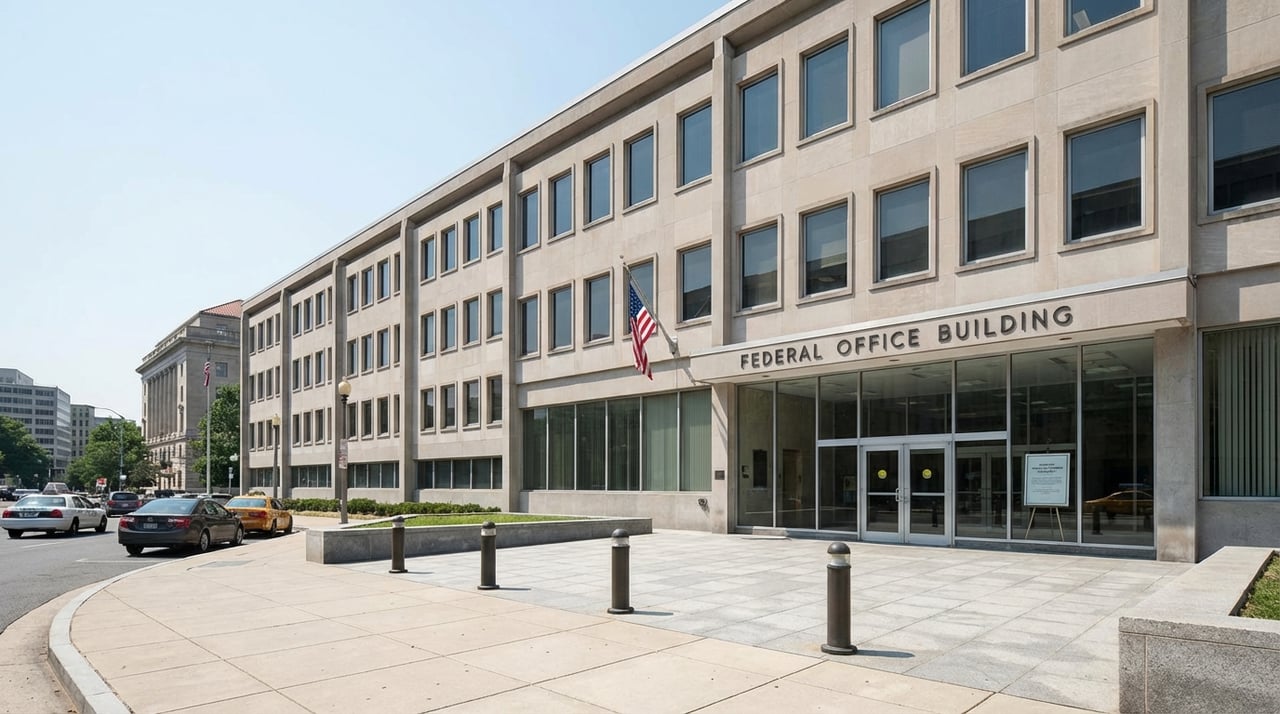
GSA sells its second major Southwest D.C. property, the historic Liberty Loan Building, for $17M, advancing a federal disposition strategy targeting up to $5 billion in government real estate.
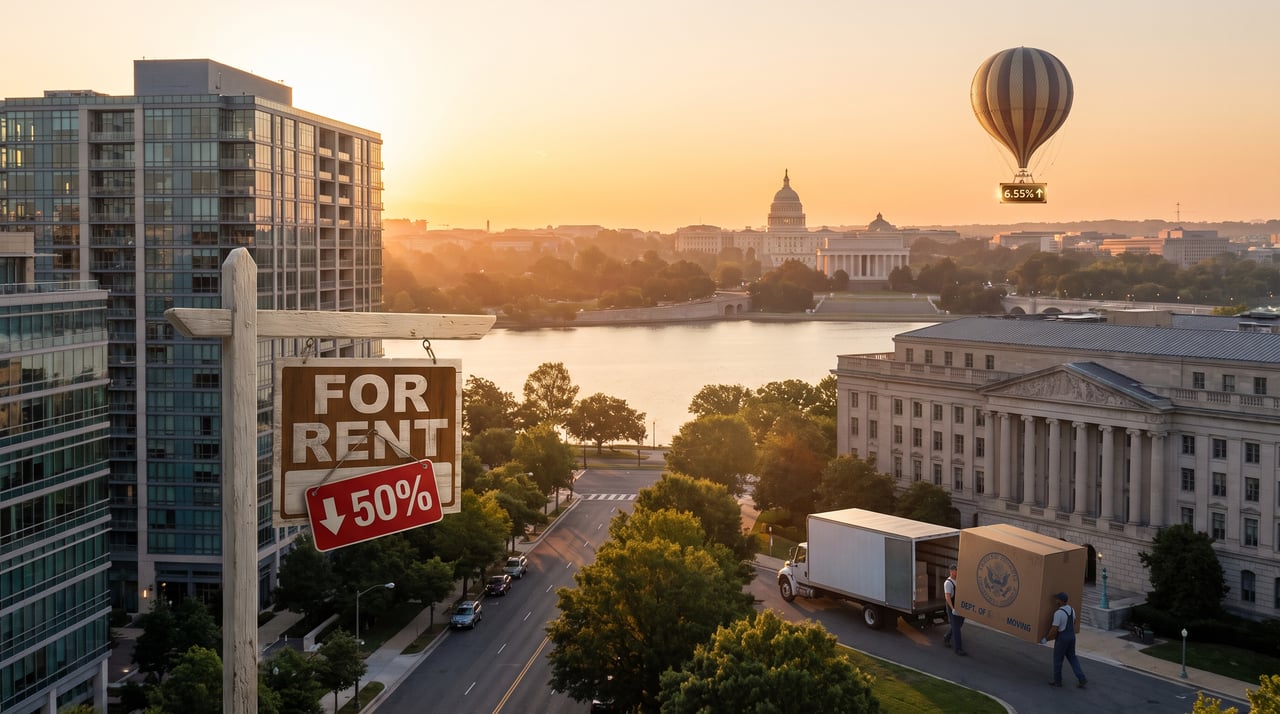
Mortgage rates rise to 6.65% on June 8 after May's blowout jobs report, reversing a modest easing trend and keeping the Fed focused on inflation over rate cuts.
Virginia's parking minimum reform law takes effect July 1, capping required spaces at 0.5 per unit within half a mile of transit, a direct cost reducer for multifamily developers.
D.C.'s new residential construction permits are on pace for just 436 units in 2026, the lowest since 1998, as market-rate and subsidized development both stall for separate structural reasons.
White House cuts steel, aluminum, and copper tariffs temporarily, effective June 8, reducing construction equipment levies from 25% to 15% through end of year.
Detailed Reports
Story 1: GSA's Second Southwest D.C. Disposition, the Liberty Loan Building
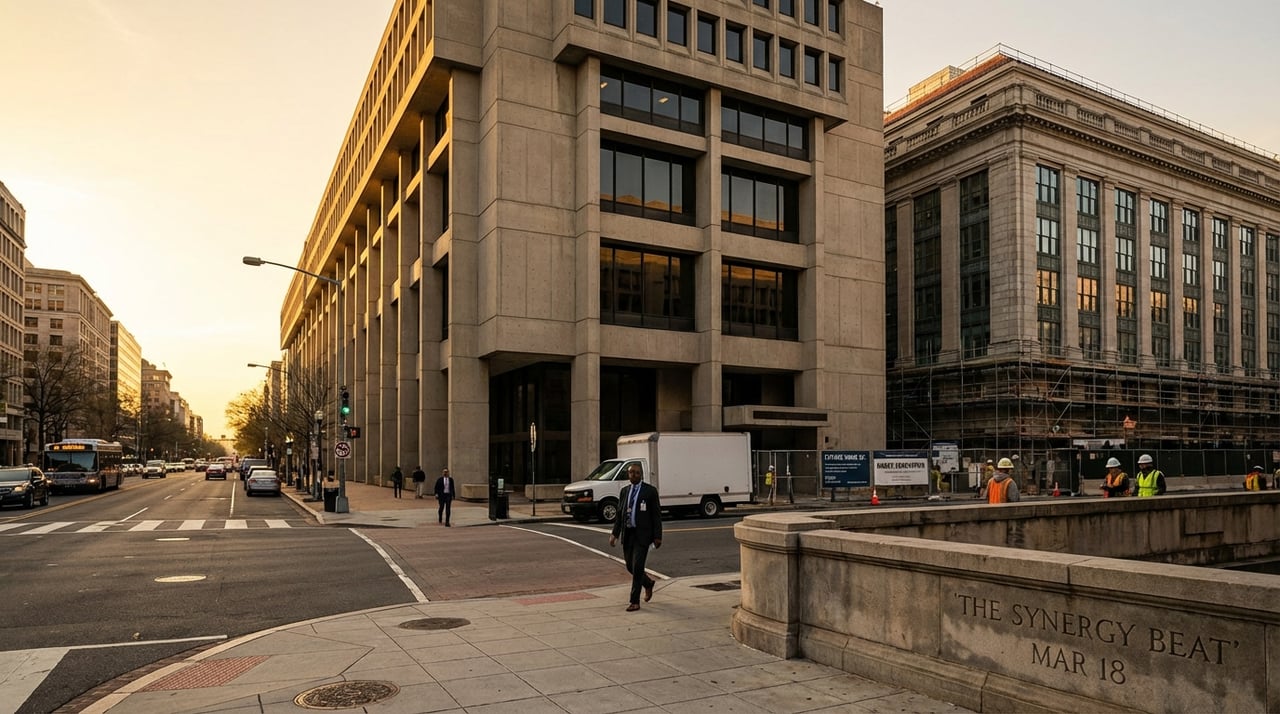
What happened. The General Services Administration completed the sale of the Liberty Loan Building at 401 14th Street SW in Washington, D.C., on May 29, 2026, for $17 million. The 173,000-square-foot, six-story World War I-era structure on 2.76 acres was purchased by Satvik Raj, a Virginia-based investor. The sale saves taxpayers an estimated $14.6 million in deferred maintenance and $1.6 million annually in operating costs. The transaction followed GSA's March sale of its 940,000 SF Regional Office Building at 301 7th Street SW to Dalian Development for $24.3 million. GSA has earmarked additional Southwest D.C. buildings, including the Robert C. Weaver and Wilbur J. Cohen buildings, for accelerated disposition, as part of the Trump administration's goal to eliminate up to $5 billion in underutilized federal real estate.
Why it matters for the DMV. Southwest D.C. is now the epicenter of the most consequential real estate repositioning in the region in a generation. Two multi-acre federal parcels have traded in the span of 10 weeks, both at prices well below replacement cost and both with mixed-use and residential redevelopment potential near Metro stations. For D.C. proper, where permitted residential construction is at a 28-year low, these sites represent the most viable source of new supply in a supply-starved city. The absence of a coordinated federal plan for the corridor, however, creates uncertainty about uses, density, and affordability that will slow private financing. Investors and developers who move early have pricing power. Those waiting for a coherent framework may be priced out.
Who it impacts first. Investors and developers. Redevelopment-focused capital and D.C.-based developers are the primary movers at this price point. Residential buyers in Southwest D.C. face a multi-year lag before any new units reach market.
Story 2: Mortgage Rates Rise on Strong Jobs Data, Keeping the Fed's Hand Stayed
What happened. The Bureau of Labor Statistics reported 172,000 nonfarm payroll jobs added in May 2026, nearly double the consensus estimate of 85,000, with upward revisions to March (+29,000) and April (+64,000). Unemployment held at 4.3%. The report triggered a rate reversal. After Freddie Mac's June 4 survey showed the 30-year fixed rate at 6.48%, down from 6.53%, the national average jumped to 6.65% on June 8 per U.S. News money data. The Federal Reserve's June 16-17 FOMC meeting is now expected to hold rates steady, as strong labor data removes urgency for cuts. Wage growth of 3.4% continues to trail inflation pressured by elevated energy costs tied to Middle East supply disruptions.
Why it matters for the DMV. The DMV's rate sensitivity is structurally higher than most metros because its market depends on a large pool of mid-tier federal and contractor employees with stable but not outsized incomes. A 30-year rate at 6.65% on a $600,000 mortgage adds roughly $100 a month compared to 6.48%. That difference is not trivial for a government worker household deciding between buying in Bethesda and renting another year. Montgomery County and Fairfax County SFH inventory is thin, and buyers who were moving toward commitment in early June are recalibrating. Pending sales nationally had increased three consecutive months. Rate persistence into summer could reverse that trend locally before the school-year purchase window closes.
Who it impacts first. Buyers. First-time and move-up buyers in the $500,000 to $750,000 range face the sharpest payment shock. Cash buyers and investors are relatively insulated.
Story 3: Virginia Parking Reform Takes Effect July 1, Development Cost Baseline Shifts
What happened. Virginia's new law, Section 15.2-2209.4, takes effect July 1, 2026, capping minimum off-street parking requirements for residential and mixed-use projects within half a mile of a mass transit station at 0.5 spaces per dwelling unit for multifamily and mixed-use, and 1.0 space for single-family and townhouse development. Localities with populations over 20,000 must also establish an administrative process allowing developers to seek at least a 20% further reduction. The law was part of Virginia's most active housing and land-use legislative session in recent memory, alongside ADU legalization statewide (effective July 1, 2027) and expedited affordable housing approvals (effective July 1, 2026). A broader proposal to eliminate all local parking minimums statewide did not pass.
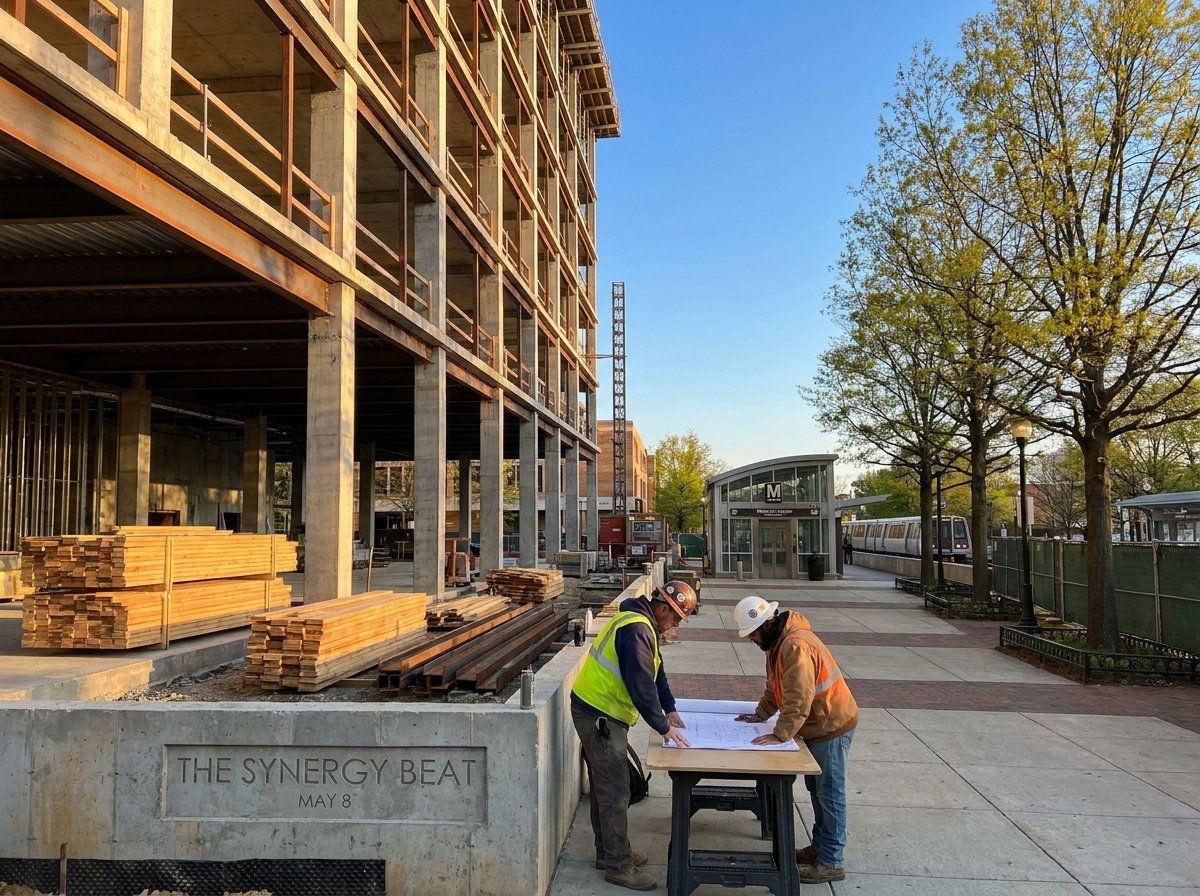
Why it matters for the DMV. Structured parking is one of the largest single cost items in multifamily development underwriting. One underground parking space can cost $30,000 to $50,000 to build. Near high-capacity transit corridors like Rosslyn-Ballston, the Silver Line, and the Yellow Line through Alexandria, reducing required parking from 1.0 to 0.5 spaces per unit can shift project economics from infeasible to viable. Developers already modeling deals in Arlington, Alexandria, Tysons, and Reston should be repricing pro formas immediately. Projects that have been stalled due to parking cost burden now have a structural path forward. This is a supply-side win with a 12 to 36 month lag before it translates into units.
Who it impacts first. Developers and investors. Transit-adjacent multifamily and mixed-use developers in Northern Virginia benefit directly. Buyers and renters see the effect later, as new supply enters the pipeline.
Story 4: D.C. New Construction Collapses to 28-Year Low as Demand-Side Pressure Mounts
What happened. According to data published by Greater Greater Washington and the D.C. Policy Center, residential building permits in the District are on pace to total just 436 units in 2026, the lowest annual figure since 1998. This follows a period of elevated construction activity from 2023 to 2025 that pushed vacancy rates from 6% to 8%, drove rent growth sharply negative, and caused investors to exit the market. Multifamily permits dropped from an annual range of 5,000 to 8,000 in recent years to just 1,372 in 2025. In January 2026, only a single multifamily building pulled a permit, for 30 units. The D.C. Policy Center attributes the collapse to demand destruction caused by federal workforce and real estate policy, not excess supply. Market-rate and subsidized development are stalling for separate reasons.
Why it matters for the DMV. D.C.'s supply collapse is a delayed indicator, not an immediate price driver. The current pipeline of 4,677 units under construction will still deliver into a soft demand environment. The structural risk emerges in 2027 and 2028, when the pipeline dries up and any demand recovery, driven by workforce stabilization, rate improvement, or population rebound, hits a sharply constrained inventory. D.C. condo buyers who are waiting for further price softening should be aware that the next supply cycle is being starved at inception. This is the opposite of the 2021 to 2023 overbuild problem that defined markets like Austin. The near-term pain for D.C. sellers is real. The medium-term scarcity risk is equally real.
Who it impacts first. Sellers, in the near term and negatively, since the current soft demand environment persists through the existing pipeline delivery. Investors, in the medium term and positively, since buyers acquiring D.C. multifamily or condo assets at current soft valuations are positioning ahead of the supply gap.
Story 5: White House Temporarily Cuts Steel, Aluminum, and Copper Tariffs on Construction Equipment
What happened. President Trump signed a proclamation to reduce tariffs on steel, aluminum, and copper imports, with the reduced levies targeting both agriculture and construction taking effect June 8, 2026. Construction-related equipment including forklifts and residential HVAC systems will face a 15% tariff, down from the previous 25%. The reduction is set to remain in effect through the end of 2027. The adjustment is distinct from broader structural tariffs on lumber, drywall, and raw materials, which remain in place. NAHB's April 2025 survey had estimated current tariff exposure at approximately $10,900 per new single-family home. The Center for American Progress projected total tariff-induced cost inflation at $17,500 per home at current homebuilding rates.
Why it matters for the DMV. The tariff reduction is targeted and partial. It addresses equipment, not raw building materials, but it provides marginal cost relief to contractors at a moment when construction economics in the DMV are under significant stress. In D.C., where construction starts hit a 15-year low, and in Northern Virginia, where developers are repricing projects under the new parking law, any cost reduction on equipment-intensive phases like framing, mechanicals, and HVAC installation has a compounding effect on project feasibility. Builders who had been delaying starts pending cost clarity now have a partial green light on the equipment side. The effect on lumber and steel input costs remains unresolved.
Who it impacts first. Builders and developers. General contractors and multifamily developers in active Northern Virginia and Maryland projects see the most direct near-term benefit. Buyers in the new construction segment see the effect as a potential moderating factor on delivery prices in 12 to 18 months.
Investor Insight of the Week
The federal government's accelerated disposal of Southwest D.C. real estate is creating a land acquisition window that will not recur. Two parcels with combined acreage of six-plus acres have sold near the Waterfront Metro and L'Enfant Plaza for prices a fraction of replacement cost, not because of market failure but because of institutional urgency. The Weaver and Cohen buildings are still on the GSA disposition list. Developers with access to patient equity and the appetite to navigate federal historic disposition requirements should be underwriting these sites now. The absence of a coordinated city-federal redevelopment plan is a risk, but it is also the source of pricing inefficiency. Southwest D.C. is currently the most attractively priced transit-adjacent development land in the DMV, and the window is measured in months, not years.
The Synergy Synthesis
Two adjacent forces are defining the DMV market structure entering the second half of 2026. The first is the collapse of new supply in D.C. proper, not a cyclical pullback but a structurally driven construction halt tied to demand destruction, investor exit, and policy-induced uncertainty. The second is the beginning of supply-side reform in Virginia, where the parking minimum law and expedited affordable housing approval process set the table for a development surge in transit corridors that will take 18 to 36 months to materialize in actual units. The region is simultaneously supply-constrained in its outer delivery pipeline and demand-depressed in its core market.
The divergence between D.C. condos and Montgomery County SFH is the clearest submarket contrast this week. D.C. condos under $600,000 are sitting on market with vacancy-driven rent declines and minimal new buyer urgency. 8% vacancy and persistent 6.65% rates create no pressure to purchase. Montgomery County SFH in the $700,000 to $950,000 range, by contrast, is holding value. School-district demand is structural, inventory remains below historical norms, and the professional-class buyer pool has not materially contracted. The risk is that rate persistence into the fall disrupts the fall selling window. The opportunity is that motivated sellers in MoCo who listed in spring are now open to negotiation that was unavailable six months ago.
In Northern Virginia, the July 1 parking reform is the dominant underwriting event. Arlington and Alexandria developers with stalled transit-adjacent deals should be back at their pro formas this week. Close-in SFH in those markets continues to outperform forecasts. The NVAR and George Mason projection of +3.8% for Arlington SFH and +4.2% for Alexandria SFH remains directionally intact, supported by return-to-office pressure and Metro proximity premium.
What This Means for You
If you're buying, rate persistence to 6.65% narrows the window before the school-year deadline. If you are pre-approved and targeting MoCo or Northern Virginia SFH, qualified properties with 30 or more days on market are negotiable now. Do not wait for a rate drop that the May jobs report just pushed further out.
If you're selling, D.C. condo sellers face a difficult summer of soft demand, rising vacancy, and no near-term rate catalyst. MoCo and NVA SFH sellers in the $700K to $1M range are in a stronger position but should price at market, not above it. The buyer pool is rate-sensitive and will not chase overpriced listings.
If you're investing, there are two plays this week. First, Southwest D.C. land, where GSA disposition pricing is below replacement cost with mixed-use and residential upside near Metro. Second, D.C. multifamily at current softened valuations, positioned ahead of the 2027 to 2028 supply gap as the permit pipeline dries up.
If you're building, in Northern Virginia, reprice transit-adjacent multifamily pro formas using the 0.5 parking minimum that takes effect July 1. Deals that failed underwriting at 1.0 sp/du may now pencil. In D.C., the June 8 tariff reduction on construction equipment provides partial cost relief, enough to advance equipment procurement on near-ready projects.
With data as our compass and community as our core, The Synergy Group of Compass helps clients act on a market that is dividing by submarket, repricing by policy, and restructuring by federal action, so every decision to buy, sell, hold, or invest is grounded in what is actually happening, not what was happening last quarter. When the ground shifts this fast, having someone who tracks it every day by your side is what keeps a decision current instead of a quarter behind.