DC and Bethesda Just Had Their Busiest Weekend of the Year
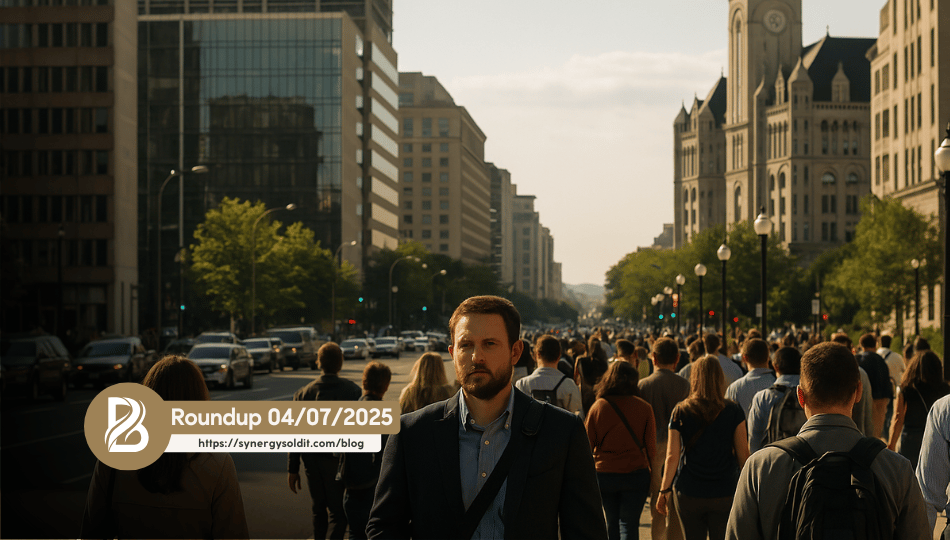
Art All Night pulled 250,000 people into all eight wards, Bethesda Row filled five blocks with juried artists competing for cash prizes, and Adams Morgan turned 48 without slowing down one bit.
Weekly Snapshot
Washington DC real estate news this week comes straight from the street, literally. Art All Night, the District's overnight arts festival, drew a record crowd across all eight wards last weekend, while Bethesda Row Arts Festival filled five downtown blocks with nearly 200 juried artists and Adams Morgan Day marked its 48th year as DC's longest-running neighborhood festival. Three very different events, three very different parts of the DMV, and each one is a pretty direct read on how much life is still packed into these neighborhoods once the summer crowds thin out.
Top Headlines
- Art All Night, now in its 15th year, spread free arts programming across all eight DC wards last weekend, building on a 2025 turnout of more than 250,000 attendees and 1,200 artists.
- The 28th annual Bethesda Row Arts Festival brought nearly 200 juried artists to five blocks of downtown Bethesda, drawing an expected 30,000 visitors from one of the region's highest-income zip codes.
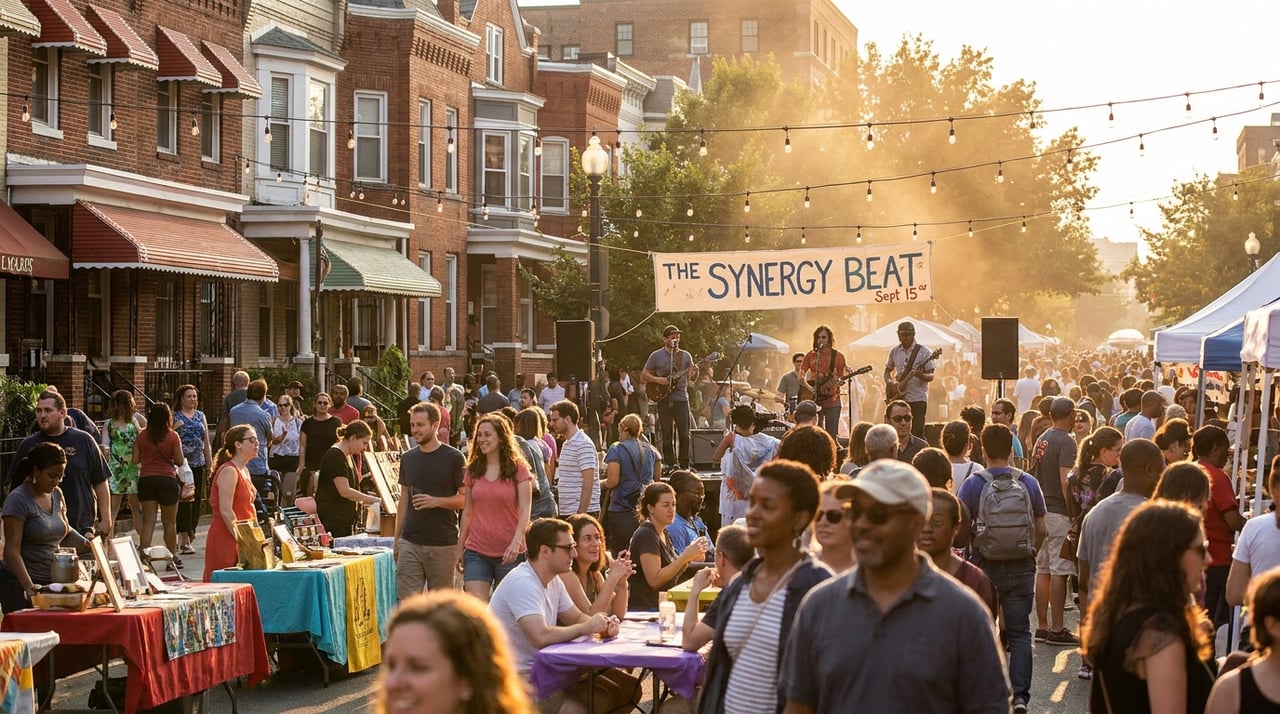
- Adams Morgan Day celebrated its 48th year as DC's longest-running, entirely volunteer-run neighborhood festival, closing six blocks of 18th Street for music, food, and an artisan stroll.
A Festival That Started in One Neighborhood Now Covers All Eight Wards
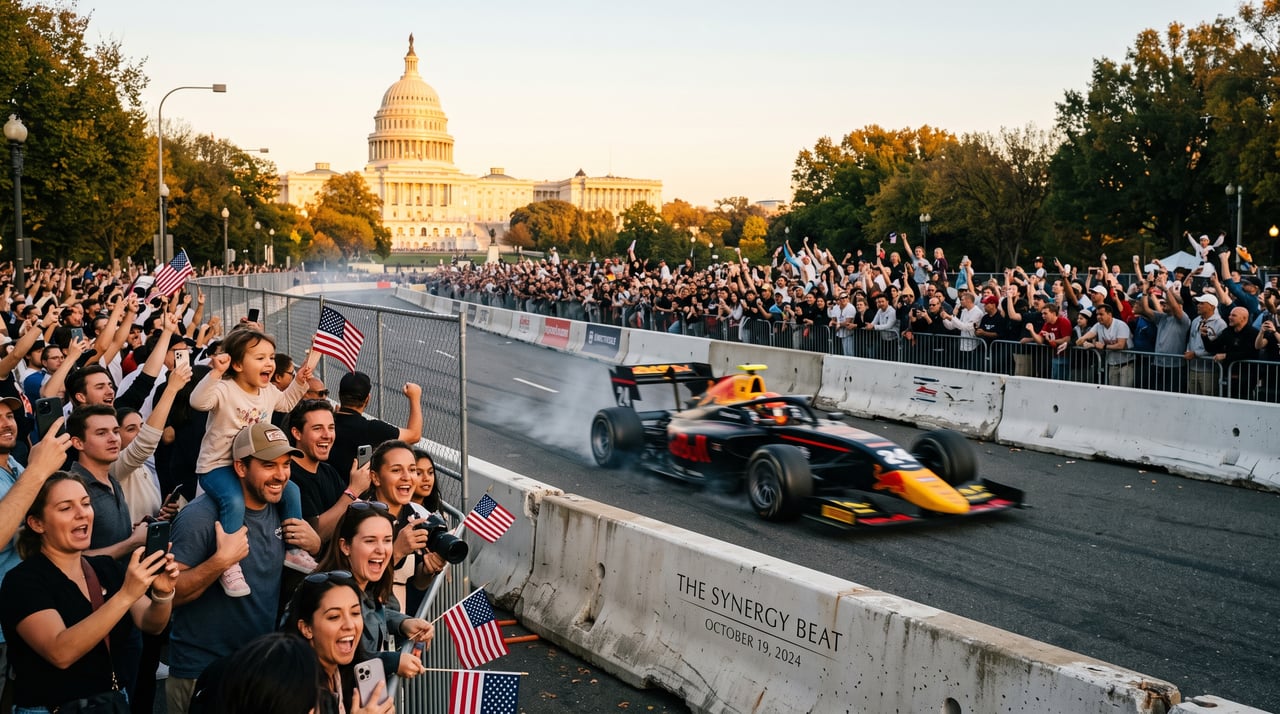
Art All Night began in 2011 as a single overnight event in Shaw, drawing about 30,000 people. Fifteen years later, it's grown into a two-night, citywide festival spanning all eight wards, and 2025's edition pulled a record 250,000 attendees and more than 1,200 artists and performers. This year's event kept that momentum going, spreading painting, sculpture, dance, film, and live music through local businesses and public spaces from Anacostia to Petworth, with a new mobile app helping visitors navigate a festival that's genuinely outgrown any single neighborhood.
The growth pattern here is the real story. A festival that expands from one Main Street corridor to all eight wards over 15 years is effectively tracking which commercial corridors across the city have grown strong enough to host a crowd for a full night. Organizers specifically frame the event as an economic driver for the small businesses and restaurants along each participating corridor, and a neighborhood's ability to absorb a few thousand extra visitors for an overnight festival says something real about its retail and restaurant density.
Source: DC Department of Small and Local Business Development, "DC Art All Night," September 2026; Hoodline, "Art All Night Turns 15, Bringing Free Art to All Eight DC Wards," September 2026.
Bethesda's Art Fair Comes With a Very Specific Number Attached
The Bethesda Row Arts Festival has a reputation that goes beyond the art itself. Recognized as one of the top 30 fine art shows in the country, it drew nearly 200 juried artists this year to five blocks of Woodmont and Bethesda Avenues, competing across 16 disciplines for cash prizes up to $2,000. Roughly a quarter of this year's artists live within an hour of Bethesda, and organizers expected more than 30,000 visitors over the two days.
Here's the number that stands out for anyone tracking this market: the three-mile radius surrounding the festival has an average household income of nearly $197,000, making it one of the most affluent art buying zones in the country. That figure goes a long way toward explaining why Bethesda Row's retail corridor has stayed resilient even in years when other downtown shopping districts struggled, and it's worth keeping in mind for anyone weighing a purchase in Bethesda, Chevy Chase, or the surrounding Upper Northwest corridor.
Source: East City Art, "28th Bethesda Row Arts Festival," September 2026; The MoCo Show, "Bethesda Row Arts Festival Returns With Nearly 200 Artists," August 2026.
Adams Morgan's Street Festival Turns 48, Still Entirely Run by Volunteers
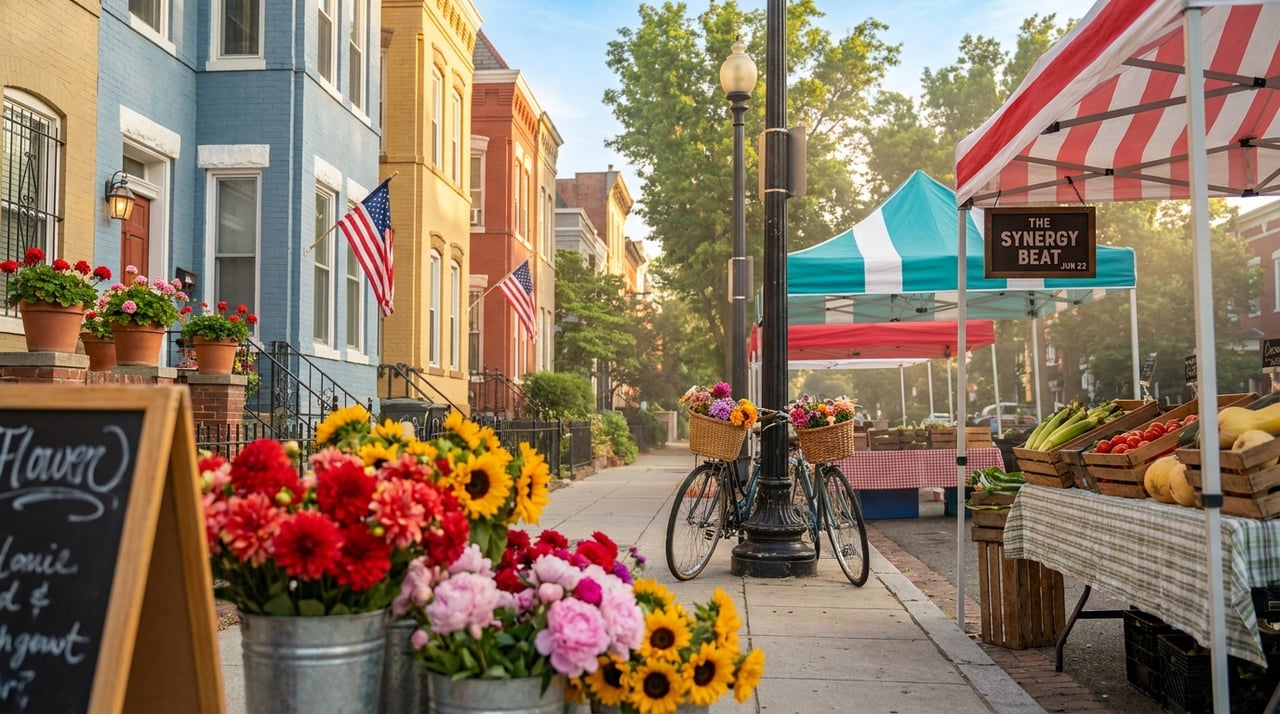
Adams Morgan Day closed six blocks of 18th Street this year for its 48th run, and the fact that it's still standing, still free, and still organized entirely by neighborhood volunteers is genuinely rare for a festival this size. The lineup follows a familiar and well-loved formula, a music stage, a reggae stage at Kalorama Park, a dance plaza at Marie Reed School, and an artisan stroll, all wrapped around the same stretch of restaurants that already make 18th Street one of the most walkable food corridors in the city.
What makes this one worth watching is the durability. Plenty of neighborhood festivals in DC have come and gone over the past few decades. Adams Morgan Day hasn't, and a festival that a neighborhood keeps funding and staffing with volunteers for 48 straight years is a strong, low-cost signal of genuine community investment, the kind that tends to hold a neighborhood's character and appeal steady even as the surrounding market shifts.
Source: Adams Morgan Community Alliance, admoday.com, September 2026; goDCgo, "Adams Morgan Day," August 2026.
Investor Insight of the Week
Long-running, volunteer-organized neighborhood festivals are one of the more reliable signals available for gauging a neighborhood's staying power. A festival that a community keeps funding for decades, without city subsidy driving it, reflects genuine local investment rather than a marketing push. Adams Morgan Day's 48 year run and Bethesda Row's 28 year run are both worth treating as a kind of informal, long-term stability index for anyone comparing similar-looking DMV corridors.
The Synergy Synthesis: Market Verdict
Three very different festivals, three very different budgets, one shared takeaway. DC's neighborhoods, from a citywide arts festival backed by the District government to a scrappy, all-volunteer street party in Adams Morgan, are still capable of pulling huge numbers of people outside on a random September weekend. Plenty of cities can't say the same right now.
The differences between the three matter too. Art All Night shows what's possible when a city invests in scaling a festival citywide. Bethesda Row shows what a wealthy, stable suburban corridor looks like when it leans into its strengths. Adams Morgan shows what a neighborhood can sustain purely through its own community energy, no big budget required. Reading all three together gives a much fuller picture of the DMV's neighborhood health than any single one on its own.
What This Means for You
If you're buying near Bethesda Row, the $197,000 average household income figure within three miles of the festival is worth knowing, it's a concrete data point behind why that corridor has stayed resilient.
If you're selling in Adams Morgan or along a corridor that hosted Art All Night this year, lean into that history in your marketing. A neighborhood with 48 years of community-run tradition, or a strong showing in a citywide arts festival, has a story buyers respond to.
If you're investing, treat long-running, volunteer-organized festivals as a low-cost signal of neighborhood durability. They're one of the more honest indicators available, since nobody's paying to manufacture 48 years of community buy-in.
If you're building or leasing retail near any of this year's festival corridors, all three neighborhoods just proved they can absorb a serious crowd. That's useful context for any foot-traffic assumptions in a pro forma.
Frequently Asked Questions
How many people attend Art All Night in DC?
Art All Night drew a record 250,000-plus attendees and more than 1,200 artists and performers in its 2025 edition, spread across all eight DC wards over two nights, and organizers expected similar turnout for the 2026 festival.
How big is the Bethesda Row Arts Festival?
The Bethesda Row Arts Festival brings together nearly 200 juried artists across five blocks of downtown Bethesda and draws more than 30,000 visitors over its two-day run, making it one of the top 30 fine art shows in the country.
Is Adams Morgan Day really DC's oldest neighborhood festival?
Yes. Adams Morgan Day marked its 48th year in 2026, making it the longest-running neighborhood festival in the District. It remains entirely organized and run by neighborhood volunteers rather than a paid production company.
Why does a neighborhood's household income near an art festival matter for real estate?
It's a useful proxy for buying power and retail resilience in that corridor. The Bethesda Row Arts Festival's surrounding three-mile radius has an average household income of nearly $197,000, which helps explain why that retail district has stayed strong even during periods when other shopping corridors struggled.
What areas does Art All Night cover in DC?
Art All Night has grown from a single Shaw event in 2011 to cover all eight DC wards, with activations spread through local businesses, public spaces, and library branches from neighborhoods like Anacostia and Petworth to Shaw and NoMa.
This week's biggest stories are proof that a neighborhood's character often shows up loudest on the one weekend a year it throws its doors open. The Synergy Group of Compass helps clients see past the headlines and into what is actually moving value across the region. Stay ahead of the market with expert insights, real-time data, and stories shaping the Washington D.C., Maryland, and Virginia real estate landscape.